Sjöhistoriska Museet is Sweden’s national maritime museum, standing on the Djurgården waterfront in Stockholm. It holds ship models, figureheads, naval weaponry, and material from the merchant fleet, spanning several centuries of Swedish seafaring. Entry has historically been free, a policy set by the museum’s parent agency and worth confirming before a visit.
What is Sjöhistoriska Museet, exactly?
It is Sweden’s central museum for maritime history, run by the state agency Statens maritima och transporthistoriska museer (SMTM). The building opened in 1938 on Djurgården, facing the water near the naval memorial. Its remit covers both the Swedish navy and the country’s civilian shipping trade, which sets it apart from single-ship museums nearby.
The collection is not built around one vessel. Instead it traces Sweden’s relationship with the sea across roughly four centuries, from the age of sail through steam and into the 20th century. That breadth is the museum’s real subject.
What does the collection actually contain?
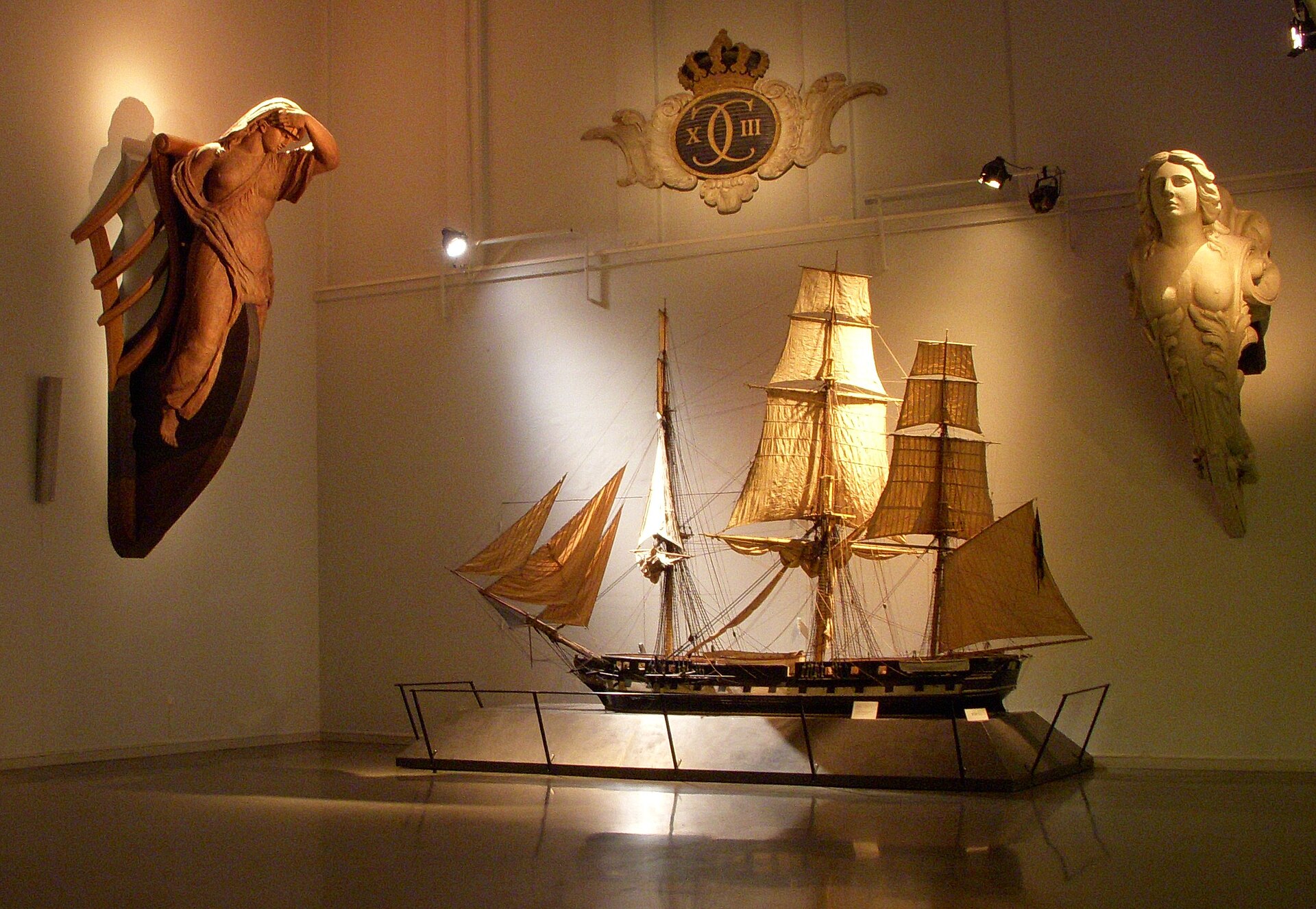
The core of the museum is its ship model collection, one of the largest of its kind. Models range from small merchant vessels to large warships, many built to scale by naval architects rather than as decorative pieces.
- Ship models covering naval and merchant vessels from several centuries
- Figureheads and carved ship ornamentation, some removed from decommissioned warships
- Naval weaponry, uniforms, and equipment tied to the Swedish armed forces
- Material from the merchant marine, including trade and passenger shipping
- Remains and finds from the wreck of the Regina, a Swedish East India Company ship
The Regina material is a useful marker of what the museum does well. It is not a full ship raised intact. It is a documented wreck site, presented with the objects recovered from it and the research built around them. That is a different kind of exhibit than a preserved hull, and it shapes how much time the museum actually needs.
Do you need to visit both Sjöhistoriska and Vasa Museet?
Not necessarily, and the overlap between the two is smaller than it looks on paper. Vasa Museet holds one ship, the warship Vasa, presented in depth: the hull itself, its recovery, and the life of a 17th-century crew. Sjöhistoriska tells the broader story around that single ship — the wider navy, the merchant trade, model-building as a craft, and wreck archaeology through the Regina finds.
The practical difference is scale. Vasa Museet is built around one enormous object and typically takes a visitor well over an hour to see properly. Sjöhistoriska is smaller and less densely programmed. A visitor with a working knowledge of the collection can reasonably expect to cover its main halls in under an hour.
Here is a simple way to decide, given limited time on Djurgården:
- Short on time, want the single unmissable object: prioritize Vasa Museet. It is the deeper, denser experience, and nothing at Sjöhistoriska substitutes for seeing the actual ship.
- Already know naval history, want context and models: Sjöhistoriska adds real value, and its Regina material is not duplicated anywhere else on Djurgården.
- Have a full afternoon: both fit comfortably, since Sjöhistoriska’s shorter visit length means it does not eat into the rest of the day.
- Traveling with young children and limited patience: Vasa’s single dramatic object tends to hold attention better than a broader model collection.
The overlap, in short, is thematic rather than exhibit-by-exhibit. Vasa Museet answers “what was it like on this ship.” Sjöhistoriska answers “what did Sweden’s whole relationship with the sea look like.” Skipping one is a reasonable choice, not a loss, depending on which question a visitor actually wants answered.

Where is it, and how does it fit into a Djurgården day?
Sjöhistoriska Museet sits on Djurgården’s northern shore, within walking distance of the naval memorial and a short walk from other museums on the island. Djurgården itself functions as both a park and a museum district, and the two roles rarely conflict.
Most visitors reach the island on foot from central Stockholm, by tram, or by the seasonal Djurgården ferry from Slussen or Nybroplan. None of these routes are complicated, but frequency and fares change with the season, so checking the operator’s own timetable before setting out is the safer move.
Because Sjöhistoriska is a shorter visit than most of its neighbors, it slots well into a day that already includes something larger — Vasa Museet, the Nordic Museum, or simply a walk across the park.
Is entry free, and does that change how you plan the visit?
Historically, yes: Sjöhistoriska has been part of a group of Swedish national museums with no general admission charge, a policy set by the state rather than the museum itself. That policy can change, and any specific figure should be confirmed on SMTM’s own site before a visit.
Free entry removes one planning problem entirely. There is no ticket to pre-book, no timed slot to protect, and no cost calculation to run against a multi-museum pass. That makes Sjöhistoriska one of the easier stops to add or drop from a Djurgården itinerary without financial consequence.
For visitors weighing several paid attractions against a city pass, the free-entry group of museums is worth understanding on its own terms — a separate question from whether a pass covering paid sites actually pays off.
Who is the museum actually for?
Sjöhistoriska rewards a specific kind of visitor more than a general one. Model-ship enthusiasts, naval history readers, and anyone researching Sweden’s merchant shipping trade will find depth here that a broader city museum does not offer.
A visitor with only a passing interest in ships, and limited time, is generally better served by Vasa Museet’s single dramatic object. Both are legitimate choices. The point is to choose based on what the visit is actually for, not on a sense that Djurgården’s museums must all be seen in sequence.
Related reading
- For the island both museums sit on, see Djurgården as a park, not a museum district.
- For the free-entry question across the city’s museums, see free vs. paid museums in Stockholm.
- For another Djurgården-area national museum, see what the Naturhistoriska Riksmuseet holds.
- For getting to Djurgården by water, see how the Djurgården ferry network works.
- For fitting museums into a single day, see what you can realistically see in Stockholm in one day.
- For the wider museum landscape, see the Museums & Galleries archive.
- For planning a Djurgården visit in context, see the Stockholm guide hub.
Access Stockholm is an independent guide written from published, checkable sources. We have not visited the places described here and we do not publish personal recommendations or invented ‘local favourites’ — where something is singled out as notable, we say who says so. Opening times, fares, closures and prices change at short notice, so treat everything here as a starting point and confirm with the museum, operator or venue directly before building a day around it. We give no advice on visas, insurance, health or safety; use your own government’s official guidance for those.
Featured image: Photo by Holger.Ellgaard, source, CC BY-SA 3.0
