Moderna Museet is Sweden’s national museum of modern and contemporary art, located on the island of Skeppsholmen in central Stockholm. Founded in 1958, it holds a collection built around European modernism — Picasso, Matisse, Dalí — alongside deep Nordic holdings, a major photography archive, and postwar and contemporary work.
What kind of museum is Moderna Museet?
It is a state museum, run as a Swedish government agency under the Ministry of Culture, with a mandate to collect, preserve and exhibit modern and contemporary art from roughly 1900 onward. That distinguishes it from Sweden’s older national collections, such as Nationalmuseum, which covers art up to around the early twentieth century, and from cultural-history institutions like the Nordiska Museet, which documents Swedish everyday life rather than fine art.
Moderna Museet opened in 1958 inside a former naval drill hall on Skeppsholmen, an island that had served the Swedish navy for centuries before its military buildings were gradually turned over to cultural use. The museum’s founding collection was modest; what it holds today is largely the result of decades of acquisition, gifts and a handful of landmark donations from private collectors and artists’ estates.
Where is Moderna Museet, and what is the building?
The museum occupies a building on Skeppsholmen that combines the original drill hall with a new wing designed by the Spanish architect Rafael Moneo, completed in 1998 after a period when the museum operated from temporary premises during reconstruction. The result is a low, deliberately unshowy building, in keeping with the low-rise military and naval architecture that still defines much of the island.
Skeppsholmen sits between Gamla Stan and Djurgården, reachable on foot across a bridge from the city centre. It is also home to Sweden’s national centre for architecture and design, ArkDes, which shares part of the same site and has historically worked alongside Moderna Museet on joint exhibitions and public programmes. The island has no significant vehicle traffic and functions largely as a cultural precinct, in contrast to the working amusement-park and historic-museum cluster on nearby Djurgården, where Skansen and the Vasa Museum are located.
What does the permanent collection contain?
The collection is built around two overlapping bodies of work: early-to-mid twentieth-century European modernism, and Nordic and Swedish modern and contemporary art. Moderna Museet’s own descriptions of the holdings point to strengths including:
- Cubism and its circle — works by Pablo Picasso, Georges Braque and André Derain.
- Surrealism, including Salvador Dalí, whose large-scale painting The Enigma of William Tell is among the museum’s best-known holdings.
- Henri Matisse and other figures central to early modern French painting.
- American postwar art, including Robert Rauschenberg’s combine work Monogram — a stuffed angora goat encircled by a tyre, mounted on a painted platform — one of the museum’s most reproduced objects, and works by Andy Warhol.
- Swedish and Nordic modernism, including Nils Dardel’s The Dying Dandy and a substantial holding of paintings and works on paper by Hilma af Klint, whose abstract compositions predate much of the European abstract art the museum also collects.
- Postwar European movements, including artists associated with the CoBrA group and Yves Klein.
Alongside painting and sculpture, Moderna Museet holds one of the larger photography collections attached to a modern art museum in Europe, assembled since the 1960s and covering both fine-art and documentary photography from the nineteenth century to the present. Film and video work, much of it acquired since the 1970s, forms a further strand of the collection that is shown on rotation rather than displayed permanently in full.
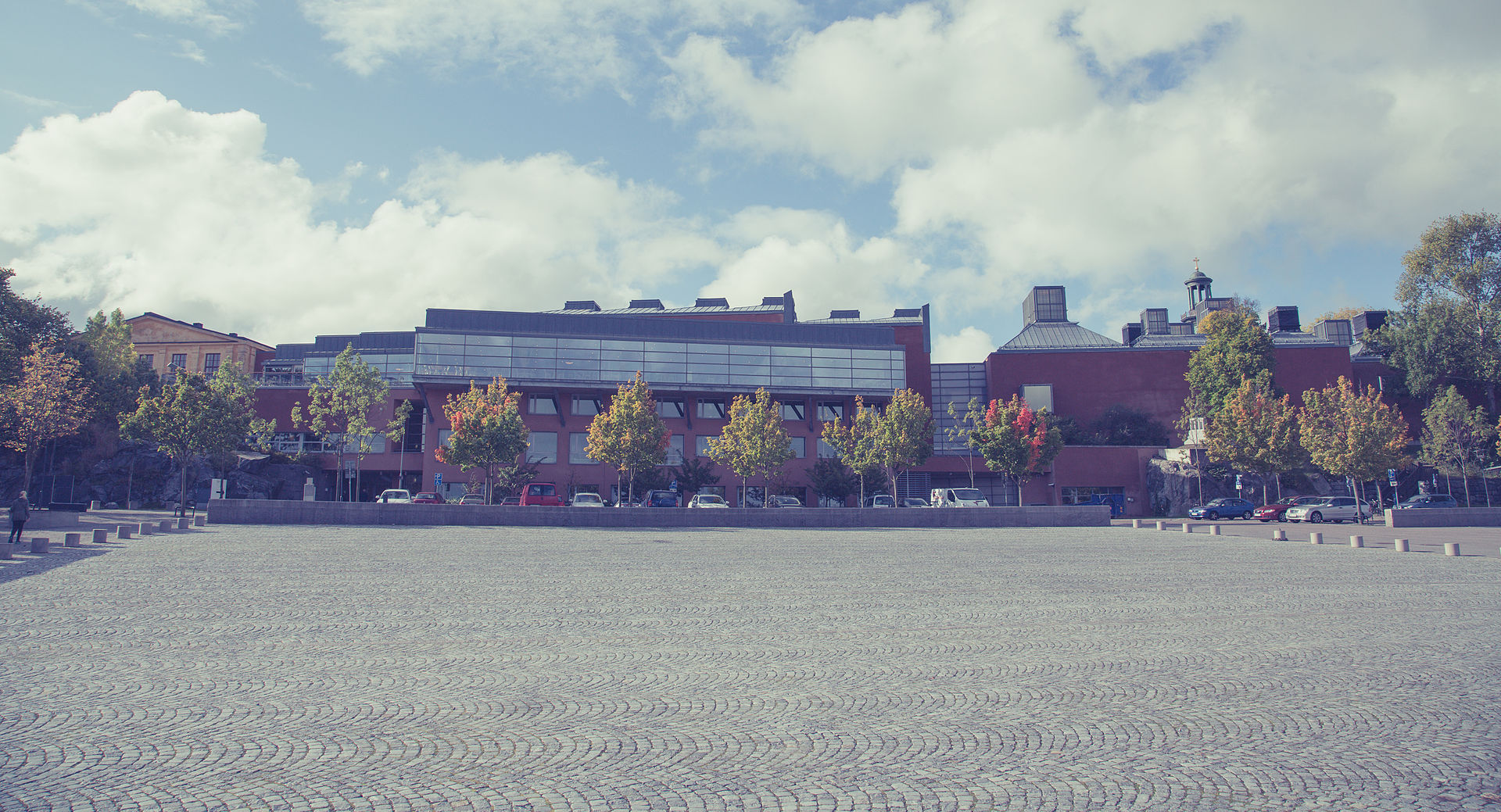
.jpg)
Is everything in the collection on display at once?
No. As with any museum of this size, only a portion of the collection is shown at any time. Moderna Museet rehangs its permanent-collection galleries periodically, grouping works thematically or chronologically rather than keeping a fixed, unchanging display. Works from the photography and video holdings in particular are rotated because of conservation limits on how long light-sensitive material can be exhibited continuously.
The museum also runs a programme of temporary exhibitions — monographic shows on individual artists, thematic surveys, and loans from other institutions — that occupy separate gallery space from the permanent collection. These exhibitions change on a schedule set by the museum, so specific shows and dates should be checked on the museum’s own site rather than assumed from older listings.
Is there a second Moderna Museet?
Yes. Moderna Museet Malmö, in the city of Malmö in southern Sweden, opened in 2009 in a former power station building. It is run by the same organisation as the Stockholm museum and draws on the same national collection, but operates as a separate site with its own exhibition programme rather than a branch showing a fixed subset of Stockholm’s holdings.
How does entry and visiting actually work?
Moderna Museet is a Swedish state museum, and admission policy for state museums — including whether entry to the permanent collection is free, discounted for under a certain age, or ticketed for temporary exhibitions — has changed more than once in recent years depending on government policy. Because of that, this article does not quote a specific price. Anyone planning a visit should confirm current admission terms, and opening hours, directly on the museum’s own website before travelling.
Like many Stockholm museums, Moderna Museet has historically closed one day a week, commonly Monday, and kept at least one late-opening evening on another day. Both of these are patterns rather than fixed rules, and should be checked against the museum’s published hours for the relevant week, since they can shift around public holidays and around exhibition installs.
How does Moderna Museet compare with Stockholm’s other major museums?
Stockholm’s national museums divide roughly by subject rather than competing for the same material. The Vasa Museum holds a single seventeenth-century warship raised largely intact from Stockholm harbour — a maritime-history and archaeology collection built around one object. Skansen is an open-air museum of relocated historic buildings and a zoo, focused on how ordinary Swedish life and building traditions worked across regions and centuries. The Nordiska Museet covers Swedish and Nordic cultural history through furniture, dress, folk art and everyday objects rather than fine art.
Moderna Museet sits apart from all three: its remit is modern and contemporary art specifically, judged as art rather than as social or maritime history. A visitor working through Stockholm’s museum landscape typically treats these as complementary rather than overlapping — one covers a ship, one covers vernacular life, one covers folk culture, and Moderna Museet covers what happened to painting, sculpture and photography from roughly the twentieth century onward.
For a wider view of how these institutions fit together, and what else counts as a major public collection in the city, the museums and galleries section of this guide groups them by subject rather than by neighbourhood, which is generally a more useful way to plan a sequence of visits than working through them geographically.
What should a resident know that a first-time visitor might not?
For anyone living in Stockholm rather than passing through, Moderna Museet is worth treating as a museum to return to rather than see once. Because the permanent-collection galleries are rehung periodically and the photography and video holdings rotate for conservation reasons, the museum looks noticeably different across repeat visits even without a new temporary exhibition. Checking the museum’s own listings before a visit — rather than relying on a description written months or years earlier, including this one — is the only reliable way to know what is actually on the walls that week.
The island setting also matters practically. Skeppsholmen has limited services of its own, and combining a visit with ArkDes or with the wider museums and galleries on Djurgården across the water is a reasonable way to structure a day, since none of these institutions function as a stand-alone destination with much around it beyond the collections themselves.
Access Stockholm is an independent guide written from published, checkable sources. We have not visited the places described here and we do not publish personal recommendations or invented ‘local favourites’ — where something is singled out as notable, we say who says so. Opening times, fares, closures and prices change at short notice, so treat everything here as a starting point and confirm with the museum, operator or venue directly before building a day around it. We give no advice on visas, insurance, health or safety; use your own government’s official guidance for those.
Featured image: Photo by Åsa Lundén, source, CC BY-SA 3.0
