Birka was a fortified trading town on the island of Björkö in Lake Mälaren, active from roughly 750 to 970 AD. Excavations there have produced one of Scandinavia’s largest collections of Viking Age material — thousands of graves, imported silk and silver, weapons, and evidence of trade routes stretching to Baghdad and Byzantium. It is a UNESCO World Heritage Site.
Where exactly is Birka?
Birka sits on Björkö, a small island in Lake Mälaren about 30 kilometres west of central Stockholm. It is not on the sea or in the Stockholm archipelago — Mälaren is a large freshwater lake that connects, via locks, to the Baltic. In the Viking Age the lake’s water level and outlets were different, and Björkö occupied a defensible position controlling access between the open sea and the agricultural heartland further inland.
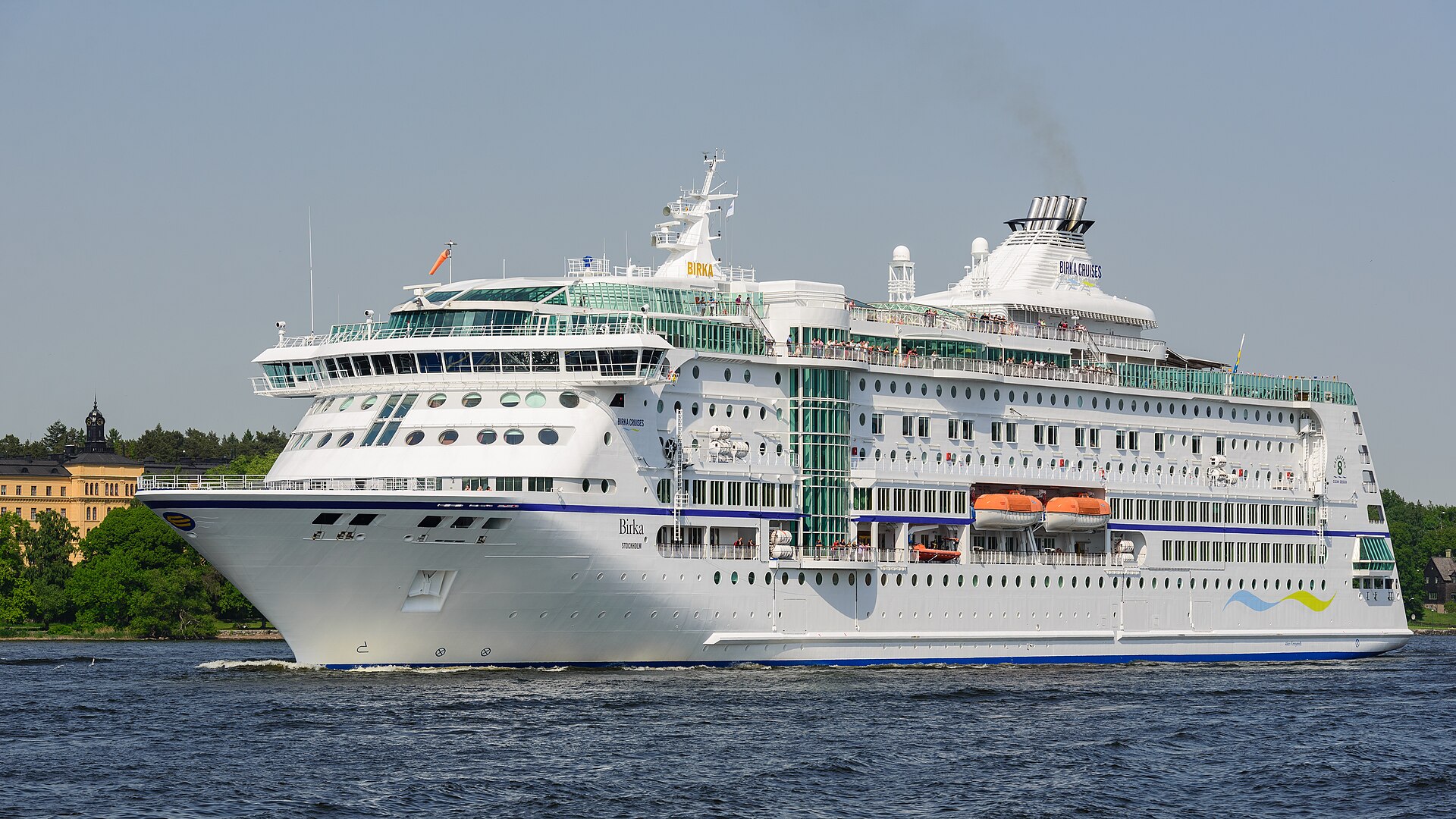
There is no road bridge to the island. Access today is by boat from Stockholm, typically a seasonal service operated by a private boat company; sailings generally run from spring through early autumn and are suspended in winter. The operator’s own site is the source to check for current schedules and fares, since these change year to year.

What was Birka, in practical terms?
Birka functioned as a proto-urban trading settlement — one of the earliest of its kind in Scandinavia — rather than a farming village or a royal residence. Archaeologists have identified a defended settlement area known as the Black Earth (Svarta jorden), named for the dark, artefact-rich soil built up from centuries of occupation, along with a hillfort, a harbour area, and several large cemeteries ringing the settlement.
The site’s layout — rampart, harbour, distinct craft and trading zones, and separate burial fields — is the physical evidence historians point to when describing Birka as a town rather than a village. Its population is estimated to have been in the hundreds at most, small by later urban standards but substantial for eighth- and ninth-century northern Europe.
What was actually found there?
Birka’s cemeteries contain well over 3,000 graves, and it is the scale and variety of these burials, combined with the settlement layer, that make the site significant. Excavation began in the 19th century under Hjalmar Stolpe and has continued intermittently since, with modern work using more precise archaeological and scientific methods.
- Imported silver. Arabic dirhams — silver coins minted in the Islamic caliphates — appear in Birka’s graves and settlement layers, tracing trade contacts running east through Russia’s river systems toward the Abbasid world.
- Textiles. Fragments of silk, some woven with silver and gold thread, have been recovered from burials, indicating either direct or indirect trade contact with Byzantium and beyond.
- Weapons and armour. Swords, spearheads, and in some graves full sets of weaponry accompany the dead, alongside horse equipment, indicating the presence of a warrior class buried at the site.
- Glass and beads. Glass vessels and large quantities of beads, some of Rhenish or eastern origin, point to trade networks running in multiple directions.
- A small figurine. A bronze figure sometimes referred to as the “Buddha of Birka,” of South or Southeast Asian style, is among the objects cited as evidence of how far trade goods could travel before reaching the lake.
These artefacts are held mainly by the Swedish History Museum (Statens historiska museum) in Stockholm, which curates the national collection from Birka and has published research on the site over several decades.
What was the “Birka warrior grave”?
One particular burial, catalogued as Bj 581, has drawn sustained attention because it contained a full set of weapons, two horses, and gaming pieces suggesting a role in military strategy or leadership — for over a century assumed to belong to a male warrior on the basis of the grave goods alone. A 2017 osteological and DNA study, published by researchers including those from Stockholm University and Uppsala University, identified the skeletal remains as biologically female.
The finding was reported in the journal American Journal of Physical Anthropology and prompted wider discussion, reported in Swedish and international press, about assumptions built into earlier interpretations of Viking Age gender roles. The debate that followed — including questions about whether grave goods and skeletal remains in the same plot are securely linked — is itself part of the site’s more recent history, and it illustrates how a well-documented cemetery keeps producing new findings decades after excavation.
Why did Birka decline?
Birka appears to have been abandoned sometime around the mid-to-late 10th century, and no single cause is settled among historians. Proposed explanations, discussed in the archaeological literature, include the falling water level of Mälaren, which would have altered navigable channels and harbour access, and the rise of nearby Sigtuna as a competing trading centre with better long-term access to the lake’s changing waterways. Sigtuna, often described as Sweden’s oldest town, took on some of the trading role Birka had held, and its continuous occupation since roughly 980 AD contrasts with Birka’s sudden abandonment.
Birka also has a documented place in early Christian history: the missionary Ansgar visited in the 9th century and is credited with establishing one of the first Christian congregations in Sweden there, an episode recorded in Rimbert’s contemporary biography of Ansgar, the Vita Ansgarii.
What is Hovgården, and why is it linked to Birka?
Hovgården sits on the neighbouring island of Adelsö and is thought to have been a royal or high-status estate contemporary with Birka, connected to it by function even though the two sites are physically separate. It includes burial mounds, a rune stone, and remains associated with a royal manor, and it is included alongside Birka in the same UNESCO World Heritage inscription, granted in 1993, on the grounds that the two sites together illustrate the political and economic structure of a major Viking Age trading network.
The pairing situates Birka within a wider network of elite and mercantile power around Lake Mälaren, comparable in scope, though different in character, to other Mälaren-region sites such as Drottningholm, which UNESCO also inscribes for its own reasons as a later royal residence on the same lake.
Where can the finds be seen today?
The bulk of Birka’s excavated material is held by the Swedish History Museum in Stockholm, whose permanent Viking Age displays include objects from the site alongside material from elsewhere in Sweden. A smaller museum on Björkö itself, run in connection with the heritage foundation responsible for the site, presents finds and reconstructions closer to where they were excavated, and is generally open only during the boat season. Riksantikvarieämbetet, the Swedish National Heritage Board, manages the archaeological site’s protected status and publishes background material on ongoing research and conservation.
Is Birka reachable as a day trip from Stockholm?
Yes, within the constraints of the seasonal boat schedule. There is no train or road route; the only practical way to reach Björkö is by the lake boat service, which typically runs from spring to early autumn and takes a few hours each way. This makes Birka a longer outing than an inner-city museum visit, closer in shape to the day trips covered in this site’s day trips coverage, and worth planning around the boat operator’s own timetable rather than a fixed assumption about hours.
Readers building a wider itinerary around Viking Age and early medieval Sweden might also look at Uppsala’s cathedral and its historical role, or at background on Stockholm’s museums, landmarks and neighbourhoods for how Birka’s finds sit alongside the city’s other historical collections. The broader museums and galleries archive and landmarks and sights archive cover related sites and collections in more depth.
Access Stockholm is an independent guide written from published, checkable sources. We have not visited the places described here and we do not publish personal recommendations or invented ‘local favourites’ — where something is singled out as notable, we say who says so. Opening times, fares, closures and prices change at short notice, so treat everything here as a starting point and confirm with the museum, operator or venue directly before building a day around it. We give no advice on visas, insurance, health or safety; use your own government’s official guidance for those.
Featured image: Photo by AleWi, source, CC BY-SA 4.0
