What is Millesgården?
Millesgården is a sculpture garden and museum on the island of Lidingö, built into a rocky hillside above Stockholm’s harbour. It was the home and studio of the sculptor Carl Milles and his wife Olga Milles, a painter, and it now operates as a foundation-run museum displaying his work outdoors on terraces and indoors in galleries.
Who was Carl Milles, and why does this place exist?
Carl Milles (1875–1955) was one of Sweden’s best-known sculptors, trained partly in Paris and active for long stretches abroad, including a teaching post at the Cranbrook Academy of Art in Michigan. He built his house and studio at Herserud on Lidingö in stages from around 1906, using the site’s steep granite slope as the setting for his own work.
According to Millesgården’s own foundation, Carl and Olga Milles donated the property, its buildings and the sculpture collection to the Swedish people in 1936, with the explicit intention that it open as a public museum. It has functioned that way ever since, making it one of the longer-running artist-house museums in the Stockholm region.
What does the sculpture garden actually contain?
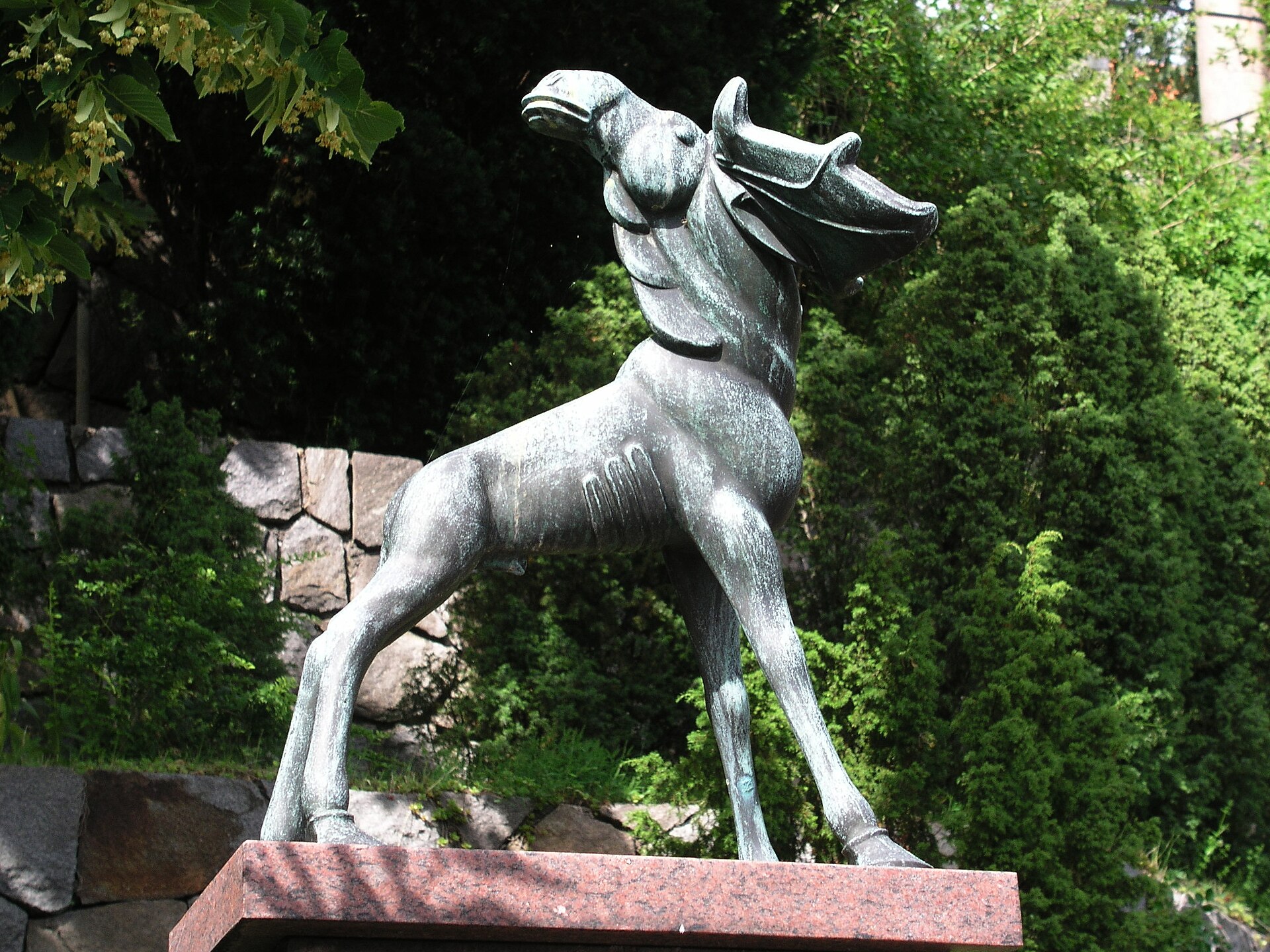
The garden is arranged as a series of terraces cut into the hillside, connected by staircases, with fountains, colonnades and freestanding columns supporting bronze figures. Milles worked repeatedly with the idea of the human form rising or reaching upward, and several of the garden’s best-known pieces — including versions of his fountain and column groups — place figures high above eye level against the open sky and the water beyond.
Millesgården’s own descriptions of the collection note that many works on the terraces are bronze casts, since Milles frequently produced multiple versions of a composition; other originals and related pieces by Milles are held in museums and public spaces elsewhere in Sweden and abroad. The garden also incorporates architectural fragments and antique columns that Milles collected and built into the setting, rather than displaying sculpture on plain plinths alone.
The terraces look out over Lilla Värtan, the stretch of water between Lidingö and the mainland, and the site’s elevation and orientation are part of how the collection is meant to be read — sculpture set against open water and sky rather than a gallery wall.
Is Millesgården a museum or a park?
It is both, in the specific sense that a small number of Stockholm sites are. The terraces function as an open-air sculpture park that can be walked freely, while the former house and studio buildings function as conventional indoor galleries, with changing exhibitions alongside the permanent display of Milles’s own work and the couple’s personal art collection.
This combination puts it in a different category from a purely green space like a city park, and closer to sites the site’s own Museums & Galleries coverage treats as house-museums: the building and its collection are the point, and the landscaping exists to present that collection rather than the reverse.

How do you get to Millesgården from central Stockholm?
Lidingö is a separate municipality and island connected to the mainland by bridge rather than a ferry crossing, which distinguishes it from the archipelago islands covered elsewhere on this site. The standard route from central Stockholm is the Lidingöbanan tram, which begins at Ropsten — the northern terminus of the Red Line metro — and runs onto Lidingö with a stop serving Millesgården directly.
Because the tram and the preceding metro leg both sit within Stockholm’s public transport network, a standard SL travel card or ticket covers the journey under the zone system described in the site’s guide to how metro zones and fares work. Anyone unfamiliar with how the card, zones and different transport modes interact more generally can start with the broader explanation of how the Stockholm travel card works across metro, bus and ferry, and the general orientation piece on getting around the city.
Bus routes also serve Lidingö from Ropsten, and current timetables and any seasonal changes to the tram schedule are best confirmed directly with SL, Stockholm’s transport operator, rather than assumed from older information.
When is Millesgården open, and does the season change what’s on show?
Millesgården typically closes or reduces hours during parts of the winter, since the outdoor terraces are less usable in snow and low light, and reopens fully for the spring and summer months — a pattern common to open-air sites in and around Stockholm. Indoor exhibitions in the gallery spaces generally continue on a separate schedule from the garden itself.
Because opening days, hours and admission prices change from year to year, this is exactly the kind of detail the site treats as perishable rather than fixed: readers should confirm current information directly on Millesgården’s own website before planning a visit, rather than relying on a fixed figure printed here.
How does Millesgården compare to other museum sites in Stockholm?
Central Stockholm has its own concentration of museums on Skeppsholmen, an island close to the old town that was set aside for cultural institutions after its military use ended — a different model from Millesgården, where a single artist’s house and collection define the whole site. The comparison is useful for understanding how differently Stockholm’s museums are organised: some are purpose-built clusters, as described in the piece on what Skeppsholmen is as a museum island, while Millesgården is a private legacy turned public trust.
It’s also worth distinguishing Millesgården from Stockholm’s large park landscapes that happen to contain museums, such as Djurgården, where the parkland long predates and exists independently of any single museum inside it — a distinction explored in the article on Djurgården as a park, not a museum district. Millesgården runs the opposite way: the terraced garden was built specifically to hold the sculpture.
Who runs Millesgården today?
Millesgården operates under a foundation — the Millesgården Foundation — established from Carl and Olga Milles’s original 1936 donation, which continues to hold and present the collection, maintain the buildings and terraces, and organise the museum’s changing exhibition programme. It functions as an independent cultural institution rather than a branch of a national museum authority, though it is widely referenced in Swedish museum and heritage listings as a site of note.
Readers assembling a broader view of the city’s museums and landmarks, including how a site like this fits into a wider visit, can start from the site’s own hub pages on Stockholm’s museums, landmarks and neighbourhoods and the dedicated Landmarks & Sights archive, both of which cover comparable single-collection sites across the region.
Related reading
what the city is like to actually live in, Stockholm, Practically, What Is Artipelag? Stockholm’s Archipelago Art Space, What Is Junibacken, and Who Is It For? Stockholm Guide
Access Stockholm is an independent guide written from published, checkable sources. We have not visited the places described here and we do not publish personal recommendations or invented ‘local favourites’ — where something is singled out as notable, we say who says so. Opening times, fares, closures and prices change at short notice, so treat everything here as a starting point and confirm with the museum, operator or venue directly before building a day around it. We give no advice on visas, insurance, health or safety; use your own government’s official guidance for those.
Featured image: Photo by Holger.Ellgaard, source, CC BY-SA 4.0
