What is Skokloster Castle?
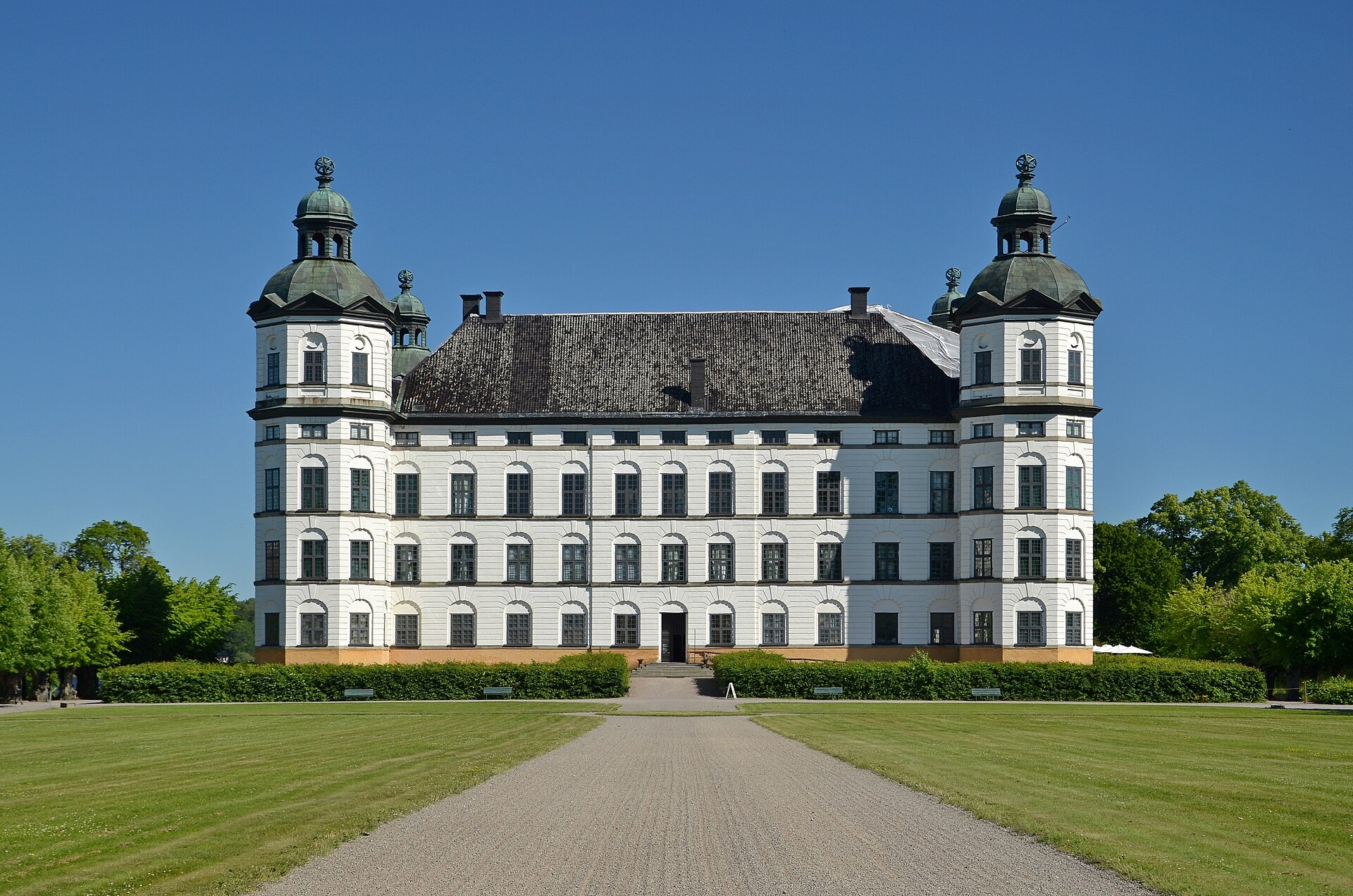
Skokloster Castle (Skokloster slott) is a 17th-century Baroque palace on a peninsula in Lake Mälaren, roughly midway between Stockholm and Uppsala. It was built for a Swedish field marshal, was never fully completed, and now operates as a state-run museum holding one of Sweden’s largest collections of period furniture, arms, armour and rare books, still largely in the rooms they were placed in.
Where is Skokloster Castle, and how do you get there?
The castle stands in Håbo Municipality in Uppsala County, on a promontory jutting into Lake Mälaren, near the small town of Bålsta. It sits roughly halfway along the lake between central Stockholm and Uppsala, making it a natural stop for anyone combining the two cities, or for anyone touring the lake’s other historic sites.
There is no direct rail line to the castle itself. The commuter train from Stockholm runs to Bålsta, from where a local bus or taxi covers the remaining distance; a car via the E18 is the more direct route. In summer, boat operators running excursions on Mälaren have historically included Skokloster as a stop, often paired with Mariefred or Sigtuna — schedules for these seasonal boats should always be checked directly with the operator, since they run only part of the year. For train logistics generally, see how you reach Swedish cities by train from Stockholm.
Who built Skokloster Castle, and why is it unfinished?
Skokloster was commissioned by Carl Gustaf Wrangel, a Swedish field marshal who had made his fortune and reputation during Sweden’s 17th-century wars in continental Europe. Construction ran from 1654 to roughly 1676, on the site of a former monastery estate. Wrangel intended the palace as a statement of wealth and rank, built to a scale that few private individuals in Sweden could match at the time.
He died in 1676 before the interior was finished, and work stopped almost immediately. The most visible result is the Great Hall on the top floor: its walls are plastered but undecorated, and carpenters’ tools and building materials from the 1670s were left where the work crew put them down. Statens historiska museer, the Swedish government agency that manages the castle today, describes this halted state as effectively preserved rather than restored — the Great Hall reads as a construction site frozen rather than a room later dressed up to imitate one.
What does the collection at Skokloster contain?
The palace’s contents survived largely intact because the estate passed down through family ownership for nearly three centuries before the Swedish state took it over, meaning rooms were furnished, closed off, and left rather than emptied and refilled by later owners. According to Statens historiska museer, the collection includes:
- Furniture and textiles largely dating from the 17th and 18th centuries, arranged room by room rather than displayed as isolated museum objects.
- An armoury described by the agency as one of Europe’s largest surviving private collections of arms and armour from the 17th century, much of it acquired or looted during Sweden’s continental campaigns.
- A library that Statens historiska museer ranks among the most extensive privately assembled book collections in Scandinavia, including early printed works and manuscripts.
- Portrait galleries and decorative art reflecting the tastes of the Wrangel family and the noble households that followed them at Skokloster.
The scale of the interiors, and the fact that so much of the original furnishing survived in place, is what distinguishes Skokloster from many other Swedish stately homes, where collections were dispersed by sale or inheritance long ago.
_3.JPG)
Is Skokloster Castle a museum today?
Yes. Skokloster is owned by the Swedish state and administered by Statens historiska museer, the same agency that runs the Swedish History Museum in Stockholm. It operates as a public museum with guided tours through the historic apartments, seasonal opening hours, and an on-site exhibition space. As with any state-run cultural institution, opening times and admission details are set and updated by the agency itself, so current information should be confirmed on its own site rather than assumed from a general description here.
The castle grounds also host the Skokloster Motor Museum, a separate collection of vintage cars and motorcycles housed in the estate’s outbuildings — a detail that surprises visitors expecting only Baroque interiors, since the two collections have little to do with each other beyond sharing the same site.
How does Skokloster compare to Sweden’s other royal and noble castles?
Sweden’s Mälaren region carries an unusually high concentration of historic castles and manor houses, each shaped by a different chapter of the country’s history. Drottningholm, closer to Stockholm, is a working royal residence and a UNESCO World Heritage Site tied directly to the monarchy. Gripsholm Castle, near Mariefred, is a royal fortress with roots going back to the medieval period and later use as a state portrait gallery.
Skokloster sits apart from both. It was never a royal residence; it was built by a private nobleman on a scale meant to rival royalty, and its significance lies less in dynastic history than in what it preserves intact: a single aristocratic household’s furnishings, library and armoury, essentially undisturbed since the 17th and 18th centuries. Where Drottningholm and Gripsholm are shaped by continuous royal use across centuries, Skokloster is closer to a sealed capsule of one family’s Baroque ambitions, stopped mid-build.
What else is nearby, and does it fit into a longer trip?
Skokloster’s position on Lake Mälaren puts it within reach of several other historic stops covered elsewhere on this site. Sigtuna, generally described as Sweden’s oldest town, lies on the same lake system. Uppsala, with its cathedral and university, is roughly the same distance again to the north. Many visitors treat Skokloster as one stop on a wider Mälaren itinerary rather than a destination on its own, given how far it sits from central Stockholm and how much travel time getting there and back requires.
For planning a trip that groups this kind of site with others outside the city centre, the broader day-trip and landmark categories on this site set out how the region’s castles, market towns and heritage sites relate to one another: see day trips from Stockholm and landmarks and sights for the wider picture, or the Stockholm guide hub for how museums, neighbourhoods and excursions fit together.
Practical detail: visiting Skokloster today
Because Skokloster is a state-managed museum rather than a private tourist operation, its opening season, guided-tour schedule and admission prices are set annually by Statens historiska museer and can change from one year to the next — particularly since the castle’s interior tours often run on a more limited schedule outside summer months. Anyone planning a visit should check the agency’s own site for current opening dates, tour times and ticket prices rather than relying on a fixed figure, since none of that detail is stable enough to print reliably here.
What does not change is the character of the place: a large, incomplete Baroque palace on a lake peninsula, holding one noble family’s collection of arms, books and furnishings almost exactly as it stood when construction stopped in the 1670s. That is the fact worth carrying into a visit, whatever the current opening hours turn out to be.
Access Stockholm is an independent guide written from published, checkable sources. We have not visited the places described here and we do not publish personal recommendations or invented ‘local favourites’ — where something is singled out as notable, we say who says so. Opening times, fares, closures and prices change at short notice, so treat everything here as a starting point and confirm with the museum, operator or venue directly before building a day around it. We give no advice on visas, insurance, health or safety; use your own government’s official guidance for those.
Featured image: Photo by Tanel Pärs, source, CC BY-SA 3.0
