Yes. Central Stockholm’s harbour waters — Riddarfjärden, the canals around Södermalm, the basins off Kungsholmen and Djurgården — are clean enough to swim in, and the city maintains official bathing sites in several of them. That wasn’t true for most of the twentieth century. What changed was decades of investment in sewage treatment and the separation of stormwater from wastewater, which turned an industrial harbour into water that now meets EU bathing standards most of the summer.
What changed to make the water swimmable?
The short version: Stockholm stopped dumping raw and partially treated sewage into the lake and the harbour. Through the nineteenth and much of the twentieth century, household waste and industrial effluent went straight into Riddarfjärden and the Baltic inlets that thread through the city. Oxygen levels collapsed in places, and fish stocks with them.
From the 1930s onward, and more intensively from the 1960s and 70s, the city built and upgraded major treatment plants — Henriksdal on the south side and Bromma on the west are the two that still process most of central Stockholm’s wastewater today, run by the municipal utility Stockholm Vatten och Avfall. Nutrient removal (cutting phosphorus and nitrogen that feed algae blooms) was added progressively, and older combined sewer sections — where stormwater and sewage shared the same pipe — have been gradually separated. Stockholm Vatten och Avfall’s own material on the system describes this as a decades-long, still-ongoing programme rather than a single fix.
The ecological payoff is well documented and slightly unusual for a European capital: salmon and sea trout now run up through the city centre to spawn, and recreational fishing for them at the Strömmen rapids near the Royal Palace is free and unlicensed — a detail the city itself points to as evidence of how far the water has recovered.
Where are the official swimming spots in the city centre?
Stockholm’s municipal bathing sites (badplatser) are concentrated on a handful of islands and shoreline parks close to the centre rather than scattered at random. The pattern worth understanding:
- Långholmen — a small island off Kungsholmen, a former prison site now largely parkland, with beach areas on its southern and western shores facing Riddarfjärden and Mälaren.
- Rålambshovsparken, Kungsholmen — a shoreline park on Riddarfjärden with a long-established bathing area, popular enough in summer that it functions as one of the inner city’s default beaches.
- Tantolunden, Södermalm — the district’s largest park has a bathing spot on its Årstaviken-facing shore, alongside allotment gardens and open lawns.
- Trekantsparken, Hammarby Sjöstad — a bathing area built into this newer waterside district’s canal, reflecting how swimmable water was designed into the neighbourhood from the start rather than added later.
These sit alongside Erikdalsbadet on Södermalm, a municipal outdoor and indoor pool complex — a managed alternative for anyone who wants supervised, chlorinated water rather than open harbour.
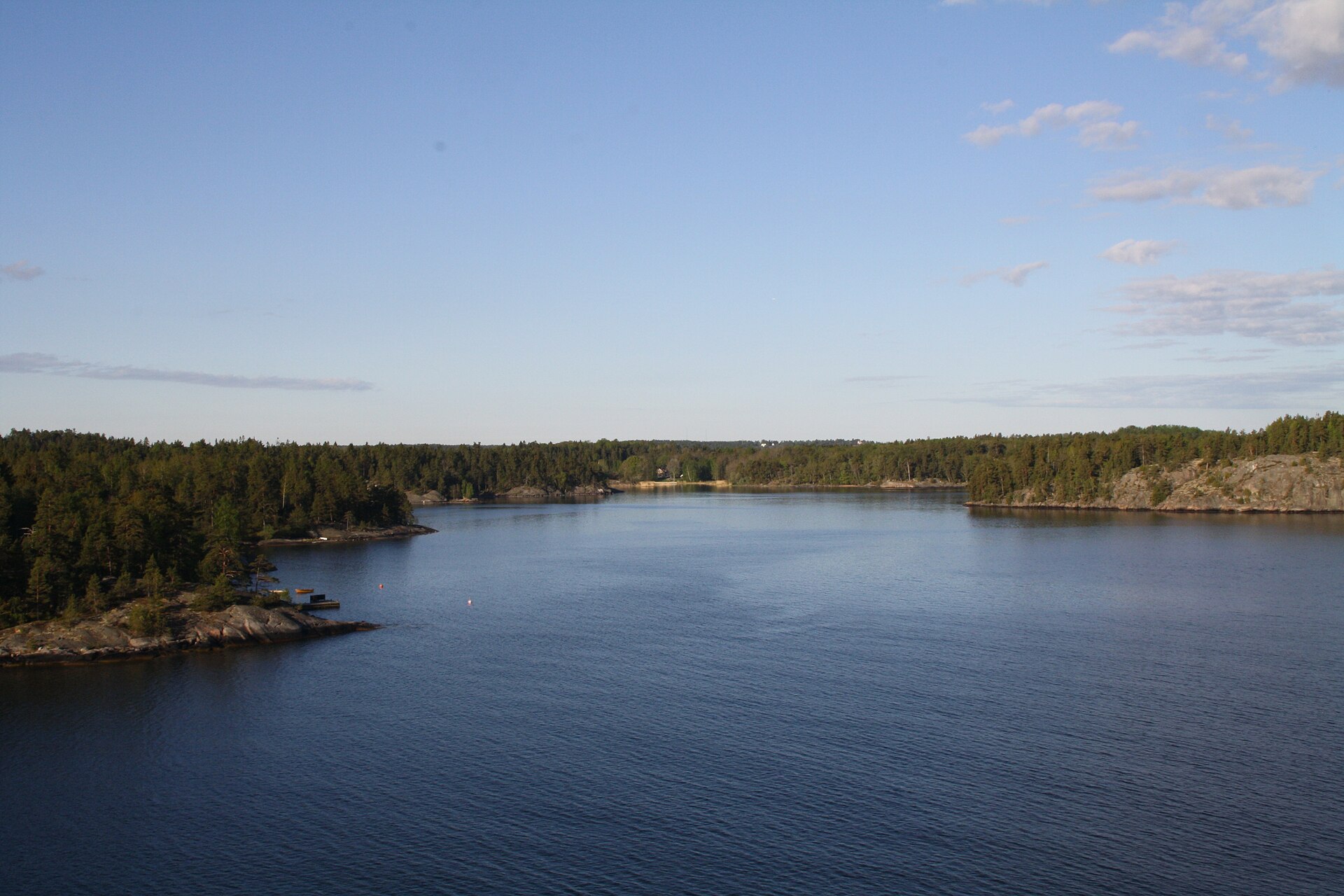
_(Kenny_McFly).jpg)
How is water quality actually checked?
Sweden applies the EU Bathing Water Directive, and Swedish bathing sites are classified — excellent, good, sufficient or poor — based on regular testing for bacteria such as E. coli and intestinal enterococci. The national portal for this, run under the Swedish Agency for Marine and Water Management (Havs- och vattenmyndigheten), publishes current classifications and testing results site by site.
The honest caveat: water quality in a city built on connected waterways isn’t static. After heavy rainfall, older parts of the sewer network can still overflow into the water faster than the system can process it, and municipal advice sometimes recommends avoiding a swim for a day or two afterward. Anyone planning to swim rather than simply look at the water should check the current classification for the specific site rather than assume all central bathing spots are equal year-round.
Can you swim anywhere in the harbour, or only at the official spots?
Sweden’s allemansrätten — the right of public access — generally covers swimming in open water, but the city centre isn’t open water in the practical sense: Riddarfjärden and the channels around Gamla Stan carry ferry, tour boat and commuter traffic, and stretches of quay have no safe entry or exit point. The designated badplatser exist because they’re the places with a beach, a jetty, or a ladder, away from shipping lanes, not because swimming is otherwise banned. Sticking to marked sites is a matter of practicality rather than rule.
When can you actually swim — is this a summer-only thing?
Functionally, yes. The Baltic and the lake basins around Stockholm hold their heat poorly; official bathing season runs roughly June to August, and water temperature is the limiting factor far more than any rule. Outside that window the outdoor spots empty out, though a smaller, cold-water swimming culture (vinterbad) exists in Sweden more broadly, generally organised around dedicated clubs and facilities with sauna access rather than casual open-water swimming. Central Stockholm’s main badplatser are a summer amenity first.
Does this matter differently to residents than to visitors?
For residents, a swimmable harbour is a genuine seasonal amenity rather than a curiosity — a reason city parks like Tantolunden and Rålambshovsparken fill up on warm afternoons, and a reason newer districts such as Hammarby Sjöstad were designed with water access built in from the start. For visitors, it’s more often a fact worth knowing about the city than something to plan around: swimming spots sit inside or beside parks that are worth visiting anyway, and a working knowledge of where the beaches are helps make sense of why certain waterside parks are busy in July and near-empty in October.
Either way, it’s a useful corrective to the idea of Stockholm as purely a museum-and-café city. The water running through its centre is treated as usable, public infrastructure — closer in spirit to a park than to a harbour to be looked at from a distance.
Where to read more
- The Långholmen entry covers the island’s beaches alongside its history as a former prison site.
- Tantolunden explains Södermalm’s largest park, including its waterside bathing area.
- Hammarby Sjöstad covers the district built explicitly around its canal.
- A Day in Stockholm on the Water looks at how the city’s waterways function more broadly, beyond swimming.
- The Parks & Archipelago archive and the Neighbourhoods archive cover the wider green and waterside spaces around the centre.
- For planning a visit around water and season generally, see Planning & Practicalities and the Living in Stockholm hub for how residents use these spaces year-round.
Current bathing water classifications for specific sites are published by Havs- och vattenmyndigheten, and Stockholm Vatten och Avfall’s own site sets out the sewage treatment programme behind the improvement in more detail — both worth checking directly for anyone weighing up an actual swim.
Access Stockholm is an independent guide written from published, checkable sources. We have not visited the places described here and we do not publish personal recommendations or invented ‘local favourites’ — where something is singled out as notable, we say who says so. Opening times, fares, closures and prices change at short notice, so treat everything here as a starting point and confirm with the museum, operator or venue directly before building a day around it. We give no advice on visas, insurance, health or safety; use your own government’s official guidance for those.
Featured image: Photo by Julian Herzog (Website), source, CC BY 4.0
