A single day in Stockholm reasonably covers one compact area done properly — either Gamla Stan and its immediate surroundings, or the museum cluster on Djurgården — plus the travel time between wherever a visitor is staying and that area. Trying to cover the historic centre, City Hall and Djurgården’s museums in one day usually means seeing two of the three only from the outside.
That is not a failure of planning. It is the shape of the city. Central Stockholm is smaller and more walkable than its reputation as a spread-out, water-broken capital suggests, but the water is real, the islands are real, and moving between them takes longer than a map line implies.
How walkable is the area a visitor is likely to cover?
The historic core — Gamla Stan, Norrmalm around T-Centralen, and the northern edge of Södermalm — sits within roughly a 20 to 30 minute walk end to end. Djurgården is a separate island reached by bridge, ferry, or tram, and its museums are spread along a single road rather than clustered.
A detailed breakdown of distances and walking times across the inner city is covered in how walkable central Stockholm actually is. The short version: the inner city rewards walking far more than it rewards attempting to see two islands’ worth of sights in one visit.
What does a realistic route through Gamla Stan actually include?
A day built around Gamla Stan can reasonably include the old town itself, one or two of its major interiors, and a short walk into neighbouring Norrmalm — but not both the old town’s interiors and a separate museum island.
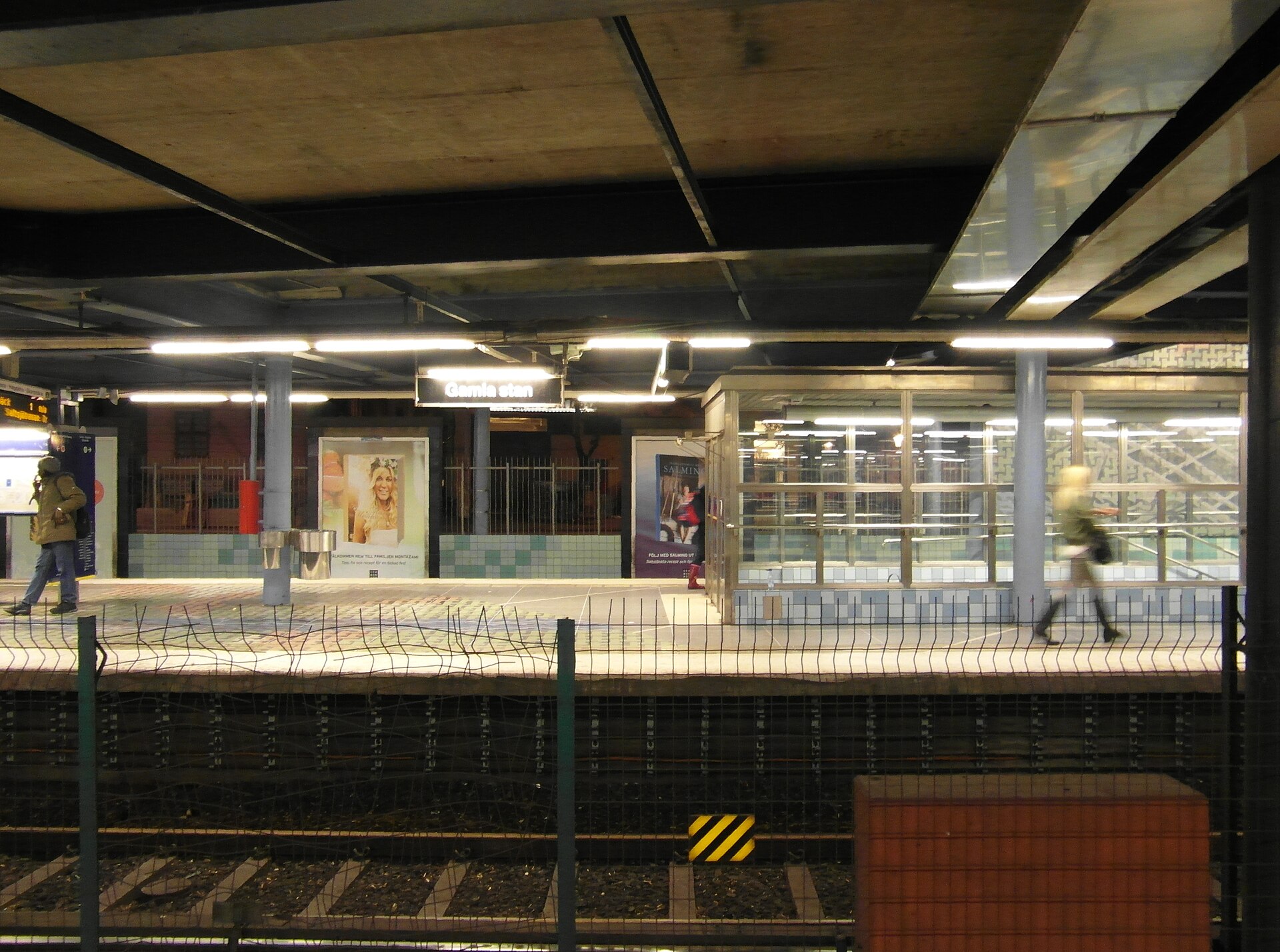
Gamla Stan is Stockholm’s medieval core, built on the original settlement island, and its street pattern — some of Europe’s narrowest surviving lanes — is itself the primary thing to see. Within it sit the Royal Palace, the working residence of the Swedish monarch with state apartments open to visitors under the Royal Court’s own arrangements, and Storkyrkan, Stockholm’s cathedral and the site of Swedish royal coronations. Stortorget, the old town’s main square, is where the Stockholm Bloodbath of 1520 took place, a fact documented in Swedish historical records rather than a modern embellishment.
A short walk north crosses into Norrmalm, where Sergels Torg and the pedestrian street Drottninggatan mark the city’s main postwar-rebuilt commercial centre — a genuinely different Stockholm from the medieval one a few minutes away. Fitting in one interior — the palace, the cathedral, or a single museum — alongside this walk is realistic. Fitting in two starts to compress each visit into something rushed.
Is Djurgården a better use of a single day?
For a visitor whose priority is museums rather than streetscape, Djurgården can be a more efficient single-day choice, because several major collections sit on one island reachable by one ferry or tram line — but it still needs a choice of one or two, not five.
Why so many of Stockholm’s national museums ended up on Djurgården is a matter of nineteenth and twentieth-century planning rather than coincidence, and the island now holds the Vasa Museum, built around the warship Vasa, which sank on its maiden voyage in 1628 and was raised largely intact in 1961; Skansen, which describes itself, per its own materials, as the world’s oldest open-air museum; and the Nordiska Museet, the national museum of Swedish cultural history. Each of these is large enough to fill half a day on its own.
Getting there is its own small system, covered in what the Djurgården ferry is and how it fits into SL’s network — useful to know before assuming a taxi or a long walk is the only option.
.jpg)
What does the Stockholm Pass change about the calculation?
A pass covering multiple attractions does not create more hours in the day; it removes the cost calculation from the decision, which sometimes changes which sights a visitor chooses but does not change how many can physically be entered and properly seen before closing time.
What the Stockholm Pass actually covers is worth checking against the operator’s own current list before assuming it applies to a specific museum, since inclusions change. The more durable point is planning-related: a pass makes it economically sensible to walk into a smaller museum for twenty minutes on the way past, which a per-ticket visitor is less likely to do. It does not make Gamla Stan and Djurgården fit into the same afternoon.
What should a resident do with visitors who only have one day?
Residents showing Stockholm to someone with a single day tend to face a different problem than visitors: knowing the city well enough to be tempted to show too much of it. The same rule applies — one district, done at a pace that allows for sitting down.
A fika stop is not padding; what fika actually is and whether it’s a fixed ritual matters because a day with no seated break in it is a worse day, not a more efficient one. Getting between districts efficiently means understanding T-Centralen, the metro’s central hub, and how the metro’s zone and fare system works if the day involves more than the inner city. For someone new to the city’s layout more broadly, how Stockholm actually functions as a place to live gives context that a one-day itinerary alone cannot.
What has to be left out?
Almost everything, by definition. A single day realistically excludes the archipelago, Skogskyrkogården, Drottningholm, and most of the districts outside the inner city and Djurgården — all of which are day trips or half-days in their own right, not add-ons to an already full itinerary.
- Södermalm’s viewpoints and Fotografiska, which sit south of Gamla Stan and deserve unhurried time rather than a ten-minute detour.
- Östermalm’s Nationalmuseum and Historiska Museet, both large national collections that reward a dedicated visit.
- Any of the archipelago boat routes, which run on their own seasonal timetable and are a separate day out rather than an afternoon extension.
A broader sense of how these pieces relate is set out in the guide to Stockholm’s museums, landmarks and neighbourhoods, and the practical mechanics of stringing more than one district together are covered in the practical hub on getting around, planning and day trips.
Does the season change what’s possible in a day?
Yes — daylight and opening hours shift what a single day can hold more than most visitors expect, since Stockholm’s daylight ranges from roughly six hours in December to close to nineteen in June, and many attractions run reduced winter hours.
When to visit Stockholm and what the light actually does across a Stockholm year both bear directly on how much of a walking-heavy itinerary is realistic outside the summer months. A one-day plan built in July, with long daylight and full opening hours, can comfortably include more outdoor walking than the same plan in January, when several attractions close earlier and some ferry routes run a reduced winter schedule.
The honest constraint behind all of this is not stamina but geography: Stockholm is built across fourteen islands, and a single day only ever properly covers one or two of them. Choosing which one is the actual planning decision — everything else follows from that.
Access Stockholm is an independent guide written from published, checkable sources. We have not visited the places described here and we do not publish personal recommendations or invented ‘local favourites’ — where something is singled out as notable, we say who says so. Opening times, fares, closures and prices change at short notice, so treat everything here as a starting point and confirm with the museum, operator or venue directly before building a day around it. We give no advice on visas, insurance, health or safety; use your own government’s official guidance for those.
Featured image: Photo by Ingolf from Berlin , Deutschland, source, CC BY-SA 2.0
.jpg)