Systembolaget is Sweden’s state-owned retail monopoly on alcoholic drinks above a certain strength. It exists because Swedish alcohol policy treats drink as a public health issue rather than an ordinary consumer good, and a single state retailer with no profit incentive to sell more is the tool the country chose to manage that. Bars and restaurants pour freely; shops do not.
What exactly does Systembolaget sell, and what doesn’t it sell?
Systembolaget holds the exclusive right to sell beer, wine, cider and spirits above 3.5% alcohol by volume for off-premise consumption in Sweden. Anything weaker than that — so-called folköl, or “people’s beer”, along with low-alcohol ciders and similar drinks — can be sold in ordinary grocery stores, supermarkets and convenience shops without restriction.
This is the practical dividing line a visitor or new resident needs to understand. A supermarket shelf of beer in Sweden is almost always the lighter 3.5%-or-under category. Anything stronger, from a standard 5% lager to wine and spirits, is only available through Systembolaget or through licensed bars and restaurants serving it for consumption on-site.
Why does a state alcohol monopoly exist in Sweden at all?
The Swedish government’s own position, stated by the Ministry of Health and Social Affairs and reflected in Systembolaget’s own corporate material, is that the monopoly exists to limit alcohol-related harm by removing profit motive from alcohol retail. A private retailer benefits from higher sales; Systembolaget, as a wholly state-owned company with a public health mandate, does not have that incentive built into how it is run.
The policy sits inside a broader Nordic tradition. Norway, Finland and Iceland all operate comparable state alcohol retail monopolies, for the same stated reason: alcohol sold as an ordinary commodity, in wide-reaching outlets with commercial incentives to discount and promote, tends to correlate with higher consumption and higher associated harm. Sweden’s version dates in its modern form to 1955, when a rationing-based system (the notorious “motbok” ration book, in place from 1919) was abolished and replaced by the current retail monopoly structure.
Sweden’s continued right to run this monopoly was a live question when the country joined the European Union in 1995, since state monopolies generally sit awkwardly with EU single-market rules. The European Court of Justice ruled in 1997 (the Franzén case) that Systembolaget’s retail monopoly could stand, provided it operated without discriminating between domestic and imported products. That ruling is why the system still exists today, functioning as ordinary retail law rather than an exception the EU merely tolerates.
Where do you actually buy alcohol as a visitor or resident?
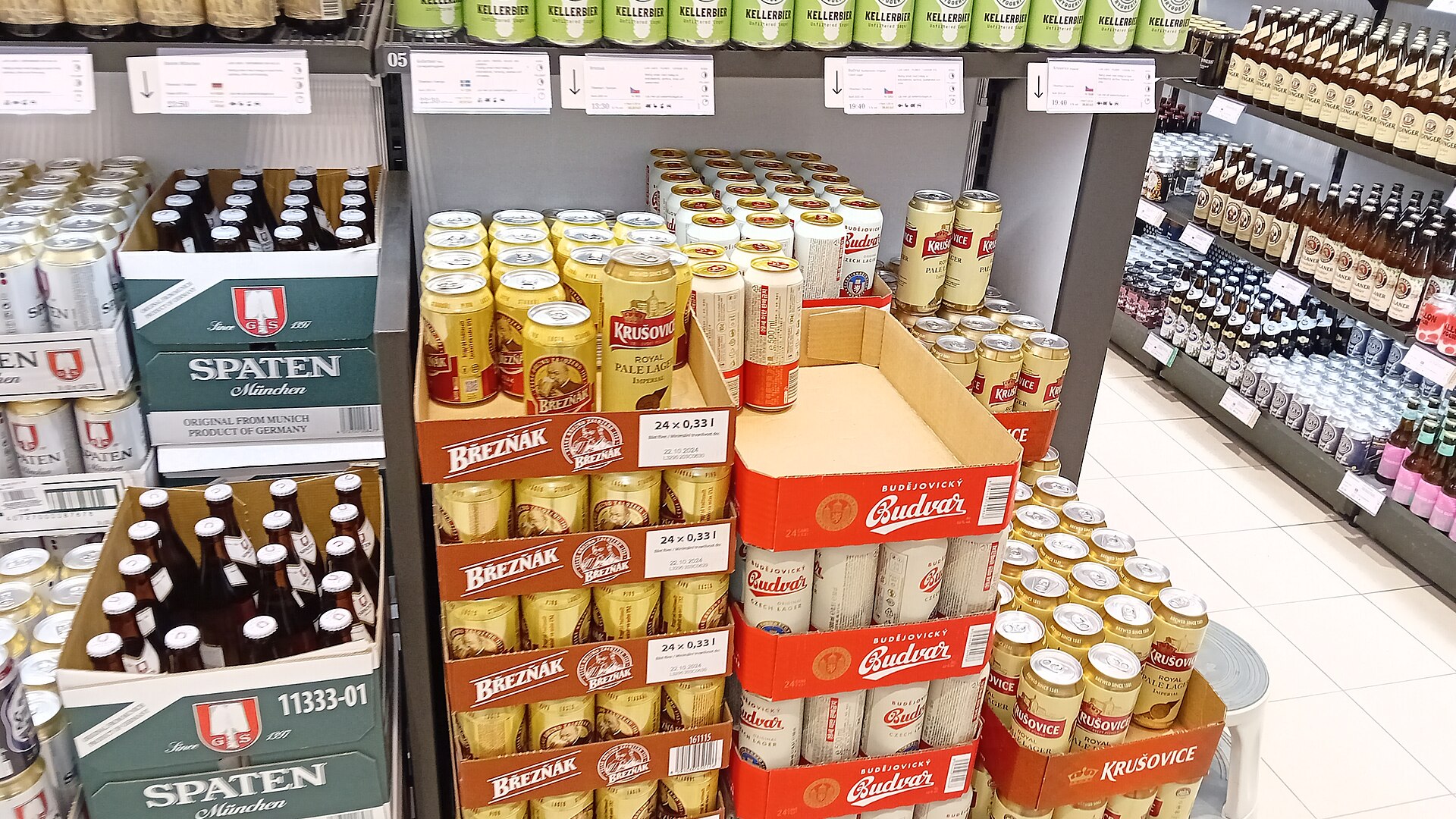
Systembolaget operates as a nationwide chain of physical stores, found in most town centres and larger neighbourhoods across Stockholm and the rest of Sweden. Stores are self-service in layout but staffed, and staff are trained to advise on pairing, style and origin much as an independent wine shop would.
- Systembolaget branches: the only retail outlets licensed to sell wine, spirits and beer above 3.5% for off-premise drinking.
- Grocery stores and convenience shops: licensed only for beer and cider at or under 3.5%.
- Bars, restaurants and licensed venues: can serve any strength on-site under their own liquor licence, independent of Systembolaget.
Systembolaget also runs online ordering with home delivery or collection, a service the company added well after its physical retail model was established. Details of coverage, delivery windows and current online ordering terms are best confirmed on the company’s own site, since these are exactly the kind of operational specifics that change.

What are the rules on age, hours and payment?
Sweden sets the legal minimum age for buying from Systembolaget at 20, higher than the age of 18 that applies to drinking in a licensed bar or restaurant. Staff can and do ask for identification, and Systembolaget’s own guidance instructs staff to check ID whenever age is not obviously well above the threshold.
Opening hours are set by Systembolaget itself and vary by branch and by day, with most stores closed on Sundays and public holidays. Because these hours shift and because the company periodically adjusts them, the reliable approach is to check the specific branch on Systembolaget’s own site rather than assume a fixed pattern. The site’s general guide to typical opening hours in Stockholm covers how this fits alongside other retail patterns in the city, and the page on which public holidays close things in Sweden is relevant since Systembolaget closures around holidays are notably strict, with many branches also closing early the day before a major holiday.
Payment at Systembolaget works the same as most Swedish retail: card and mobile payment are standard and cash acceptance varies. The site’s guide to how paying works in Stockholm, and whether cash is still used covers this in more general terms.
Does the monopoly affect what restaurants and bars can serve?
No. The monopoly applies only to retail sale for consumption elsewhere. A restaurant, bar or hotel with its own serving licence (serveringstillstånd) can sell and serve any alcoholic drink on its premises regardless of strength, and pricing and selection there follow ordinary hospitality-industry rules rather than Systembolaget’s retail model.
This is why the practical experience of drinking in Stockholm can feel entirely unremarkable to a visitor — wine lists, cocktail menus and draft beer function as they would in most European cities — while buying a bottle to take home follows a distinct, state-run process. The two systems run in parallel and rarely intersect for a typical visitor, since most short stays involve eating and drinking out rather than self-catering.
How does this compare with buying alcohol at the airport or on arrival?
Duty-free alcohol purchased outside Sweden, including at Stockholm Arlanda Airport on arrival from outside the EU, is not subject to Systembolaget’s retail monopoly, since it is bought before entering the domestic retail system and falls under separate customs allowances. Anyone connecting onward from Arlanda into the city should note this is a different channel entirely from Systembolaget and governed by its own duty-free and customs rules, which are set by Swedish customs authorities rather than by Systembolaget. The site’s guide on getting from Arlanda into Stockholm city covers the arrival journey itself.
Is Systembolaget only relevant to residents, or does it matter for visitors too?
It matters for both, in different ways. A resident builds it into a weekly shopping routine, planning around closed Sundays and shorter holiday hours. A visitor typically encounters it only if self-catering, staying in an apartment rather than a hotel, or attending a private gathering where guests are expected to bring their own drink.
For a short visit centred on restaurants, museums and public spaces, Systembolaget is largely peripheral — the alcohol served in bars and restaurants is unaffected by it. For anyone staying longer, renting an apartment, or living in the city, understanding the branch network, the age threshold and the Sunday closure pattern becomes a normal piece of local knowledge, on par with knowing how metro zones and fares work or how the Stockholm travel card functions across transport modes.
Where does Systembolaget fit into the wider picture of daily life in Stockholm?
Systembolaget is one of several state-run or state-regulated systems that shape ordinary life in Sweden more than in many comparable cities — alongside strict rules on public holidays, a distinctive approach to fika and coffee-break culture, and a retail rhythm generally more structured around fixed hours than continuous, always-open commerce. None of this is dramatic in daily practice, but it is a genuine structural difference from countries where alcohol retail is fully deregulated.
Readers looking to understand how the city functions more broadly, beyond any single rule or institution, can start with the Living in Stockholm hub, which gathers the practicalities of daily routine, or the Stockholm Practical hub, which covers planning, transport and food more generally. The Living in Stockholm archive and Planning & Practicalities archive both carry further detail on how the city’s rules and systems interlock for residents and visitors alike.
Access Stockholm is an independent guide written from published, checkable sources. We have not visited the places described here and we do not publish personal recommendations or invented ‘local favourites’ — where something is singled out as notable, we say who says so. Opening times, fares, closures and prices change at short notice, so treat everything here as a starting point and confirm with the museum, operator or venue directly before building a day around it. We give no advice on visas, insurance, health or safety; use your own government’s official guidance for those.