What is Hagaparken?
Hagaparken is an 18th-century royal park on the northern edge of central Stockholm, laid out as an English-style landscape garden for King Gustav III from the 1780s onward. It contains a small number of Gustavian-era buildings, open lawns running down to the bay of Brunnsviken, and a working royal residence. Entry to the park itself is free and unrestricted.
Where is Hagaparken, and how do you reach it?
Hagaparken sits between the northern edge of Vasastan and the municipality of Solna, on the eastern shore of Brunnsviken, a long, narrow inlet of Lake Mälaren’s water system. It is reachable by bus from central Stockholm, and it borders the university and hospital district of Solna directly to the north. There is no metro station inside the park itself, so most visitors arrive by bus, bicycle, or on foot along the paths that circle Brunnsviken. Anyone planning the route should treat current bus numbers as something to confirm with SL, Stockholm’s regional transport operator, on the day rather than relying on an old timetable — a general grounding in how the city’s buses and paths connect is covered in the Getting Around section.
Why was Hagaparken laid out the way it is?
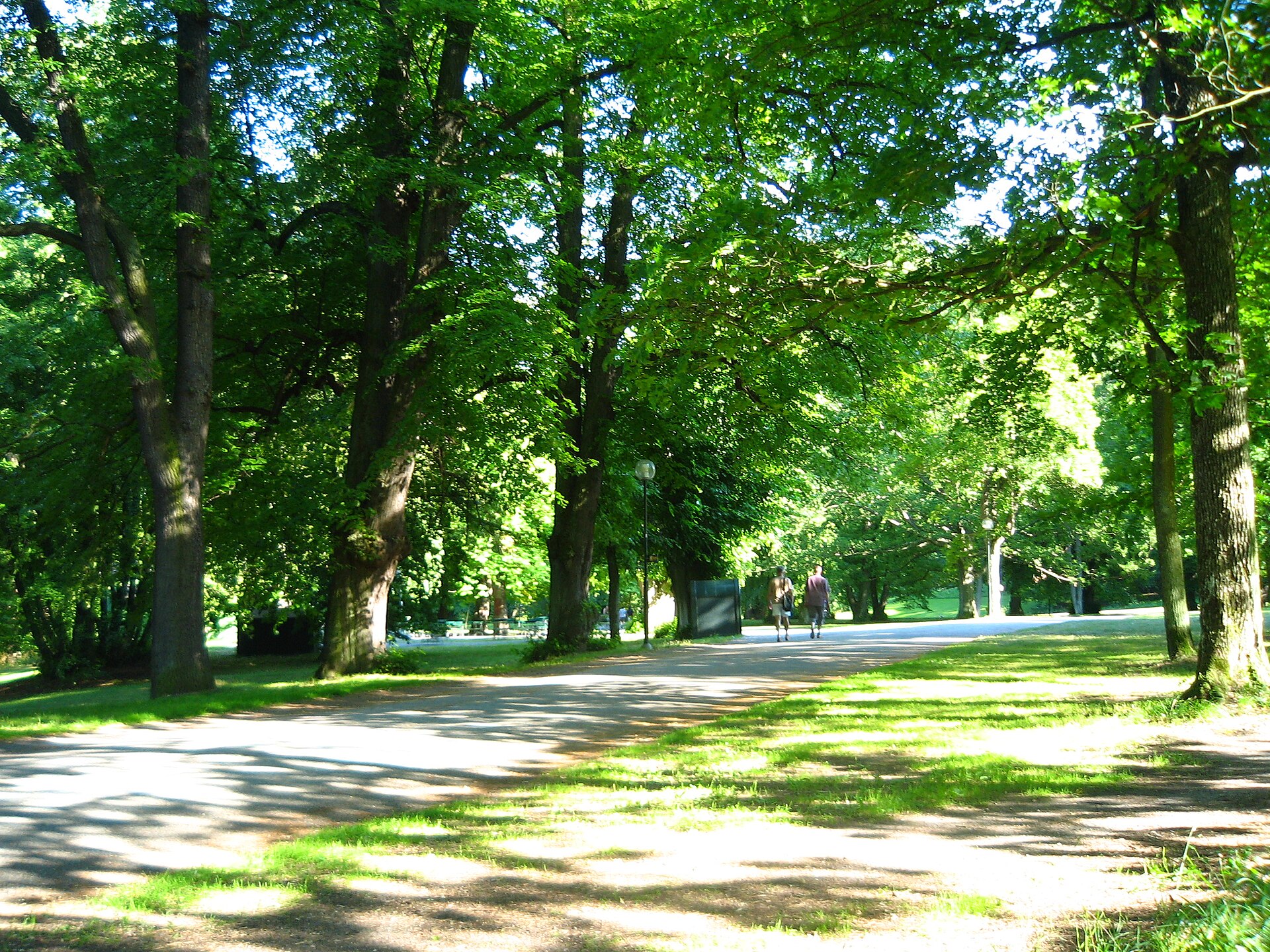
Gustav III commissioned the park as a deliberate rejection of the formal, symmetrical gardens associated with French and earlier Swedish court taste. The landscape architect Fredrik Magnus Piper designed it in the English picturesque style then fashionable across Europe: winding paths, irregular tree groupings, and views composed to look unplanned. The king intended Hagaparken as a retreat distinct from the formal palace gardens at Drottningholm and Ulriksdal, and several buildings in the park were built to look like something other than what they were — a pattern that shows up repeatedly in its structures.
What is Gustav III’s Pavilion?
Gustav III’s Pavilion (Gustav III:s paviljong) is the park’s principal building, a Neoclassical villa completed in the 1780s to designs by the architect Olof Tempelman, with interiors decorated by Louis Masreliez. It is generally regarded, in the Royal Court’s own material, as one of the best-preserved examples of Gustavian interior decoration in Sweden — a style that fused Swedish restraint with motifs borrowed from ancient Rome and Pompeii, which Gustav III had visited shortly before construction began. The pavilion is managed by the Royal Court and opens to the public on a seasonal schedule; opening months and ticketing should be checked directly on the Royal Palaces’ own site rather than assumed from a previous year.
What is Haga Palace, and can you visit it?
Haga Palace (Haga slott) was built between 1802 and 1804 as a residence within the park, originally intended for Gustav IV Adolf’s family. Since 2009 it has served as the official residence of Crown Princess Victoria, Prince Daniel and their children, following a decision by the Riksdag to renovate and assign it as a family home. As a working royal residence, Haga Palace is not open to the public, and the grounds immediately around it are correspondingly restricted, even though the wider park continues right up to its perimeter.
What are the Copper Tents?
The Copper Tents (Koppartälten) were built in the 1790s, also to Piper’s design, as barracks and stabling for the royal guard — disguised, in keeping with the park’s taste for architectural jokes, as a cluster of military campaign tents rendered in copper-clad timber rather than canvas. The building now houses a restaurant and a small permanent exhibition on the park’s history, and functions as one of the more practical stopping points for anyone walking the grounds at length.
What else is inside Hagaparken?
Beyond the three main buildings, the park holds several smaller structures and open areas that reward slower walking:
- The unfinished stone foundations of “Stora Haga slott,” a grand palace Gustav III commissioned but never lived to see built, left as ruins after his assassination in 1792.
- The Echo Temple (Ekotemplet), a small Neoclassical pavilion used for outdoor dining in the park’s original design.
- The Turkish Kiosk (Turkiska kiosken), a lookout structure reflecting the period’s fashion for Ottoman-inspired garden follies.
- Fjärilshuset – Haga Ocean, a privately run butterfly house and small aquarium sited within the park, distinct from the royal buildings and run as its own visitor attraction with its own hours and admission.
- Wide lawns and shoreline paths along Brunnsviken, used year-round for walking, running and cycling rather than for any single sight.
How does Hagaparken fit into the Royal National City Park?
Hagaparken is one section of the Royal National City Park (Kungliga nationalstadsparken), a protected green corridor established by Swedish law in 1994 that runs from Ulriksdal in the north, through Haga and around Brunnsviken, down through Djurgården and out toward the inner archipelago. The designation exists specifically to prevent this chain of parkland from being built over as the city has grown around it, and it is often cited, including by Stockholm’s own planning authorities, as an unusually deliberate piece of urban conservation for a capital city. Djurgården, the better-known section of this same protected corridor, functions very differently — it is covered separately as a park rather than a museum district, which is a useful comparison for understanding what makes Haga distinct.
Is Hagaparken free to visit, and when is it open?
The park itself has no gates, no admission charge and no closing time — it is public land, open at all hours, in the same way as most Swedish parkland is covered by allemansrätten, the general right of public access, even though this is a managed royal park rather than open countryside. What does have hours and fees are the individual attractions inside it: Gustav III’s Pavilion, the Copper Tents’ exhibition space, and Fjärilshuset all run on their own seasonal schedules, typically reduced or closed over winter. Anyone planning a visit around a specific building should confirm current hours on that operator’s own site rather than the park’s general reputation for being open.
What is there for residents and families?
For people living in Stockholm or Solna, Hagaparken functions mainly as everyday green space: a running and cycling loop around Brunnsviken, a picnic lawn in summer, and a quiet cross-country skiing route in winter when conditions allow. It draws far fewer overseas visitors than Djurgården’s museum cluster, and the buildings inside it are secondary to the park’s use as open land. Families with children are more likely to build a visit around Fjärilshuset’s butterfly house than around the Gustavian interiors, a pattern reflected in wider planning around a day in Stockholm with children. Broader context on how the city’s parkland is used across the year sits in the Parks & Archipelago section, and general orientation for first-time visitors to Stockholm is covered in the Stockholm Guide hub.
How does Hagaparken compare to Djurgården?
Both are royal parkland protected under the same national city park designation, but they serve different purposes. Djurgården concentrates several major museums — the Vasa Museum, Skansen and others — within walking distance of each other, and functions as much as a museum district as a park. Hagaparken has no museums of comparable scale; its buildings are a royal pavilion, a former barracks, and a private residence, set inside an open, pastoral landscape designed to look like the countryside rather than a formal royal garden. Visitors choosing between the two on a short trip are usually choosing between an afternoon of museums and an afternoon of walking — a distinction worth making before planning a day around either one, and one that fits into wider itinerary planning covered in the Featured image: Photo by Steven Lek, source, CC BY-SA 4.0
