Gripsholm Castle (Gripsholms slott) is a state-owned royal fortress on an island in Lake Mälaren, in the small town of Mariefred, roughly 70 kilometres southwest of Stockholm. Built in its current form by King Gustav Vasa in the 1530s and 1540s, it now houses Sweden’s national state portrait collection and is managed as a public monument by the Swedish state.
Where exactly is Gripsholm Castle?
The castle sits on a small island at the edge of Mariefred, a town on the southern shore of Lake Mälaren in Södermanland county. It is not on the sea and not part of the Stockholm archipelago — Mälaren is a large freshwater lake that stretches inland from Stockholm, and Gripsholm occupies a defensive position where the lake narrows, controlling the water route toward the capital.
This is the same lake system that links Stockholm to towns such as Sigtuna, and the castle’s siting follows the same logic as other medieval strongpoints built to watch over shipping lanes into the city.
Who built it, and why does it look like a fortress?
The site takes its name from Bo Jonsson Grip, a powerful 14th-century magnate who built an earlier stronghold here. That structure was demolished, and the castle as it survives today dates to Gustav Vasa’s reign, when the crown rebuilt Gripsholm from 1537 as both a royal residence and a defensive work guarding the approach to Stockholm.
Its four round corner towers, thick brick walls and moat-like water surround are characteristic of Vasa-era Swedish castle building — a period when the newly independent monarchy fortified key points around Mälaren, much as it fortified the sea approaches at Vaxholm further east. Later monarchs, including Gustav III in the 18th century, added interiors and a private theatre wing, though the exterior retains its 16th-century military character.
What does the castle hold today?
Gripsholm’s principal contents are Sweden’s state portrait collection (Statens porträttsamling), described by the Nationalmuseum, which curates it, as one of the oldest and largest collections of historical portraiture in continuous existence anywhere. It comprises several thousand portraits of Swedish monarchs, statesmen and cultural figures, spanning roughly five centuries, hung throughout the castle’s state rooms and galleries rather than in a conventional museum layout.
The rooms themselves are part of the exhibit: panelled chambers, painted ceilings and furnished apartments from different periods of the castle’s use, alongside the defensive towers and passageways from the original Vasa-era construction. Statens fastighetsverk, the Swedish state agency that owns and maintains the country’s royal palaces and historic properties, is responsible for the building’s upkeep and public access.
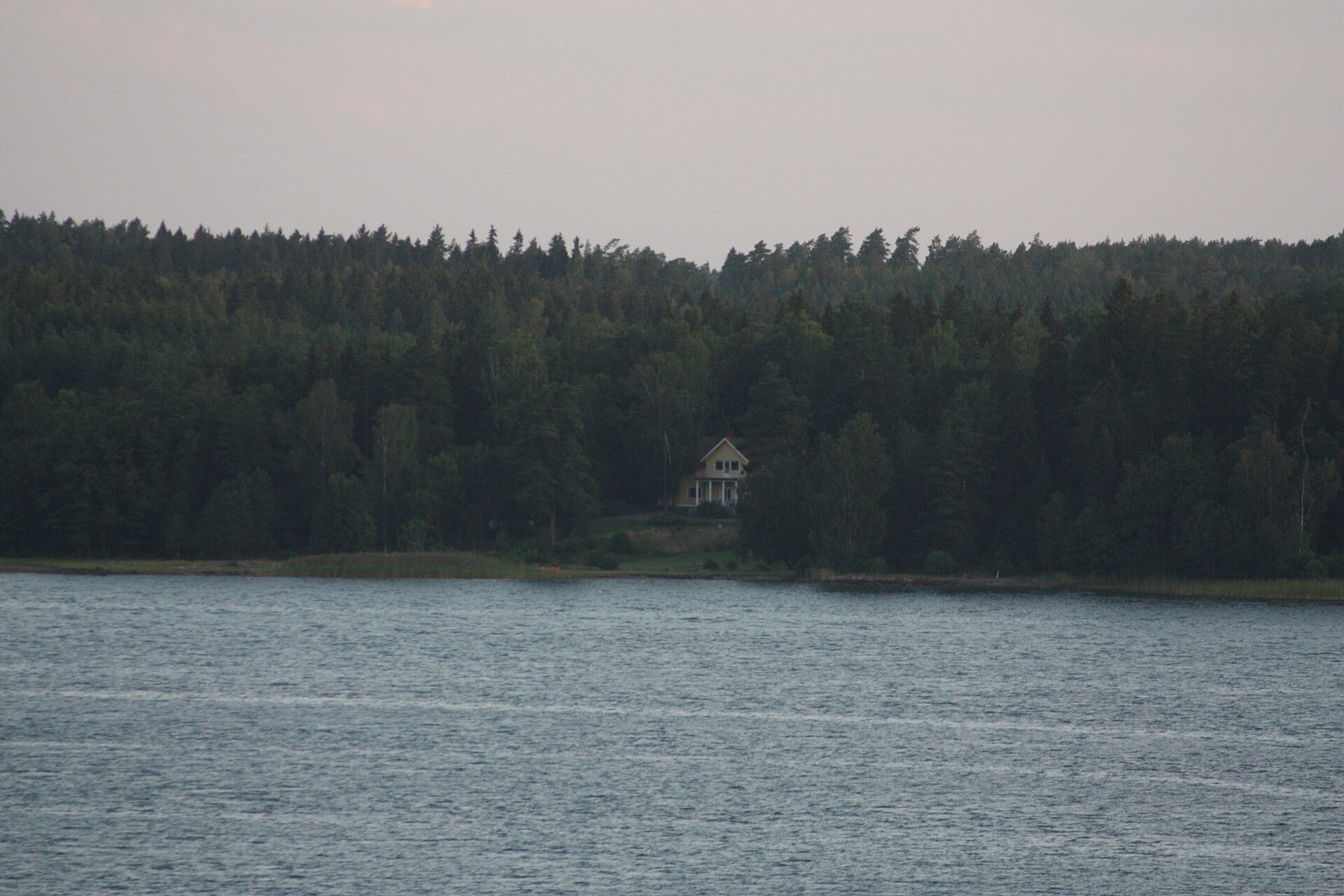

What is Mariefred, the town beside it?
Mariefred is a small lakeside town that grew up around a 15th-century Carthusian monastery (from which the town takes its name) and later around the castle itself. It has a compact historic centre with a parish church and a working harbour on Mälaren, and functions today largely as a day-trip destination built around the castle and the surrounding waterfront.
The town is also the terminus of Östra Södermanlands Järnväg, a preserved narrow-gauge heritage railway that runs steam and vintage diesel services on a short line connecting Mariefred to the mainline station at Läggesta. This heritage railway, rather than any regular commuter service, is one of the more distinctive ways of arriving at the castle.
How do you get to Gripsholm Castle from Stockholm?
There is no direct metro or commuter-rail line to the castle itself. Two practical routes are commonly used:
- By train to Läggesta station on the mainline south of Stockholm, then onward to Mariefred by the heritage narrow-gauge railway or by connecting bus — a combination worth checking against current timetables, as detailed at Sweden’s national rail information sites before travelling. Broader guidance on reaching towns beyond Stockholm by train is set out separately for the rail network from Stockholm.
- By boat, in summer, when historic steamships operate on Lake Mälaren between central Stockholm and Mariefred — a slower, seasonal option rather than a year-round transport link.
Because both routes depend heavily on season and timetable, the operators’ own current schedules should be checked directly rather than relying on a fixed journey time.
Is Gripsholm connected to Swedish literature?
The castle’s name appears outside Sweden chiefly through the German writer Kurt Tucholsky’s 1931 novella “Schloss Gripsholm” (Gripsholm Castle), a satirical account of a summer holiday partly set near the castle. The book is a work of fiction rather than a historical record of the site, but it has kept the name in wider European circulation and is sometimes cited in accounts of the town’s cultural footprint.
How does Gripsholm compare with Drottningholm?
Both are royal properties on Mälaren managed under the Swedish crown’s broader network of palaces, but they serve different roles. Drottningholm, close to central Stockholm, is a UNESCO World Heritage site and remains a part-time royal residence with a working 18th-century court theatre. Gripsholm, further out near Mariefred, is a state-run historic monument and portrait gallery rather than an active royal residence, and its architecture reflects an earlier, more explicitly defensive period of Swedish castle building.
Is Gripsholm Castle open to visitors, and when?
The castle operates on a seasonal schedule typical of Swedish state properties, generally with fuller opening in the warmer months and reduced hours or closure on some days outside the main season. Because opening times, ticket arrangements and any closures for events change from year to year, current details should be confirmed directly on Statens fastighetsverk’s own site before planning a visit, rather than relied on from any third-party listing.
For travellers weighing whether to include Gripsholm alongside other destinations outside the city, it sits within the broader pattern covered in guidance on day trips from Stockholm, and fits naturally alongside comparable excursions such as Sigtuna, another Mälaren-region town with a much older civic history.
Why does Gripsholm matter to Stockholm’s story?
Gripsholm is not a Stockholm building, but it belongs to the same defensive and dynastic history that shaped the capital: a Vasa-era stronghold built to protect the water approaches to a young royal capital, later converted into a repository for the state’s own image of itself in paint. Its portrait collection, in particular, functions as a visual record of Swedish rulers and public figures that complements the holdings of Stockholm’s own national institutions.
Readers assembling a wider view of the region’s museums and landmarks can find related institutions listed under museums and galleries and landmarks and sights, while general trip planning around Stockholm and its surrounding towns is covered in the site’s practical planning hub.
Access Stockholm is an independent guide written from published, checkable sources. We have not visited the places described here and we do not publish personal recommendations or invented ‘local favourites’ — where something is singled out as notable, we say who says so. Opening times, fares, closures and prices change at short notice, so treat everything here as a starting point and confirm with the museum, operator or venue directly before building a day around it. We give no advice on visas, insurance, health or safety; use your own government’s official guidance for those.
Featured image: Photo by AleWi, source, CC BY-SA 4.0
