Artipelag is a large, privately funded exhibition and event space on the island of Ingarö, part of Värmdö municipality east of central Stockholm. It shows changing exhibitions of contemporary art, design and craft rather than holding a fixed permanent collection, and it sits on the shore of Baggensfjärden, a bay of the inner archipelago.
Where is Artipelag, and how far is it from the city?
Artipelag stands on Ingarö, an island reached by road from Stockholm across the Skurubron bridge and through Gustavsberg, roughly 25 kilometres from the city centre. It is close enough for a half-day or full-day trip but is not on the metro network, which places it in a different practical category from museums on Djurgården or Skeppsholmen.
Getting there generally means a car, a bus service run by the regional transport operator SL, or — in the warmer months — a boat connection across Baggensfjärden. Because seasonal boat timetables and bus routes change, the operator’s own site and SL’s journey planner are the sources to check before travelling. For the wider picture of how the archipelago’s transport actually fits together, see how to actually visit the Stockholm archipelago and the Getting Around archive.
Who built Artipelag, and why does it exist?
Artipelag was founded by Björn Jakobson, the entrepreneur behind the baby-carrier company BabyBjörn, and opened in 2012. It is run as a private foundation rather than a state or municipal museum, which is why it does not appear alongside institutions like the Nationalmuseum or Moderna Museet in the national museum system.
That private funding model matters for how the place operates day to day: exhibitions are commissioned and curated independently, ticketing and opening patterns are set by the foundation itself, and there is no obligation to hold a standing collection open to the public year-round.
What does the building look like, and who designed it?
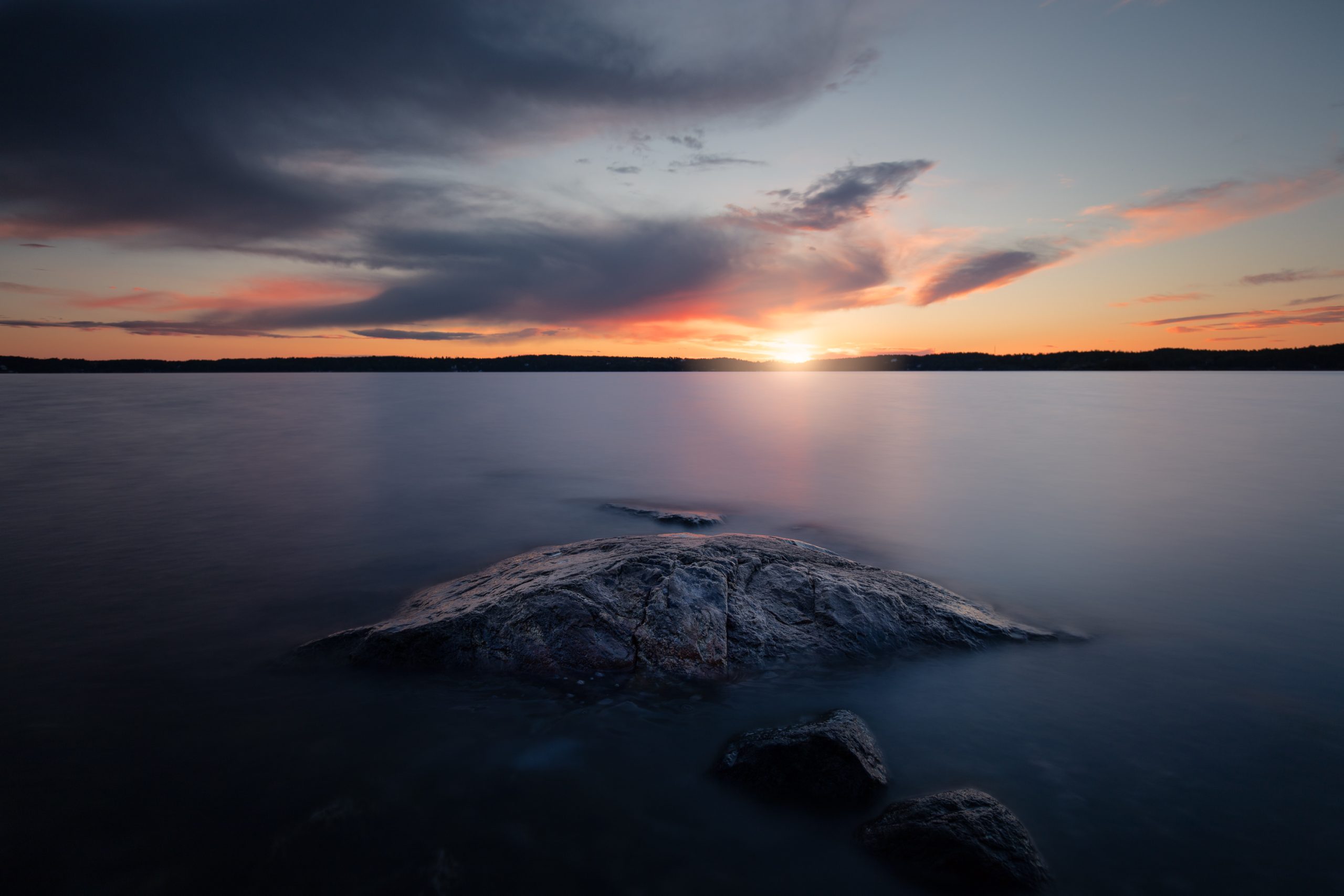
The building was designed by the Swedish architecture practice Nyréns Arkitektkontor, led by architect Johan Nyrén. It is built low into the rock face above the water, with long glazed sections that face out across Baggensfjärden, and a design brief that treated the surrounding pine forest and shoreline as part of the visitor route rather than as landscaping around a separate object.
The result is a single large structure combining gallery halls, an auditorium, event spaces, a shop and a restaurant, connected by walkways that step down toward the water. Architecturally it is closer in spirit to Nordic gallery buildings that foreground site and light than to a conventional museum block.
What kind of art and design does Artipelag show?
Artipelag’s own programme has covered contemporary painting, sculpture, photography, design and craft, with exhibitions typically running for several months before changing. Because it holds no permanent collection in the way a national museum does, what is on view at any given time depends entirely on the current programme, and there is no guaranteed “core” work a visitor can expect to see on every trip.
This distinguishes it clearly from institutions built around a fixed holding — the Vasa Museum’s ship, or the Nationalmuseum’s collection of Nordic and European painting. Artipelag functions more like a large-scale kunsthalle: a venue for exhibitions rather than a repository. Anyone planning a visit around a specific artist or theme should confirm the current exhibition on Artipelag’s own site rather than assume continuity from a past visit or a guidebook description.
Is there anything else on site besides the galleries?
Artipelag includes a restaurant and a café, a shop selling design objects and books, and outdoor space along the shoreline and through the surrounding forest that visitors can walk without paying for exhibition entry. The venue has also hosted concerts, talks and private events in its auditorium, functions that sit alongside its exhibition programme rather than replacing it.
The wooded shoreline setting means a visit can combine gallery time with a walk along the water, which is part of why the site is sometimes discussed in the same breath as the archipelago’s parks and nature areas rather than purely as a museum stop. For context on how the wider archipelago is structured, see what the Stockholm archipelago actually is and how big it is.
Does Artipelag charge for entry, and does it stay open all year?
As a privately run foundation, Artipelag sets its own admission prices, discounts and opening calendar, and these are not fixed by any municipal or national body. Opening days and hours have historically varied by season, with the venue sometimes reducing hours or closing certain days outside peak months.
Because ticket prices and hours are exactly the kind of detail that changes without notice, this is a case where the operator’s own website is the only reliable source — not a guidebook, and not a previous visitor’s account. Anyone planning a trip should confirm current admission and opening times directly with Artipelag before travelling out to Ingarö.
How does Artipelag compare to Stockholm’s other art museums?
Central Stockholm concentrates its major art institutions on Skeppsholmen and around Blasieholmen and Djurgården — Moderna Museet, the Nationalmuseum, and a cluster of smaller galleries within walking distance of the water. Artipelag sits apart from that cluster geographically and administratively: it is neither state-funded nor within easy walking range of the metro, and its programme changes on its own schedule rather than drawing on a standing national collection.
That makes it a different kind of stop rather than a substitute for the central museums. Visitors working through the city’s core art holdings in a day or two will generally find those covered in the Museums & Galleries archive, while Artipelag suits a traveller with a car, more time, or a specific interest in a current exhibition, combined with an afternoon on the water.
Who tends to visit, and how does it fit into a longer stay?
Given its distance from central Stockholm and its reliance on a car, seasonal boat or bus connection, Artipelag reads less as a first-day stop and more as something folded into a longer stay, a day trip built around the archipelago, or a specific interest in a current exhibition. Residents with a car are in a straightforward position to treat it as an occasional outing; visitors without one need to plan the journey deliberately rather than assume it works like a Djurgården museum reachable on foot or tram.
For travellers building a broader itinerary, the wider planning hubs are the better starting point: the Stockholm guide hub for museums, landmarks and neighbourhoods, and the practical planning hub for transport and day-trip logistics, including the Day Trips archive for how sites outside the city core are typically reached and combined.
What should a reader check before planning a trip out?
Three things change often enough that they should never be taken from a secondhand source: the current exhibition, admission pricing, and the seasonal transport schedule — particularly the boat service across Baggensfjärden, which typically runs only in warmer months. Artipelag’s own site is the primary source for all three, and SL’s journey planner is the source for bus and public transport timing to Ingarö.
Beyond that, the durable facts are stable: it is a privately founded exhibition venue on Ingarö, built by Nyréns Arkitektkontor into the rock above the water, founded by Björn Jakobson, and run as a programme of changing exhibitions rather than a fixed collection.
Access Stockholm is an independent guide written from published, checkable sources. We have not visited the places described here and we do not publish personal recommendations or invented ‘local favourites’ — where something is singled out as notable, we say who says so. Opening times, fares, closures and prices change at short notice, so treat everything here as a starting point and confirm with the museum, operator or venue directly before building a day around it. We give no advice on visas, insurance, health or safety; use your own government’s official guidance for those.