July in Stockholm is the warmest month of the year on average, with roughly 18-20 hours of daylight around the solstice tapering off through the month, and a city centre that empties out as residents leave for the archipelago and the countryside. Museums generally stay open, but many restaurants and shops in inner-city neighbourhoods close for staff holidays, and the pace of the whole place changes.
How warm does it actually get?
July is Stockholm’s warmest month, with average daytime temperatures typically in the low-to-mid 20s Celsius, according to long-term climate normals published by SMHI, the Swedish Meteorological and Hydrological Institute. Days above 25°C occur most years but not every year, and stretches of cloud and rain are common — Stockholm’s summer climate is maritime and changeable rather than reliably hot. Evenings cool noticeably, and a light jacket is standard even in mid-July.
For a fuller account of how daylight and temperature shift across the year, see what the light actually does through a Stockholm year, which covers the swing from near-endless June days to the short daylight of December.
Why does the city feel emptier in July?
Sweden’s collective bargaining agreements traditionally guarantee employees at least four consecutive weeks of paid leave, and July is the month most commonly used for it — a pattern sometimes referred to informally as “industrisemester” (industry holiday), historically tied to factory shutdowns. The practical effect in Stockholm is that many independent shops, some restaurants, and parts of the public sector reduce hours or close entirely for two to four weeks, concentrated from early to late July.
This is separate from Midsummer, the festival that falls in June and effectively shuts the city down for a long weekend; July is the quieter month that follows it. The pattern and reasoning behind that earlier closure are explained in what Midsummer is, and what happens to Stockholm.
For residents, this means service gaps are worth planning around rather than being caught by — a dentist, a favourite bakery or a local repair shop may simply not be open. For visitors, it means an inner city with lighter foot traffic and shorter queues at major sights, but also a slightly reduced range of smaller, independently run venues.
Do museums close for the summer?
No — Stockholm’s major national and municipal museums operate on their usual (or extended) summer hours through July, since this is peak season for domestic and international visitors. Institutions such as the Vasa Museum, Nationalmuseum, Moderna Museet and the Nordiska Museet typically run full schedules, sometimes with longer opening hours than in winter.
What does shift is which museums draw the crowds. Djurgården, the parkland island holding many of the city’s largest museums, tends to be at its busiest in July, partly because it is also where open-air attractions like Skansen operate on full summer programming. Background on why the museums cluster there is covered in why Stockholm’s national museums are concentrated on Djurgården, and the wider island itself is explained in what Djurgården is, and why so much of it is parkland.
Smaller private galleries are the ones more likely to reduce hours or close for a portion of July, in line with the general holiday pattern — worth checking directly with any specific venue rather than assuming standard hours apply.
What happens to transport in July?
Public transport keeps running, but on a summer timetable — SL (Storstockholms Lokaltrafik), the regional transport operator, typically reduces frequency on some bus and commuter train lines during July to reflect lower commuter demand, while adding capacity on routes serving the archipelago. Confirm current timetables directly on SL’s own site before relying on a specific departure.
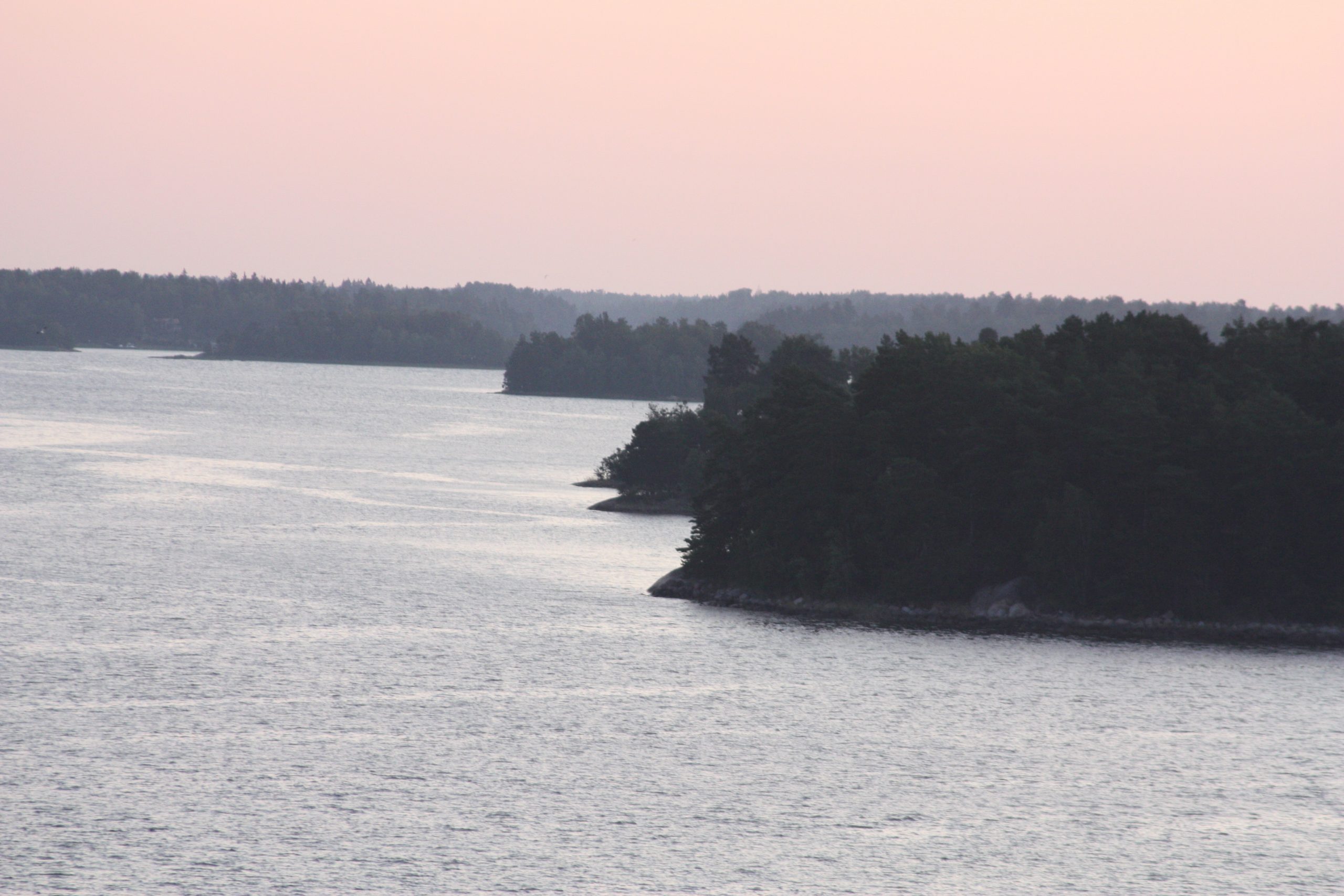
What increases is archipelago boat service. July is peak season for the boats connecting central Stockholm to the islands of the archipelago, with more frequent departures and a wider network of stops than in the shoulder seasons. How that seasonal network is structured is covered in how Stockholm’s archipelago boats work, by season.
The metro, buses, commuter trains (pendeltåg) and most ferries operate under the same zone-based fare system year-round, using the same rechargeable travel card described in how the Stockholm travel card works across transport and how Stockholm’s metro zones and fares are structured — July brings no change to that underlying system, only to how often services run.
What outdoor life does July bring?
July is when Stockholm’s public parks, waterside paths and outdoor swimming spots see the heaviest use, since long daylight hours and warmer water make evening swimming and cycling common well past what would be a normal working day elsewhere. Kungsträdgården and other central green spaces often host free public events and concerts through the month — details vary year to year and are best checked against the city’s own event listings closer to the date, rather than assumed from previous summers.
Cycling infrastructure sees its heaviest seasonal use in July as well, since this is when both the bike-share system and private cycling are at their most practical. The mechanics of the network are covered in how cycling works in Stockholm, lanes, rules and bikes.
Is July the right time to visit?
It depends on what a visitor wants from the trip: July offers the most daylight and the widest range of open outdoor attractions, but also the largest crowds at major sights and the highest prices for accommodation, since it overlaps with peak Swedish and international holiday season. A comparative view across the whole calendar year, including why some visitors prefer May, September or even winter, is set out in when the best time of year to visit Stockholm actually is.
For a resident, July’s practical downside is exactly the crowding and closures described above; its practical upside is that this is genuinely the best month for using the archipelago boats, sitting outdoors late into the evening, and relying on long daylight for anything that would otherwise require planning around sunset.
What should a first-time visitor plan around?
Anyone building a July itinerary should treat opening hours, restaurant closures and transport timetables as things to check close to the travel date rather than fixed facts, given how much of the city’s July schedule is shaped by the holiday period described above. Broader planning fundamentals — how the city is laid out, how to move between districts, and how to sequence a visit — are covered in the practical planning hub and the guide to Stockholm’s museums, landmarks and neighbourhoods.
Residents planning around the July slowdown, including which services typically reduce hours and how the city’s administrative calendar interacts with the national holiday pattern, will find more context in the hub on what it’s actually like to live in Stockholm and the wider planning and practicalities archive.
For anyone with specific questions about entry requirements, health cover or emergency guidance while travelling in July, the relevant authority is the traveller’s own national government, not this site — official travel advice pages maintained by home governments are the correct reference point.
Access Stockholm is an independent guide written from published, checkable sources. We have not visited the places described here and we do not publish personal recommendations or invented ‘local favourites’ — where something is singled out as notable, we say who says so. Opening times, fares, closures and prices change at short notice, so treat everything here as a starting point and confirm with the museum, operator or venue directly before building a day around it. We give no advice on visas, insurance, health or safety; use your own government’s official guidance for those.
Featured image: Photo by Manfred Werner (Tsui), source, BY-SA