Prins Eugens Waldemarsudde is a former private residence on the Djurgården peninsula in Stockholm, built for Prince Eugen (1865–1947), a member of the Swedish royal family and a working landscape painter. On his death he left the entire estate — house, gallery, park and collection — to the Swedish state, with the condition that it open as a public art museum. It has operated as one since 1948.
Who was Prince Eugen?
Prince Eugen was the youngest son of King Oscar II, but he is remembered chiefly as a painter rather than a royal figure. He trained in Paris in the 1880s, painted Swedish and Nordic landscapes throughout his life, and was an active patron and collector of contemporaries such as Carl Larsson, Anders Zorn and Bruno Liljefors. He never married, had no direct heirs, and used his position and independent wealth to build both an art collection and a house designed specifically to display it.
What is the building itself?
The main house was built between 1903 and 1905 to designs associated with the architect Ferdinand Boberg, in a version of the national romantic style then current in Sweden — brick, steep roofs, and detailing drawing loosely on Nordic Renaissance building. It was designed from the outset as a working residence with studio space, not a converted older manor.
A separate gallery building was added on the same grounds in 1913, again designed by Boberg, purpose-built to hang paintings under top light rather than adapted from domestic rooms. Both buildings, along with the estate’s old windmill and outbuildings, are protected as part of the property today.
What does the collection contain?
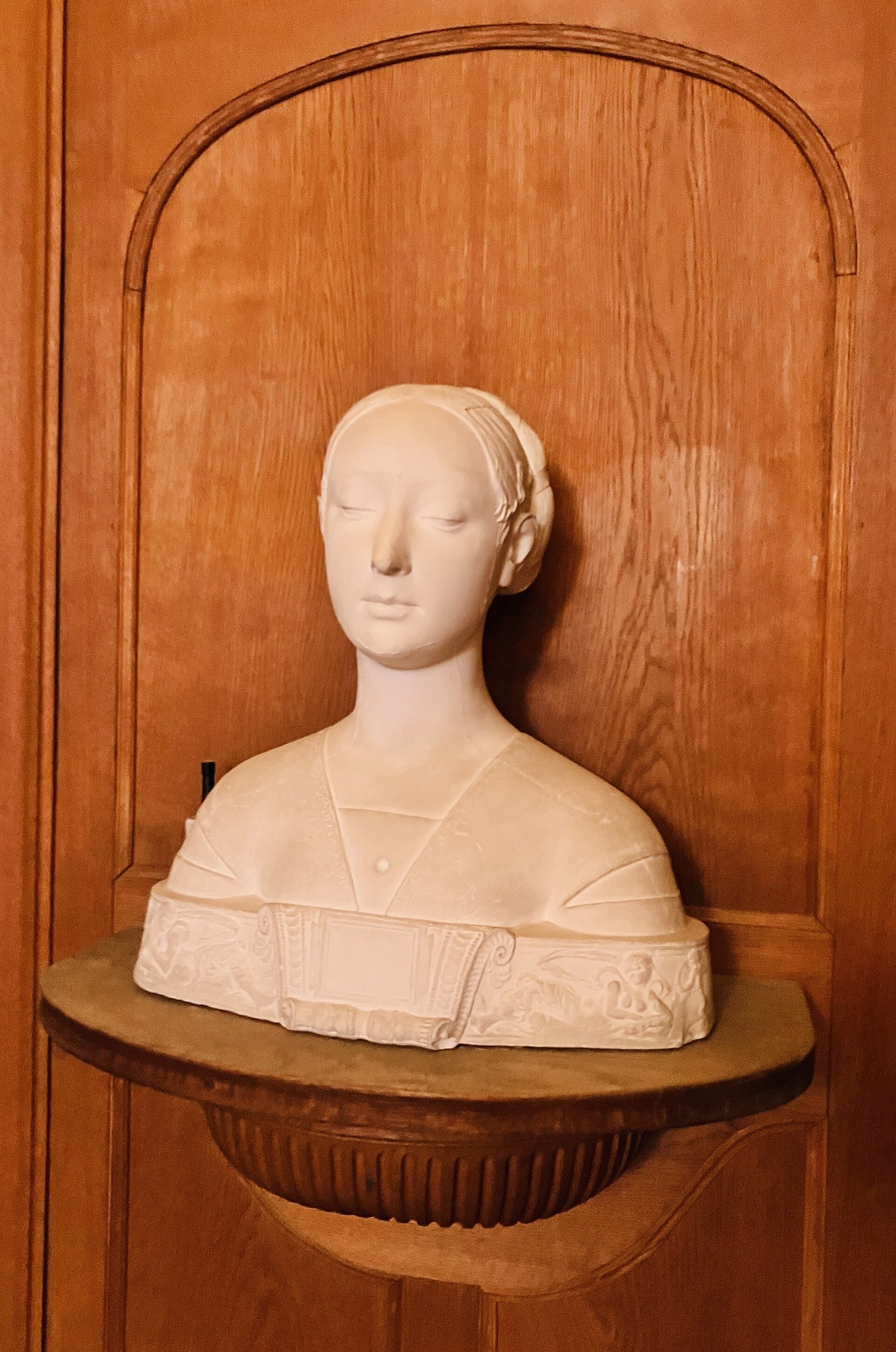
The core of the collection is Prince Eugen’s own output: several hundred of his landscape paintings, largely of Swedish scenery and the waters around Stockholm, painted in a restrained, atmospheric style rather than a decorative one. Alongside his own work, the museum holds paintings and works on paper he collected during his lifetime from Nordic contemporaries, giving the collection a documented late-19th- and early-20th-century Nordic character rather than a broad survey of art history.
The museum’s own published material on the collection sets out these holdings in detail, and is the appropriate reference for specific attributions and dating rather than general guidebook description.
What is in the sculpture park?
The grounds around the house form a public sculpture park, open at hours that differ from the indoor galleries and free to walk regardless of museum admission. Works are sited along paths running down to the water, and the park is one of relatively few places in Stockholm where outdoor sculpture is presented as a deliberate collection rather than incidental public art.
How does Waldemarsudde compare to other Stockholm art museums?
Waldemarsudde belongs to a small category of Stockholm museums that are former private houses converted into public collections, rather than purpose-built civic museums. Thielska Galleriet, also on Djurgården, is the closest comparison: another collector’s villa, holding Nordic and Scandinavian art from roughly the same period, now open to the public on similar terms.
For a broader survey of Swedish and European painting across a longer historical span, Nationalmuseum is the relevant institution. For 20th-century and contemporary work, including major international modern art, Moderna Museet covers that ground instead. Waldemarsudde sits between these — a single collector’s taste, fixed at the point of his death, rather than an institution built to expand indefinitely.
Where is Waldemarsudde, and how do you get there?
The museum sits at the southern tip of Djurgården, on the water separating the peninsula from central Stockholm. Djurgården also holds Skansen, the open-air museum, and the Vasa Museum, though Waldemarsudde is further out on the peninsula than either and reached by a different route.
Access is by bus or by the seasonal Djurgården ferry and tram line that serve the peninsula; timetables and current routes are published by Stockholm’s public transport operator, SL, whose own site (sl.se) should be checked for current schedules rather than relying on a fixed route description here.
What are the practical details a visitor needs?
Opening hours, ticket prices, and any free-entry windows are set and changed by the museum itself, and this kind of detail is not durable enough to publish reliably in an article like this one. The museum’s own site, waldemarsudde.se, is the source to check before travelling, including whether the house and the sculpture park operate on the same hours — they frequently do not, since outdoor grounds can stay open later or year-round while the galleries follow shorter hours.
As with most Stockholm museums, many close on Mondays or have reduced hours in the low season; confirm the current pattern directly with the operator rather than assuming a fixed schedule.
How does Waldemarsudde fit into a broader Djurgården visit?
Djurgården is a single royal park containing several unrelated museums, run by different organisations, and Waldemarsudde is one of the more specialised of them. Visitors building a day around the peninsula’s museums, including the Nordiska Museet and the wider spread of institutions covered on this site’s museums and galleries hub, should treat Waldemarsudde as a distinct stop with its own hours and access route, not an extension of the Skansen or Vasa Museum area.
Who runs Waldemarsudde today?
The estate operates as a state-run museum under Swedish cultural authorities, following the terms of Prince Eugen’s bequest. It is staffed and curated separately from Sweden’s larger national galleries, with its own published scholarship on the collection and its own conservation programme for both the paintings and the historic buildings. For anything beyond the durable facts set out here — current opening pattern, temporary exhibitions, ticket structure — the museum’s own published material is the primary and most current source.
Access Stockholm is an independent guide written from published, checkable sources. We have not visited the places described here and we do not publish personal recommendations or invented ‘local favourites’ — where something is singled out as notable, we say who says so. Opening times, fares, closures and prices change at short notice, so treat everything here as a starting point and confirm with the museum, operator or venue directly before building a day around it. We give no advice on visas, insurance, health or safety; use your own government’s official guidance for those.
Featured image: Photo by trolvag, source, CC BY-SA 3.0
