Långholmen is a small island in central Stockholm, sitting in Riddarfjärden between Kungsholmen and Södermalm. For roughly 250 years it was one of the city’s main sites of confinement — first a workhouse, then a prison that operated until 1975. Today the same buildings hold a hostel, a museum, and a nature reserve with a well-used swimming beach.
Where is Långholmen, and how do you get there?
Långholmen lies just west of Södermalm and south of Kungsholmen, in the stretch of water where Lake Mälaren opens into Riddarfjärden. It is reached on foot or by bicycle over two low bridges — one from Södermalm near Hornstull, one from Kungsholmen — and passes underneath the much larger Västerbron, the road bridge that arcs high overhead between the two bigger islands.
Despite being physically separate, Långholmen is administered as part of the Södermalm city district, not Kungsholmen, which is a point of confusion for visitors trying to place it on a map. For the wider pattern of how the city’s islands relate to one another, see which islands Stockholm is actually built on.
What was Långholmen before it became a park and hostel?
Långholmen’s institutional history goes back to the early 18th century. A spinnhus — a workhouse combining forced labour with confinement, primarily for women — was established on the island in 1724. Over the following century and a half the site grew into one of Sweden’s principal prisons, with successive buildings added as the country’s prison system expanded and was reformed.
The best-known structure, the large brick complex still visible on the island today, was built in stages through the 19th century and functioned as a central prison, Centralfängelset, and later as a remand facility. It held both men and women at different points in its history, and it operated continuously until it was finally closed in 1975, by which point the buildings were considered outdated for a modern penal institution.
Sweden’s prison and probation service, Kriminalvården, traces much of the country’s institutional history through sites like this one; Långholmen is one of the more visible physical remnants of that history still standing in a major Swedish city.
What is the former prison used for now?
After decommissioning, the prison buildings were converted rather than demolished. Part of the complex now operates as a hostel, using former cell blocks as accommodation — a detail that is usually the first thing pointed out to guests, since the room layout still echoes the building’s original function.
Another part of the site houses a museum devoted to the history of the prison and, more broadly, to the history of punishment and incarceration in Sweden. It uses the original architecture, including cell corridors and administrative rooms, as the exhibition space itself rather than reconstructing it elsewhere.
The conversion is a fairly literal example of adaptive reuse: nothing about the buildings’ shape has been disguised, and their former purpose is treated as the subject of the visit rather than something to be smoothed over.

What is the Långholmen nature reserve?
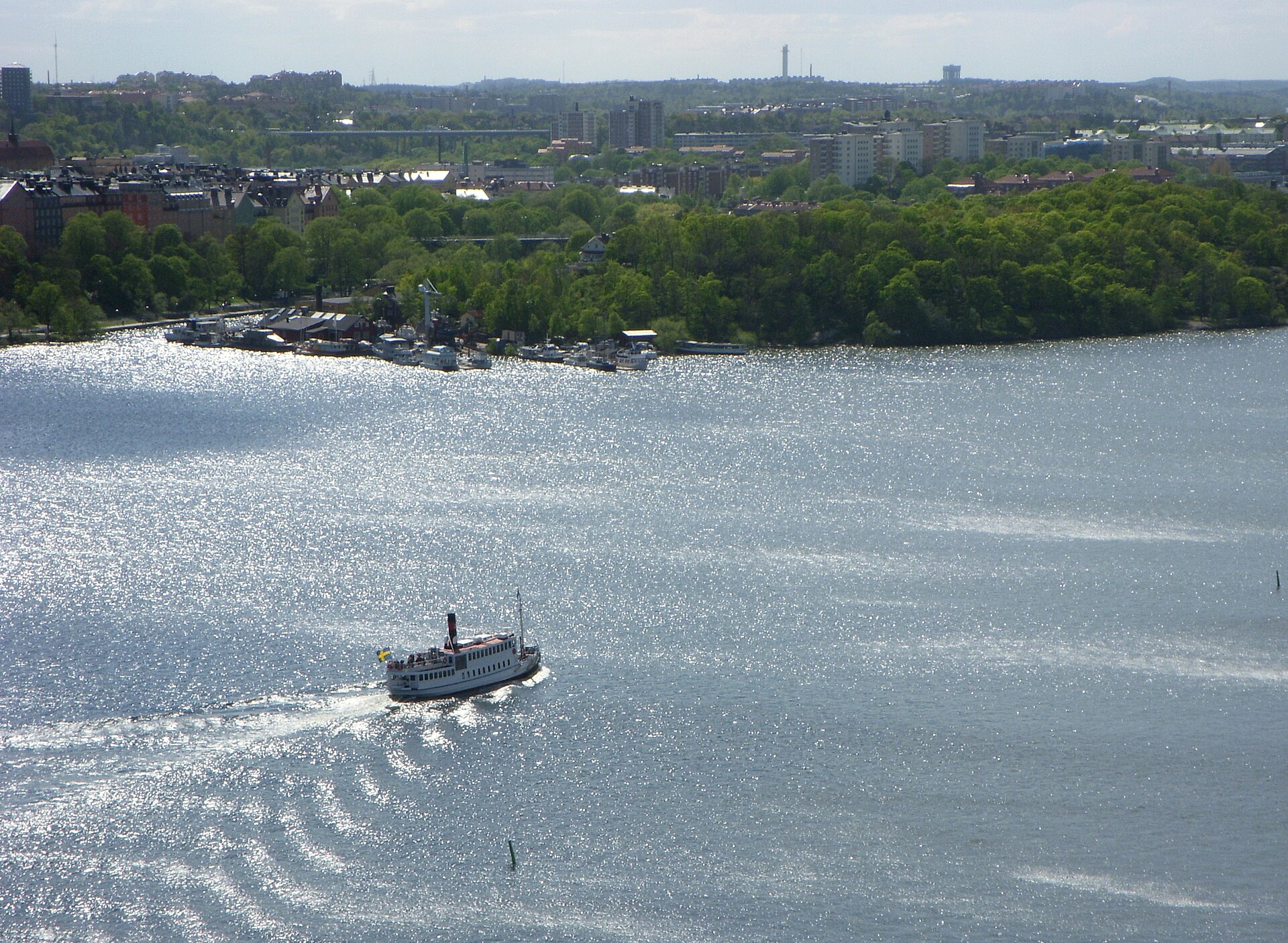
Much of the island outside the former prison complex is protected as a nature reserve, managed by the City of Stockholm. It covers cliffs, mixed woodland, and open grassland shaped in part by the island’s earlier use as a quarry — sandstone and granite were cut here for use elsewhere in the city before the prison-era buildings dominated the site.
The reserve status means the green areas of Långholmen are managed for public access and habitat rather than as ornamental parkland, which is a distinction relevant to residents who use it as a walking and swimming spot rather than a formal garden.
What is Långholmsbadet?
Långholmsbadet is the island’s swimming area, on its western side facing open water rather than the narrower channel toward Kungsholmen. It is one of the more established outdoor swimming spots inside central Stockholm, used through the warmer months by people from both Södermalm and Kungsholmen rather than being a destination in its own right for visitors from further afield.
As with other open-water swimming spots in the city, water quality and seasonal opening are managed by the city rather than by a private operator, and conditions should be checked on the relevant municipal source rather than assumed from one visit to the next.
How does Långholmen fit into the rest of the city?
Långholmen sits at the edge of two much larger, better-known districts without belonging fully to either in the way a visitor might expect. Its administrative attachment to Södermalm is a matter of city districting, while its geography — cut off by water on all sides — places it visually and functionally closer to Kungsholmen, the island immediately to its north.
That in-between status is part of why it functions differently from either neighbour: it has no shopping streets, no dense housing, and no through-traffic in the way both larger islands do. What it has instead is a single former institution, now split between accommodation, a museum, and open green space, plus a beach used mainly by people who already live nearby.
For readers building a wider picture of how Stockholm’s individual islands and districts relate to each other, the neighbourhoods archive and the landmarks and sights archive cover the surrounding areas in more detail, and the Stockholm guide hub sets out how the museums, landmarks and districts connect across the city as a whole. Anyone weighing up how a lesser-visited island like this one fits into daily life in the city, rather than just a single visit, may also find the living in Stockholm hub useful for the broader context of how residents actually use the city’s water and green spaces.
Access Stockholm is an independent guide written from published, checkable sources. We have not visited the places described here and we do not publish personal recommendations or invented ‘local favourites’ — where something is singled out as notable, we say who says so. Opening times, fares, closures and prices change at short notice, so treat everything here as a starting point and confirm with the museum, operator or venue directly before building a day around it. We give no advice on visas, insurance, health or safety; use your own government’s official guidance for those.
Featured image: Photo by Holger Ellgaard, source, CC BY-SA 3.0
