Skeppsholmen is a small island in central Stockholm that once served as a base for the Swedish Navy and now holds two of the city’s national museums, a preserved sailing ship, and a former naval church. It sits between Blasieholmen and Djurgården, reached on foot by a single bridge, and carries almost no through traffic.
Where is Skeppsholmen, and how do you get there?
Skeppsholmen lies just east of Blasieholmen, across a short bridge called Skeppsholmsbron, and is linked onward to the smaller islet of Kastellholmen by its own footbridge. It is walkable from Gamla Stan or central Norrmalm in well under fifteen minutes.
The island carries almost no private car traffic; access is largely on foot, by bicycle, or via a city bus route operated by SL, Stockholm’s regional transport authority. Because routes and stops change over time, current service should be checked on SL’s own site rather than assumed from any fixed number here. The bridge itself replaced an earlier ferry connection and is one of several small crossings that stitch Stockholm’s central islands together — a pattern covered more broadly in the guide to which islands Stockholm is actually built on.
Why did the Swedish Navy build a base here?
From the 17th century, Skeppsholmen served as one of the Royal Swedish Navy’s principal anchorages and shipyards in Stockholm, chosen for the shelter the surrounding islands gave to moored vessels. Naval activity continued on the island into the 20th century before fleet operations were consolidated elsewhere in Sweden, freeing the barracks and dockyard buildings for other uses.
Much of what stands on the island today is a direct result of that history: long barracks blocks, a former guardhouse, and workshop buildings built for naval use rather than civilian life. Many of these historic, state-owned structures are today managed by Statens fastighetsverk, Sweden’s National Property Board, which is responsible for the upkeep of government-owned heritage buildings across the country — a remit it sets out on its own site.
What is on Skeppsholmen today?
The island’s former military buildings now house cultural institutions almost exclusively. The main points of interest are:
- Moderna Museet — Sweden’s national museum of modern and contemporary art, holding works by artists including Picasso, Dalí and Warhol alongside a strong collection of Nordic modernism, as described on the museum’s own site.
- ArkDes — the Swedish Centre for Architecture and Design, which shares its building with Moderna Museet and holds the national collection of architectural drawings and models.
- af Chapman — a 19th-century sailing ship permanently moored at the island’s edge and operated as a youth hostel.
- Skeppsholmskyrkan — a former naval church, now used mainly as a venue for concerts and exhibitions rather than regular worship.
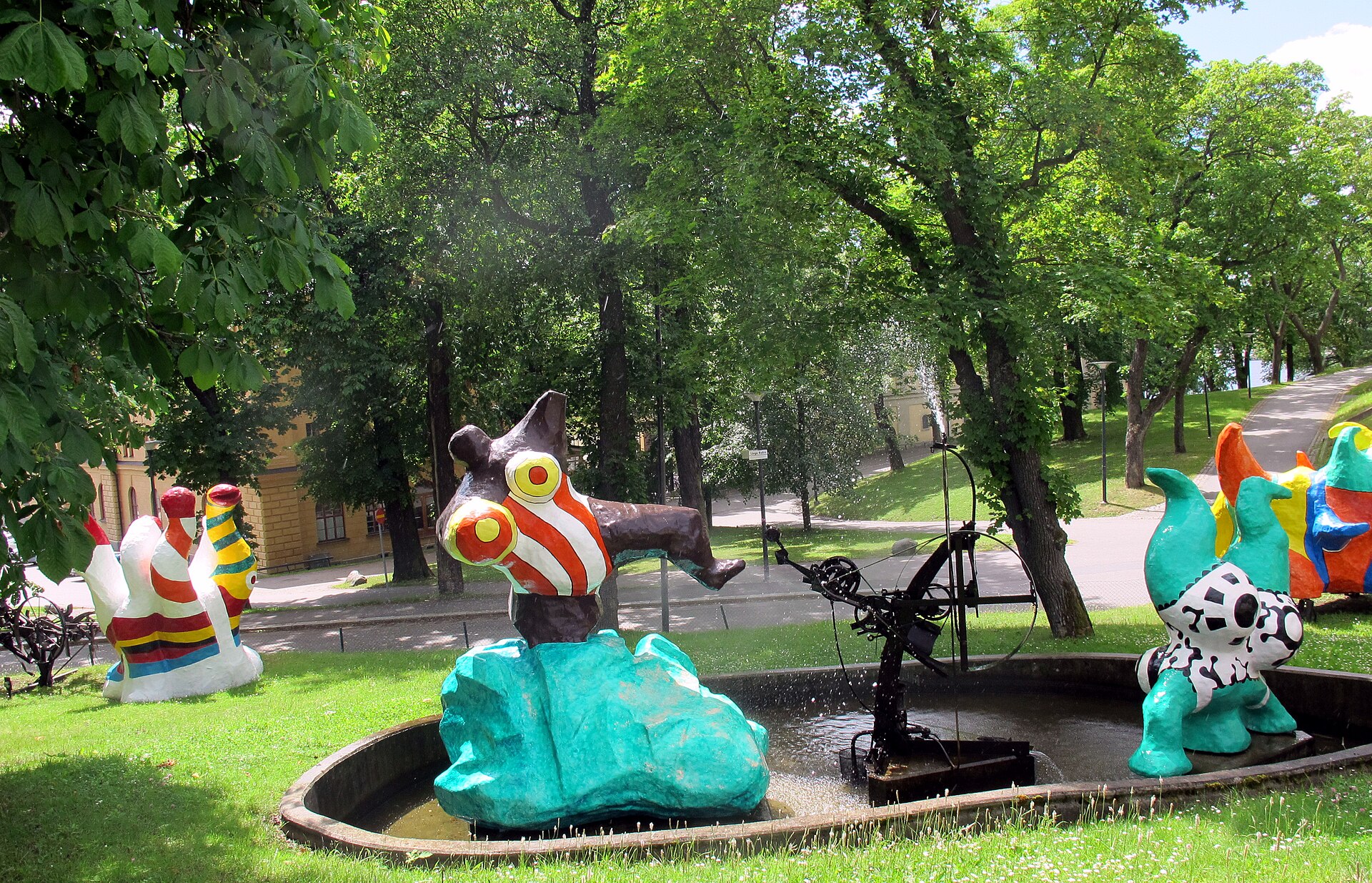

What is Moderna Museet, and why is it here rather than elsewhere?
Moderna Museet occupies a purpose-built structure completed in the late 1990s, designed by the Spanish architect Rafael Moneo, on the site of an earlier naval drill hall. Its placement on Skeppsholmen reflects a wider pattern in Stockholm, where former military and industrial land close to the city centre has repeatedly been converted to museum use rather than housing. The museum’s collection and current exhibitions are detailed in the site’s own guide to what Moderna Museet holds, and its status within Sweden’s national museum system connects to the wider explainer on how free-entry policy works at Sweden’s national museums.
What is af Chapman, and why is a ship moored there?
af Chapman is a full-rigged steel ship built in 1888 that has been permanently moored off Skeppsholmen since the mid-20th century, after decades of active sailing service. It now operates as a youth hostel run by Svenska Turistföreningen, the Swedish Touring Association, the same organisation behind a large network of hostels and mountain cabins elsewhere in the country. Details on current bookings and access sit on STF’s own site rather than here, since hostel operations and pricing change over time.
Is Skeppsholmen part of Djurgården?
No. Skeppsholmen is a separate island, both administratively and physically, connected to Djurgården only indirectly — via Kastellholmen and the surrounding bridge network — not by any direct land link. The two islands are often visited together because they sit close by water, but they are distinct places with different histories: Djurgården was royal parkland and later became the site of Stockholm’s major open-air museums, a story covered in what Djurgården is, and why so much of it is parkland and in why so many of Stockholm’s museums ended up there. Skeppsholmen’s history is naval rather than royal.
The islet immediately alongside Skeppsholmen, Kastellholmen, is smaller still and known chiefly for its fortified tower and flagpole; it is covered separately in what Kastellholmen is, and why it flies a flag.
Does anyone actually live on Skeppsholmen?
Effectively no. The island has no significant residential population. Its buildings are occupied by museums, a hostel ship, a former church now used for events, and a small number of state offices, which makes it a cultural and former-military precinct rather than a neighbourhood in the way Södermalm or Vasastan function as places people live day to day. The art college Konstfack was based on the island for much of the 20th century before relocating elsewhere in Stockholm in the 2000s, which is one reason several of the barracks buildings still carry a distinctly institutional layout inside.
For readers comparing how different central districts actually work as places to live, the pattern on Skeppsholmen is closer to a campus than a residential area — worth setting against the fuller picture in the guide to living in Stockholm and the neighbourhoods archive, both of which cover districts with genuine populations.
How does Skeppsholmen fit into a visit to Stockholm’s museums?
Skeppsholmen sits within easy walking distance of Blasieholmen, where Nationalmuseum holds Sweden’s largest collection of paintings and applied art — a natural pairing covered in what Nationalmuseum holds. Combining a walk across Skeppsholmsbron with a visit to either institution is straightforward on foot, without needing transport in between.
As with most Stockholm museums, opening hours on Skeppsholmen follow a seasonal pattern rather than a fixed year-round schedule: many institutions extend hours in summer, run a late evening on one weekday, and close on Mondays outside peak season. These shapes are durable; specific hours are not, so current times should always be confirmed on each museum’s own site rather than assumed. The general mechanics of museum access, free-entry evenings, and combined tickets across the city are set out in the museums and galleries archive and the wider Stockholm guide hub.
Is Skeppsholmen used for anything beyond its museums?
The island’s open ground and quays have occasionally hosted outdoor cultural events and exhibitions, and Skeppsholmskyrkan is used periodically for concerts. As with any recurring but undated activity, this site does not list specific fixtures, since dates shift year to year; anyone planning around a particular event should check directly with the venue or the relevant cultural organiser closer to the time. What stays constant is the island’s underlying character: a compact, largely car-free former naval site whose buildings have been converted, block by block, into some of the more architecturally distinct museum space in central Stockholm.
Access Stockholm is an independent guide written from published, checkable sources. We have not visited the places described here and we do not publish personal recommendations or invented ‘local favourites’ — where something is singled out as notable, we say who says so. Opening times, fares, closures and prices change at short notice, so treat everything here as a starting point and confirm with the museum, operator or venue directly before building a day around it. We give no advice on visas, insurance, health or safety; use your own government’s official guidance for those.
Featured image: Photo by Murat Özsoy 1958, source, CC BY-SA 4.0
