Sweden’s free-entry policy applies to a specific group of state-run “central museums” (centralmuseer), funded through the national culture budget rather than ticket sales. Since 2016 the government has periodically waived admission to their permanent collections, though the rule has been narrowed and widened more than once. Private and foundation-run museums are never part of it, and always charge.
Which museums does the policy actually cover?
The policy applies only to museums that are state agencies (statliga myndigheter) or grouped under state agencies, funded directly by the Riksdag through the Ministry of Culture (Kulturdepartementet). It does not apply to every museum in Stockholm, or even every well-known one.
Institutions that have fallen inside this group at various points include Nationalmuseum, Moderna Museet, Historiska museet, Naturhistoriska riksmuseet, Etnografiska museet, Östasiatiska museet, Medelhavsmuseet, Sjöhistoriska museet, Livrustkammaren, and the Hallwyl Museum — the last three administered jointly with Historiska museet under a shared state agency. Nationalmuseum’s own collection spans European painting, sculpture and design from the medieval period to the early twentieth century; Moderna Museet holds the twentieth- and twenty-first-century collection, including major Nordic and international modern art. Details of both are covered on this site’s explainer on Nationalmuseum’s collection and its guide to Moderna Museet.
Because the list is set by government decision rather than by the museums themselves, it is not fixed. The Ministry of Culture publishes the current scope on regeringen.se, and each museum states its own admission terms on its official site — that is the only place to confirm what currently applies.
Why did the policy exist, and has it changed?
Free entry to the central museums was introduced by the Swedish government from February 2016 as a cultural-policy measure, on the argument that public collections funded by taxpayers should be freely accessible. The reform covered permanent collections; temporary and touring exhibitions were generally excluded from the start.
The policy was not permanent. Following a change in the parliamentary budget for 2019, funding tied to the free-entry scheme was reduced, and several of the museums reintroduced admission charges for adults that year while keeping free entry for children and young people. Swedish public broadcaster SVT and national newspapers covered the reversal at the time as a direct consequence of the budget vote. Since then, funding and scope have shifted again with subsequent budgets, which is exactly the kind of detail this site will not pin to a number: confirm the live position on each museum’s own site before planning around it.
Which major Stockholm museums are not part of this scheme?
Most of Stockholm’s best-known museums sit entirely outside the state free-entry system, because they are run by private foundations, companies, or a mix of public and private funding rather than as central state agencies.
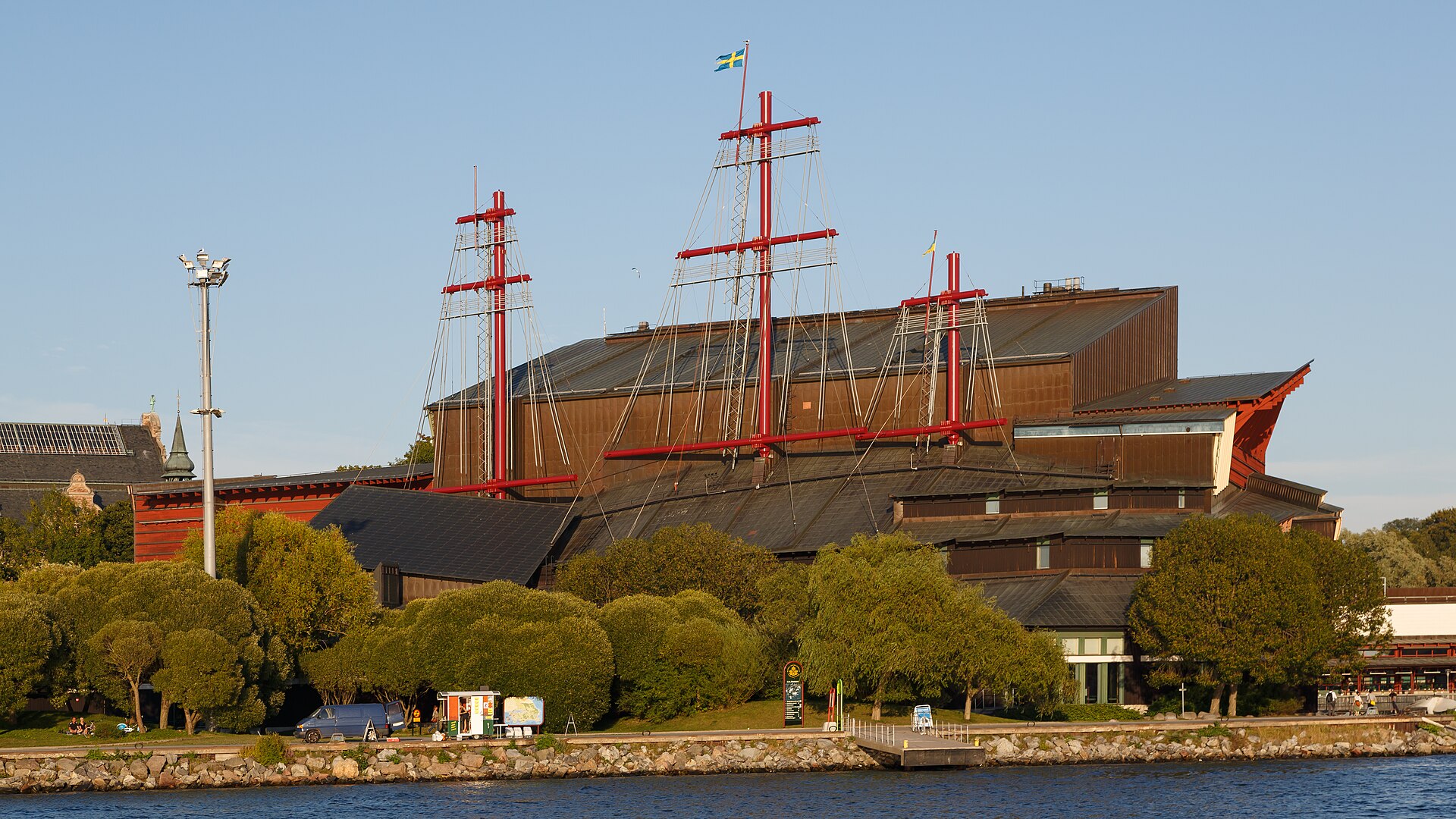
- The Vasa Museum, home to the almost fully intact 17th-century warship, is part of a separate state maritime-museums agency and sets its own admission independently of the central-museums scheme.
- Skansen and the Nordiska Museet are run by a private foundation, not a state agency, and both charge admission on their own terms.
- The Fotografiska photography museum is a privately owned company.
- The ABBA Museum is a commercially operated attraction.
- The Nobel Prize Museum is run by the Nobel Foundation.
- The Tekniska Museet, Sweden’s national museum of science and technology, is organised as a foundation with mixed public and private funding, and charges standard admission.
None of these have ever been part of the state’s free-entry reform, regardless of what happens to Nationalmuseum or Moderna Museet’s admission status in a given year.

Is entry ever free at the private and foundation museums anyway?
Sometimes, but always on the individual institution’s own terms, not the government scheme described above. Two recurring patterns are worth knowing.
Many museums — state and independent alike — waive entry for children and young people up to a set age, commonly somewhere between 18 and 20, as standard policy rather than a special offer. This applies widely across Stockholm’s museum sector and is worth checking on any individual museum’s ticket page, since the cutoff age and conditions vary by institution.
Separately, Kulturnatt Stockholm is an annual cultural-night event, organised by the City of Stockholm, during which a large number of museums and cultural institutions across the city — state-run and independent — open with free or reduced entry for the evening. It recurs on a single night each spring, and the organiser confirms the date and participating venues each year on its own site; this is a pattern to plan around rather than a fixed calendar date to rely on.
Do temporary exhibitions cost extra even where permanent collections are free?
Generally yes. Even during periods when a state museum’s permanent collection carries no admission charge, special and touring exhibitions are typically ticketed separately, because they are usually financed differently — often through exhibition-specific budgets, sponsorship or co-production with other institutions rather than the core government grant.
This distinction matters for planning a visit to somewhere like Nationalmuseum or Moderna Museet: the free-entry status quoted on the museum’s website usually refers to its standing collection on permanent display, not necessarily whatever headline exhibition is running that season.
How does this affect planning a museum day in Stockholm?
For a resident building a routine of museum visits rather than a one-off trip, the practical takeaway is that admission status at the state museums is not stable enough to memorise. Nationalmuseum and Moderna Museet, in particular, have swung between free and paid entry more than once since 2016 as government budgets have changed.
For a visitor mapping out a limited number of days, the more useful mental model is the categorical one set out above: state central museums may or may not currently be free, foundation and private museums almost never are, and youth discounts are common everywhere regardless of a venue’s funding structure. Working from that structure, rather than a remembered figure, holds up even after the next budget cycle changes the details again.
A broader survey of what each of Stockholm’s major museums actually holds — separate from admission policy — is available on this site’s Museums & Galleries hub, alongside individual explainers such as the one on the Hallwyl Museum’s preserved late-19th-century interiors.
Where should admission be confirmed before a visit?
Each institution’s own site is the only reliable source, and this site deliberately does not quote current prices for that reason. The Ministry of Culture publishes the government’s current position on free entry to the central museums on regeringen.se, while Nationalmuseum and Moderna Museet each state their live admission terms on their own official sites. For any museum outside the state scheme — Vasa, Skansen, Fotografiska, the ABBA Museum, Tekniska Museet and others — the museum’s own ticketing page is the only page worth trusting, since none of them are bound by the government’s free-entry decisions in the first place.
Access Stockholm is an independent guide written from published, checkable sources. We have not visited the places described here and we do not publish personal recommendations or invented ‘local favourites’ — where something is singled out as notable, we say who says so. Opening times, fares, closures and prices change at short notice, so treat everything here as a starting point and confirm with the museum, operator or venue directly before building a day around it. We give no advice on visas, insurance, health or safety; use your own government’s official guidance for those.
Featured image: Photo by Liridon, source, CC BY-SA 4.0

Related reading
Free vs Paid Museums in Stockholm: Does an Attraction Pass Pay Off?.