The sensible order is to start in Gamla Stan, because it is the oldest and smallest part of the city and everything else radiates outward from it. From there, move to the museum cluster on Djurgården and Skeppsholmen, then to the modern centre at Norrmalm, and leave Södermalm’s viewpoints for last, when the geography has settled into place.
This is not the only order a visit could take. It is simply the one that follows how Stockholm was actually built — as a scatter of islands stitched together by bridges and ferries — rather than a route drawn to save shoe leather. Understanding the shape of the city first makes everything after it easier to place.
Why start in Gamla Stan?
Gamla Stan is Stockholm’s medieval core, founded in the 13th century on the small island between Lake Mälaren and the Baltic. It contains the Royal Palace, Storkyrkan cathedral, and the square Stortorget, and its street pattern has barely changed in five centuries.
Starting here works because Gamla Stan is compact and central — most of central Stockholm’s other districts sit visibly around it. A first look at the palace, the cathedral and the narrow lanes gives a physical sense of where the city began, before the rest of it is added on. The history of Gamla Stan as Stockholm’s old town and the Royal Palace’s public rooms and museums are both worth reading in advance, since the island rewards knowing what you’re looking at rather than wandering it cold.
Where does the Djurgården museum cluster fit in?
Djurgården and neighbouring Skeppsholmen follow Gamla Stan because they are the next concentration of major sights, reached by a short ferry or bus ride, and because several of the collections there directly extend what Gamla Stan introduces — Sweden’s royal and maritime history in particular.
Djurgården is a former royal hunting park that now holds the Vasa Museum, Skansen open-air museum, and the Nordiska museet, among others. Skeppsholmen, a small island just off Gamla Stan, holds Moderna Museet and the Museum of Far Eastern Antiquities. The concentration of national museums here is not incidental: Djurgården became Stockholm’s museum island largely because the crown owned the land and released it for public institutions through the 19th and 20th centuries. The Skeppsholmen museum island developed on the same logic, on former naval ground.
Because this cluster involves several separate buildings, a first visit rarely covers more than two or three of them properly in one day. Choosing which ones matters more than trying to see all of them.
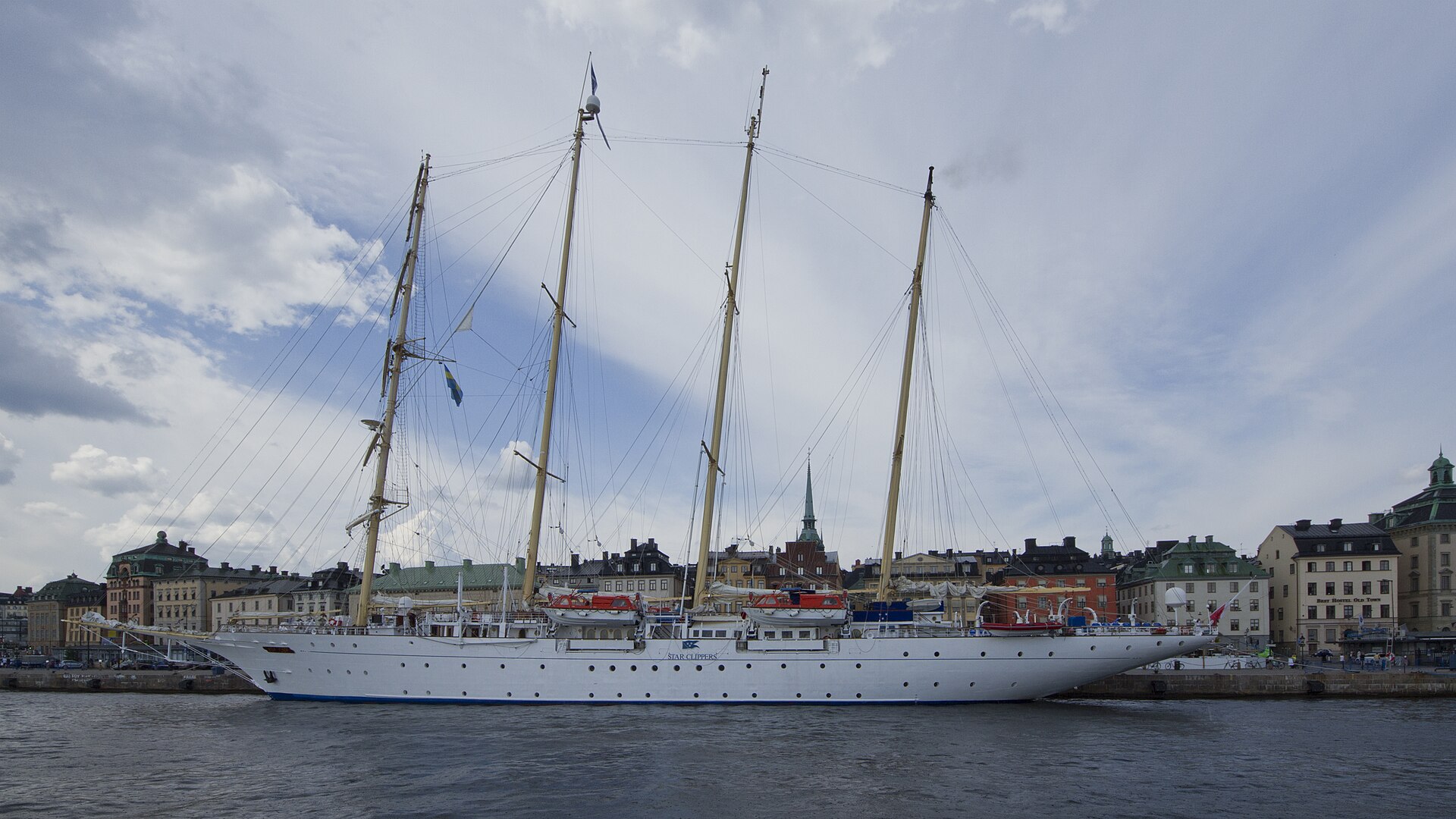
.jpg)
When does the city centre make sense to see?
Norrmalm, the modern commercial core north of Gamla Stan, makes sense after the historic and museum districts, because it is best understood as what replaced the old city rather than a starting point in its own right.
Norrmalm was substantially rebuilt from the 1950s onward, when large parts of its older housing stock were demolished in a redevelopment programme now generally regarded, in retrospect, as one of the more controversial urban planning episodes in Swedish history. What stands there now — Sergels Torg, the Kulturhuset, the shopping street Drottninggatan, and the transport hub of T-Centralen — is a deliberately modern layer over an older street pattern. Reading about what Norrmalm is and what was rebuilt there makes more sense once Gamla Stan has already established what the city looked like before.
T-Centralen itself is worth treating as a destination rather than just a transfer point: it is the hub where all three Stockholm metro lines meet, and its tiled platforms are part of what has led some to describe the network as the world’s longest art gallery. Both the function of T-Centralen as the metro’s central hub and the reputation of the Stockholm metro’s station art are covered separately.
Why does Södermalm come later, not first?
Södermalm, the island south of Gamla Stan, works best toward the end of a first visit because its main draw is perspective — its ridges and viewpoints look back across the water at everything already seen, which only means something once that has been visited.
Södermalm was historically a working-class district and is now a mixed residential and commercial one, known for streets like Fjällgatan and the elevated walkway Monteliusvägen, both of which look north over Gamla Stan and the water. Visiting it last turns those views into a kind of summary rather than an introduction to places not yet seen. Details on Södermalm as a district are worth reading before going up, so the view can be read rather than just admired.
How do you actually move between these areas?
Walking, the metro, and a few ferry routes cover all of this without needing a car at any point, and the districts described above are closer together than the number of “sights” suggests.
Central Stockholm is genuinely walkable between adjacent districts — Gamla Stan to Norrmalm, for instance, is a short bridge crossing — though Djurgården is usually better reached by ferry or bus given the distance. The real walking distances across central Stockholm are worth checking before assuming everything is next to everything else.
For anything requiring the metro or bus, Stockholm uses a zone-based fare system with a rechargeable card, run by the regional transport operator SL. The mechanics of this — how the metro’s zones and fares are structured — are worth understanding on day one rather than working out at a ticket gate. A single card also covers buses and most ferries within the system, which is relevant once Djurgården’s ferry crossing enters the plan.
Does this order change with the season?
The sequence itself doesn’t change, but what’s comfortable to do in a given order does — long queues and long daylight in summer favour an early start on outdoor sights, while short winter days push indoor collections earlier in the day.
Sweden’s high midsummer sun means Djurgården’s outdoor spaces and Södermalm’s viewpoints stay usable into the evening in June and July, while in December an equivalent day needs to front-load anything outdoors before mid-afternoon darkness. The city’s museums, correspondingly, are a safer bet for the later part of a winter day. General patterns on this are set out under when to visit Stockholm across the year and how daylight actually shifts through the Stockholm year.
What if there’s more than one day?
One day is enough to cover Gamla Stan and a first pass at Djurgården; a second day usually goes to Norrmalm and Södermalm properly; a third is where an archipelago boat, Kungsholmen, or a second museum choice tends to fit.
This site sets out that pacing in more detail elsewhere: what a single day can reasonably hold is covered in what you can reasonably see in Stockholm in one day, and the two- and three-day extensions are covered in how two days in Stockholm might be spent and what a third day makes room for. Together with the district and transport pages linked above, they form a fuller picture of the landmarks, museums and neighbourhoods that make up central Stockholm and the practical mechanics of getting around and planning a visit.
None of this order is compulsory. It reflects how the city’s geography and history actually connect — old town, museum island, rebuilt centre, residential ridge — rather than a checklist to complete. A visitor with three days and a transport card can rearrange the pieces; what the order is meant to prevent is arriving at a district with no sense of why it sits where it does.
Access Stockholm is an independent guide written from published, checkable sources. We have not visited the places described here and we do not publish personal recommendations or invented ‘local favourites’ — where something is singled out as notable, we say who says so. Opening times, fares, closures and prices change at short notice, so treat everything here as a starting point and confirm with the museum, operator or venue directly before building a day around it. We give no advice on visas, insurance, health or safety; use your own government’s official guidance for those.
Featured image: Photo by Liridon, source, CC BY-SA 4.0
