Build the day around light, not around a list of sights. Get outside during the brightest window, roughly late morning to mid-afternoon, and treat everything else — arrival, breakfast, the evening — as time spent indoors. In December, Stockholm’s usable daylight is closer to four hours than the six or so between official sunrise and sunset, because the sun stays low the whole time.
How short are Stockholm’s December days, really?
Around the winter solstice, Stockholm gets roughly six hours between sunrise and sunset. That figure alone undersells how dim the day feels, because the sun never climbs far above the horizon at this latitude — it tracks low and at an angle for the whole of that window rather than rising to any real height at midday. The practical effect is closer to four hours of what most visitors would call proper daylight, with long dusk at both ends.
This is a fixed astronomical fact of the latitude, not a quirk of any particular year. The seasonal swing is covered in more detail in how daylight changes across the Stockholm year, which is worth reading before booking anything for a December trip, since it explains why the same city feels so different in June.
What does “four hours of light” actually mean for planning?
It means the outdoor part of the day is short and needs to be deliberate. The sun typically clears the horizon somewhere around 8:30–9:00am and sets by mid-afternoon, but the light only becomes properly bright — enough to see a building’s detail, a canal’s colour, a street’s proportions — for a stretch in the middle. Photographs taken outside that window will look like dusk even at what the clock calls midday.
For a visitor, this changes the order of operations. A June itinerary can afford to wander outdoors most of the day and duck into a museum when tired. A December itinerary works better in reverse: fix the indoor destinations first, and slot outdoor movement into the bright middle.
How should a December day actually be structured?
A workable shape looks less like a checklist of sights and more like three blocks:
- Early morning (dark): breakfast, transit, anything already indoors — a museum with an early opening, a covered market.
- Midday (the four bright hours): whatever benefits most from daylight — walking a district, crossing a bridge with a water view, a viewpoint, an open-air site.
- Afternoon into evening (dark again by mid-afternoon): museums, indoor collections, anything lit rather than viewed, food.
This is the same basic problem as a wet day, just governed by light rather than weather, and the two share a lot of solutions. A wet-weather version of this same planning problem covers the indoor-heavy logic in more detail. For how much a single day can hold regardless of season, what a single day in Stockholm can realistically cover sets a useful ceiling — December simply pushes that ceiling lower.
What is worth doing in the bright middle of the day?
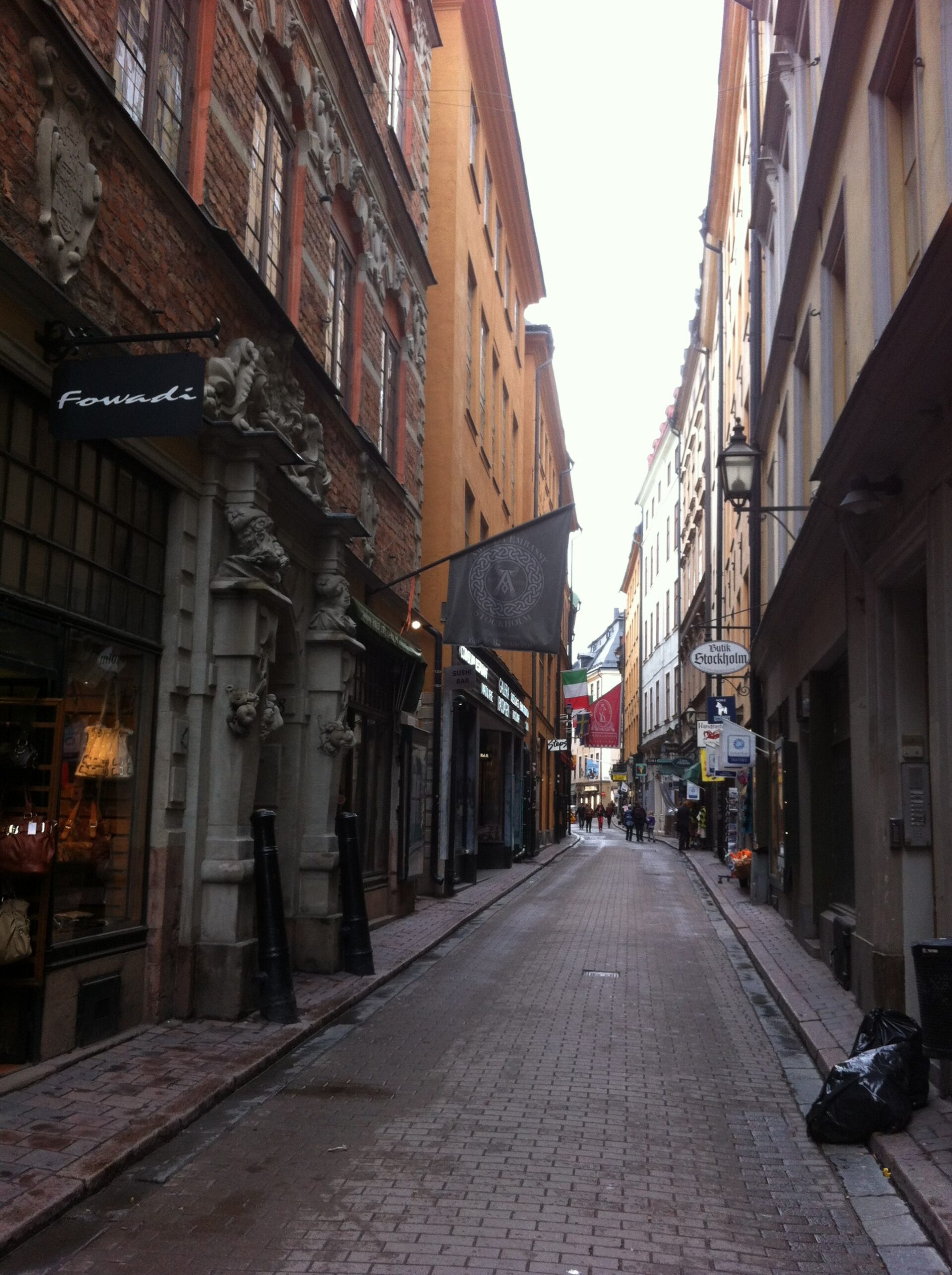
Anything where the point is the view, the water, or a district’s shape rather than an interior. Central Stockholm is compact enough that a few hours of walking covers a genuine cross-section of it — Gamla Stan’s narrow streets, a bridge crossing with open water on both sides, a look down over the harbour from one of the city’s ridge streets. None of this needs to be rushed; the point is simply to do it while the sky is doing something.
Pavements and steps can ice over in December, which is one reason locals tend to favour flatter routes and public transport over long walks once the light has gone. Timing the walking for the bright hours also means timing it for when streets are least treacherous underfoot, since ice is more visible and less likely to have re-formed.
.jpg)
What works well once it’s dark again — which is most of the day?
Museums, essentially, and it’s worth remembering that Stockholm has an unusually dense cluster of them. A large share sit on or near Djurgården, the former royal hunting ground turned parkland and museum district, and why so many of Stockholm’s museums cluster on Djurgården explains how that concentration came about. Skansen, the open-air museum and zoo on Djurgården, is a useful December anchor in its own right: Skansen’s open-air museum keeps its historic buildings and animal enclosures open through winter, and its own site is the place to check current December opening hours and any seasonal market, since these details change year to year.
December is also when Stockholm’s Christmas markets recur — most visibly at Skansen and around Stortorget in Gamla Stan — as a seasonal pattern rather than a fixed date. Exact opening weekends shift each year, so this is worth confirming on the relevant operator’s own site rather than treating any specific date as reliable.
How does December affect opening hours and closures?
December contains several public holidays that genuinely close things — Christmas Eve, Christmas Day, and New Year’s Eve and Day all affect shops, museums and some transport schedules, with effects that build for days beforehand. Which public holidays close things in Stockholm lays out the pattern, and it’s worth checking before building a plan around late December specifically, since a day either side of Christmas can behave very differently from an ordinary Tuesday.
How cold does it get, and does that change the plan?
Stockholm’s December cold is real but rarely extreme compared with much of inland Scandinavia, moderated by the water around the city. How cold Stockholm actually gets in winter covers the typical range and what it means for clothing and pace. In practice, cold shortens the appetite for standing outdoors more than the daylight does — another reason the bright midday hours are better spent walking somewhere specific than lingering at a single outdoor spot.
Is December worth planning a trip around at all?
That depends on what a visitor is optimising for. Against the long, bright days of June, December loses on almost every outdoor measure. What it offers instead is a city running its normal indoor life at full pace — museums, markets, a working capital rather than a peak-season one — under conditions the best time of year to visit Stockholm weighs against the other seasons directly. For anyone whose interest is mainly collections, interiors and a shorter, denser kind of day, four hours of daylight is a constraint to plan around, not a reason to reschedule.
Access Stockholm is an independent guide written from published, checkable sources. We have not visited the places described here and we do not publish personal recommendations or invented ‘local favourites’ — where something is singled out as notable, we say who says so. Opening times, fares, closures and prices change at short notice, so treat everything here as a starting point and confirm with the museum, operator or venue directly before building a day around it. We give no advice on visas, insurance, health or safety; use your own government’s official guidance for those.
Featured image: Photo by Jules Verne Times Two, source, CC BY-SA 4.0
