Nackareservatet is a nature reserve of forest, rock and lakes on the southeastern edge of Stockholm, split across the boundary between Nacka municipality and Stockholm municipality. It protects a stretch of near-wilderness that survived being built over as the surrounding suburbs grew, and it is managed jointly by the two municipalities rather than by a national body.
Where exactly is Nackareservatet, and who runs it?
The reserve sits directly southeast of the inner city, wedged between the Nacka side of the metropolitan area and Stockholm’s own outer districts such as Skarpnäck, Bagarmossen, Björkhagen and Kärrtorp. Because the boundary between Nacka municipality and Stockholm municipality runs through the middle of it, the two authorities manage it together, coordinating trail maintenance, signage and rules under Swedish nature-reserve legislation.
This dual ownership is unusual. Most nature reserves close to Stockholm belong cleanly to one municipality or to the county administrative board, Länsstyrelsen. Nackareservatet’s split status reflects the fact that the terrain itself never respected the administrative line — the forest and lake system simply continues from one side to the other.
What kind of landscape does it actually protect?
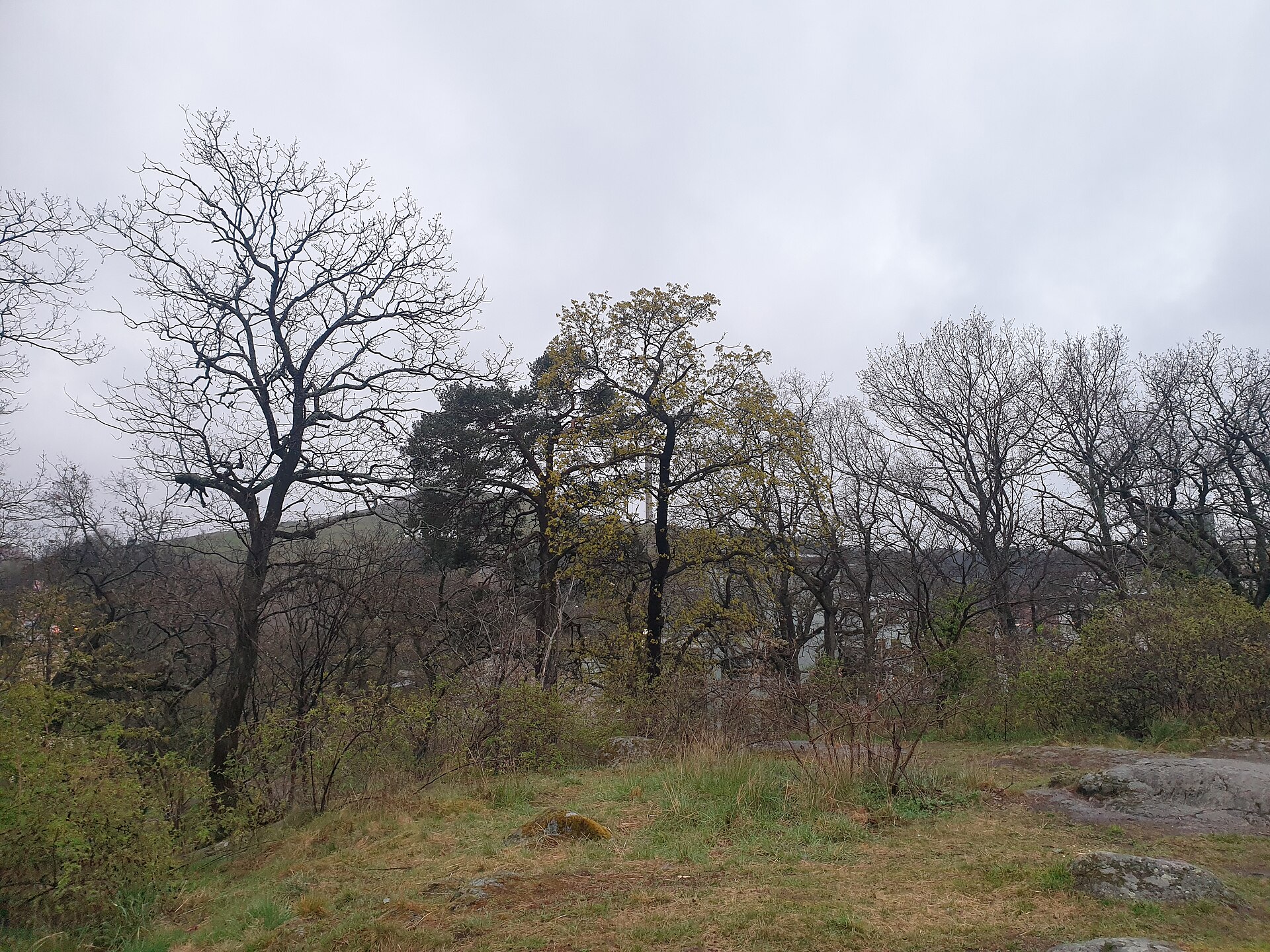
The reserve is a mix of coniferous and mixed forest, exposed granite ridges, wetland and a chain of small lakes, including Källtorpssjön and Söderbysjön. The terrain is rougher and more folded than most park land inside the city — steep rock, thin soil, and stands of pine that have never been cleared for housing.
This is deliberate. The reserve exists precisely because this pocket of forest was identified as ecologically and recreationally valuable while the land around it, in districts like Skarpnäck and parts of Nacka, was being developed with housing from the mid-20th century onward. Protecting it kept a continuous block of near-natural land within reach of dense residential areas rather than leaving only fragments.
Wildlife inside the reserve includes woodpeckers and other forest birds typical of central Sweden, along with amphibians around the wetland areas. The municipalities’ own information for the reserve documents specific species and habitat types in more detail than is useful to summarise here; readers with a specific ecological interest should check the current management plan on the relevant municipal site.
How do you get there without a car?
Access is one of the reserve’s defining features: unlike most large nature reserves near Stockholm, several entry points sit within a short walk of Tunnelbana stations on the green line, including Skarpnäck, Bagarmossen and Kärrtorp, as well as bus routes serving the Nacka side. This makes it usable as an afternoon outing rather than a planned excursion, which is part of why it records heavy local use despite having no admission gate, visitor centre or entrance fee.
There is no single “front door.” The reserve is entered from multiple points around its perimeter, and different entrances lead to different terrain — some straight into forest, others past a lake. Readers planning a first visit should treat it as a network of access points rather than a single site with one obvious way in, and check current transport details through the site’s guide to getting around Stockholm.

What can you actually do inside the reserve?
The core activity is walking. Nackareservatet has a marked network of hiking trails of varying length and difficulty, ranging from short loops suitable for a couple of hours to longer routes that cross most of the reserve’s terrain. Cross-country skiing is possible on prepared tracks in winters with sufficient snow, and several of the lakes are used for swimming in summer, with informal bathing spots rather than staffed lidos.
There is no restaurant, kiosk or formal visitor centre inside the reserve itself. Anyone planning a longer walk should bring water and food, in the same way they would for any forest walk in Sweden — this is genuinely a forest, not a landscaped city park with amenities built in.
Does allemansrätten apply inside the reserve?
Yes, broadly, though a nature reserve carries its own specific rules that sit on top of the general right. Sweden’s allemansrätten, the right of public access, allows walking, foraging for berries and mushrooms, and temporary camping across most uncultivated land. Inside a formally designated nature reserve like Nackareservatet, the managing municipalities can add specific restrictions — for example on lighting fires outside designated spots, on cycling off marked trails, or on dogs during nesting season.
These reserve-specific rules are posted at entrances and on the municipalities’ own pages for the reserve, and they take precedence over the general right where the two differ. Anyone visiting with a dog, a bike, or planning to camp should check the current rules rather than assume the general right of access covers everything.
How does Nackareservatet fit into Stockholm’s wider green space system?
Stockholm’s regional planning has long organised protected green land around the city into a series of wedges, or “gröna kilar,” radiating outward from the built-up centre. Nackareservatet forms the core of the southeastern wedge, playing a role for that side of the city similar to what the Royal National City Park plays to the north — a large, connected block of protected land that keeps suburbs from merging into one continuous built-up mass.
It differs from a park like Tantolunden on Södermalm in scale and character: Tantolunden is a managed inner-city park with allotment gardens and open lawns, while Nackareservatet is genuine forest and rock, protected mainly because of what it already was rather than shaped into something new. For a wider sense of how Stockholm structures its parks, forests and archipelago land, the Parks & Archipelago category covers comparable sites across the region.
Is the reserve different depending on the season?
Yes, in the way any Nordic forest reserve is. Snow cover opens up cross-country skiing on marked routes in winters with enough snowfall, while summer brings swimming at the lakes and the heaviest foot traffic from nearby residents. Spring and autumn tend to be quieter, with the forest floor and wetland areas at their most visibly active for wildlife.
None of this is staffed or ticketed, so there is no seasonal opening schedule to check in the way there is for a museum. The practical variable is daylight and weather rather than hours, and readers unfamiliar with how much the Swedish calendar changes light and conditions through the year may find it useful to read more broadly in the Planning & Practicalities category.
Who should actually plan to visit?
Nackareservatet is not designed around visitors in the tourism sense. It has no ticketed attraction, no guided experience and nothing resembling a landmark at its centre. Its value is functional: a large area of real forest that residents of Nacka and the southeastern parts of Stockholm can reach on foot or by metro without leaving the city.
For someone building a longer stay around Stockholm’s landmarks and museums, it is unlikely to be a priority stop. For anyone living in or spending real time in the southeastern suburbs, it functions as the local forest — the place for a run, a ski, or an afternoon walk rather than a sight to tick off. Readers weighing how districts like this fit into the wider city, alongside the more central neighbourhoods, can compare notes in the Neighbourhoods category and the Living in Stockholm hub, which covers how residential Stockholm actually functions day to day.
Access Stockholm is an independent guide written from published, checkable sources. We have not visited the places described here and we do not publish personal recommendations or invented ‘local favourites’ — where something is singled out as notable, we say who says so. Opening times, fares, closures and prices change at short notice, so treat everything here as a starting point and confirm with the museum, operator or venue directly before building a day around it. We give no advice on visas, insurance, health or safety; use your own government’s official guidance for those.
Featured image: Photo by Axel Pettersson, source, CC BY-SA 4.0
