You plan a Stockholm day in the rain by moving the itinerary indoors and letting the metro do the walking: pick two or three museums or covered sights that sit near the same transit line, group them by district, and treat outdoor viewpoints and archipelago plans as the part you drop, not the part you push through.
How much does it actually rain in Stockholm?
Stockholm’s rainfall is spread fairly evenly across the year rather than concentrated in a single wet season. The Swedish Meteorological and Hydrological Institute (SMHI), the national weather authority, records precipitation in most months, with late summer typically among the wetter periods and late winter among the driest. This means a rainy day is a live possibility on almost any visit, not a risk confined to one season — worth factoring into planning discussed on when to visit Stockholm generally.
What indoor museums can cover a full day?
Stockholm’s museum landscape is dense enough that an entire day can run indoors without repeating a building or a theme. The Nationalmuseum holds Sweden’s largest collection of paintings, sculpture and design across several centuries, in a purpose-built 19th-century building near Blasieholmen. On Skeppsholmen, a former naval island now given over largely to museums, Moderna Museet holds Sweden’s national collection of modern and contemporary art.
Photography has its own dedicated institution at Fotografiska, a privately run museum in a converted early-1900s customs building on Södermalm. For a rainy day built around a single fixed subject rather than a browse, the Vasa Museum on Djurgården houses the almost fully intact 17th-century warship Vasa, raised from Stockholm harbour in 1961 — a full building in itself, with no outdoor component required. The general shape of what a museum-heavy day involves is covered in the Museums & Galleries archive.
How does the transport system help on a wet day?
Stockholm’s public transport network, run by SL, is structured around zones and a rechargeable travel card, and most of the network runs underground or under cover between stations, which matters more on a wet day than a dry one. The zone and fare system covers metro, bus, commuter train and some ferries under one ticket, detailed further at how the travel card works across transport.
T-Centralen, the central interchange station, connects all three metro lines and sits directly beneath Stockholm Central Station, making it a practical dry hub to plan a rainy day around. The metro itself is worth treating as a minor attraction on a wet afternoon: many of its stations are rock-cut and painted or sculpted, a scale of public art that has led some observers to call it, informally, the world’s longest art gallery. Riding a few stops between museums costs nothing extra beyond the fare already paid, and it keeps a visitor under cover for most of the transition. General movement patterns across the city are covered in the Getting Around archive.

Which districts work well under cover?
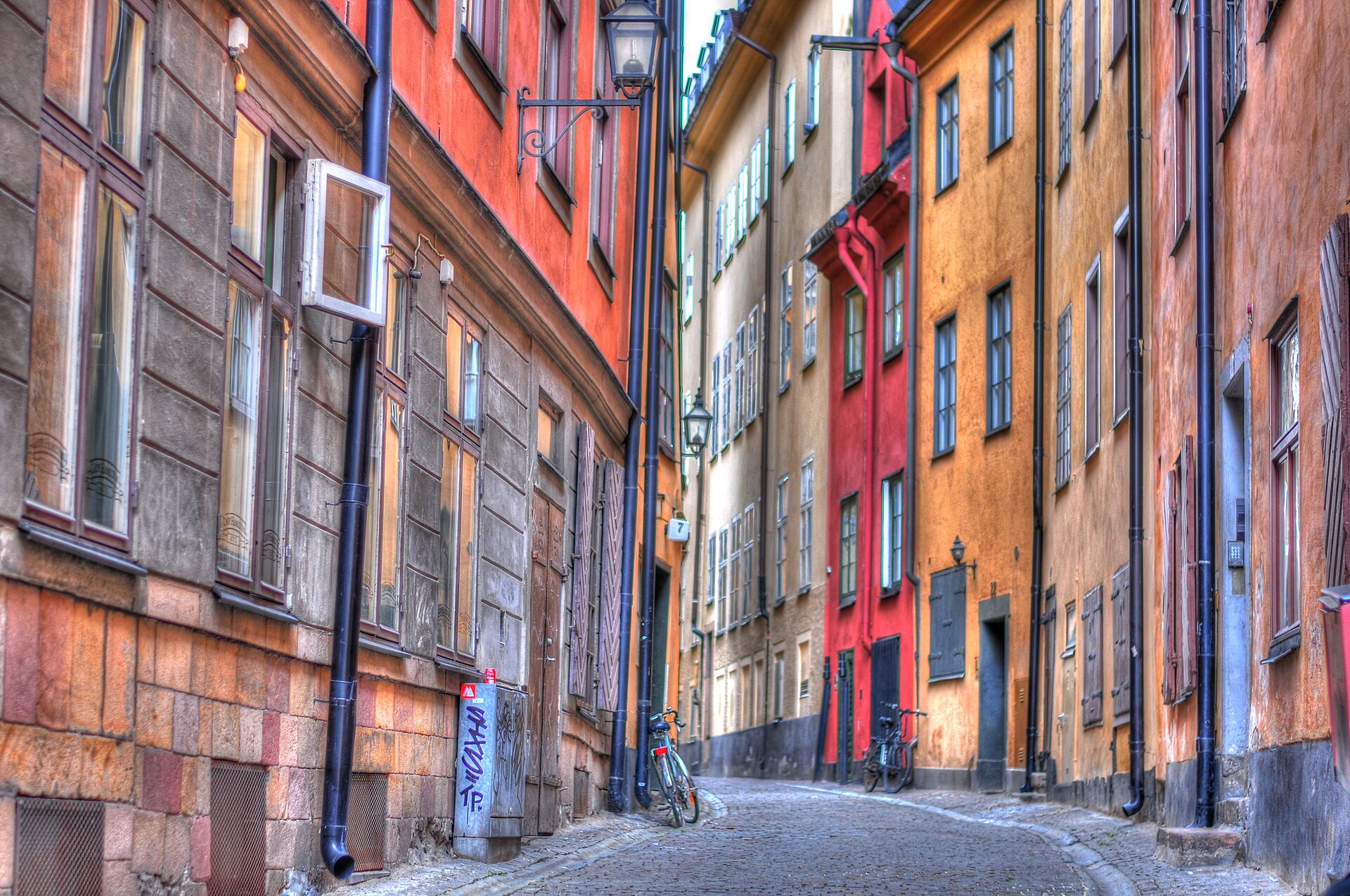
Some districts are built at a density that makes short, covered hops between things realistic; others are not. Gamla Stan, Stockholm’s medieval old town, has narrow streets close enough together that a rain shower is a minor inconvenience rather than a planning problem, and it holds several indoor sights — Storkyrkan cathedral, the Royal Palace, the Nobel Prize Museum — within a few hundred metres of each other. Skeppsholmen, by contrast, is an island of museums with real distances between buildings and little shelter along the way, which makes it a stronger dry-weather plan.
Norrmalm and the area around Sergels Torg are almost entirely covered by shopping streets, arcades and the underground Kulturhuset complex, making central Norrmalm a reasonable fallback when rain sets in mid-afternoon. District-level planning generally is covered in the Neighbourhoods archive.
What about food and fika when it’s raining?
Rain doesn’t change how Swedish café culture works, only how much of the day gets spent inside one. Fika, the Swedish coffee-and-pastry break, is as much a fixture of a rainy Tuesday as a sunny one, and a longer stop than usual is a normal way to wait out a downpour rather than a compromise. Food markets such as Östermalms Saluhall or Hötorgshallen — covered, indoor halls built for exactly this climate — are worth building a rainy lunch around; more on how the city’s markets and eating culture function generally sits in the Food & Markets archive.
Does rain change much by season?
Rain interacts with daylight and temperature differently depending on the time of year, which changes what a wet day actually feels like to plan around rather than how likely it is. A rainy day in December compounds with the short daylight hours described at what the light does through a Stockholm year, pushing almost everything indoors by necessity. A rainy day in July, by contrast, still leaves long evening daylight once the weather clears, a pattern covered in what happens in Stockholm in July. Winter rain also interacts with near-freezing temperatures in ways covered at how cold a Stockholm winter actually is — sleet and icy pavement are a different planning problem from a warm summer shower.
How do residents handle rainy days differently from visitors?
A resident’s rainy day usually isn’t a rearranged itinerary at all — it’s a normal commute on a system built to run underground for most of its length, with an umbrella and the right footwear treated as standard rather than notable. Where a visitor loses an outdoor plan, a Stockholmer typically just moves the errand, the gym visit or the fika indoors without much friction, because so much of daily life in the city — commuting, shopping, eating — was already built around a climate that rains through most months. What changes for residents is less the day itself and more the seasonal rhythm, discussed more broadly in the Living in Stockholm hub.
For a visitor building a single wet day into a longer trip, the practical move is to treat it as a museum day and slot outdoor sights — a viewpoint, a park, an archipelago boat — into whichever day forecasts better. Broader itinerary logic, including how to sequence a first or second day around weather and opening hours, is set out in the Stockholm Practical hub and the Itineraries & Day Plans archive. Current forecasts, which no fixed guide can responsibly replace, are published by SMHI at smhi.se.
Access Stockholm is an independent guide written from published, checkable sources. We have not visited the places described here and we do not publish personal recommendations or invented ‘local favourites’ — where something is singled out as notable, we say who says so. Opening times, fares, closures and prices change at short notice, so treat everything here as a starting point and confirm with the museum, operator or venue directly before building a day around it. We give no advice on visas, insurance, health or safety; use your own government’s official guidance for those.
Featured image: Photo by Jürgen Howaldt, source, CC BY-SA 2.0 de
