Grinda is a small, car-free island in Stockholm’s middle archipelago, roughly two to three hours from the city centre by boat depending on the route. Most of it is managed as a nature reserve, with hiking paths, swimming spots, a campsite, rental cabins and a historic inn. It works as either a long day trip or a simple overnight stay.
Where is Grinda in the archipelago?
Grinda sits in what is usually called the mellanskärgård, the middle band of the Stockholm archipelago, east of Vaxholm and south of the route out toward Sandhamn. It is one of thousands of islands and skerries that make up the archipelago, but it is among the smaller number that have year-round public transport, marked trails and managed visitor facilities rather than being purely private or unreachable without your own boat.
Its position places it within a cluster of islands that includes Vaxholm to the west — the historic fortress town covered in this site’s piece on Vaxholm — and, further out toward open water, the sailing village described in what Sandhamn is. Grinda is closer to the mainland than either of those, which is part of why it functions well as a shorter excursion.
Is Grinda a nature reserve?
Most of the island’s land is protected and managed by Skärgårdsstiftelsen, the Stockholm Archipelago Foundation, a body that owns and manages large areas of unbuilt archipelago land specifically to keep them open to the public rather than developed. Skärgårdsstiftelsen’s own site describes its holdings on Grinda as including forest, meadow and shoreline, with marked walking trails connecting the island’s few settled points.
Because it is largely reserve land, general allemansrätten rules apply to walking, picking berries or mushrooms, and short-term camping in undesignated areas, alongside whatever specific reserve regulations Skärgårdsstiftelsen posts for Grinda itself — details worth checking on the foundation’s own site before relying on them.
What buildings and facilities are actually on the island?
Grinda has a small cluster of built structures near its main jetty, including Grinda Wärdshus, an inn whose building dates from the early twentieth-century period when wealthy Stockholmers built summer villas on archipelago islands close enough to reach by steamer. The island also has a Skärgårdsstiftelsen-run campsite and a number of rental cabins, along with a shop that, in common with most archipelago retail, operates on a seasonal schedule.
- A network of marked hiking trails crossing forest and open meadow.
- Several designated swimming spots along the shoreline.
- A campsite and cabins for rent, both operated by Skärgårdsstiftelsen.
- Grinda Wärdshus, the island’s inn.
- A jetty area serving as the main arrival and departure point.
None of this amounts to a village in the way Vaxholm or Sandhamn are villages. Grinda is closer to a managed nature area with a small amount of visitor infrastructure attached to it.
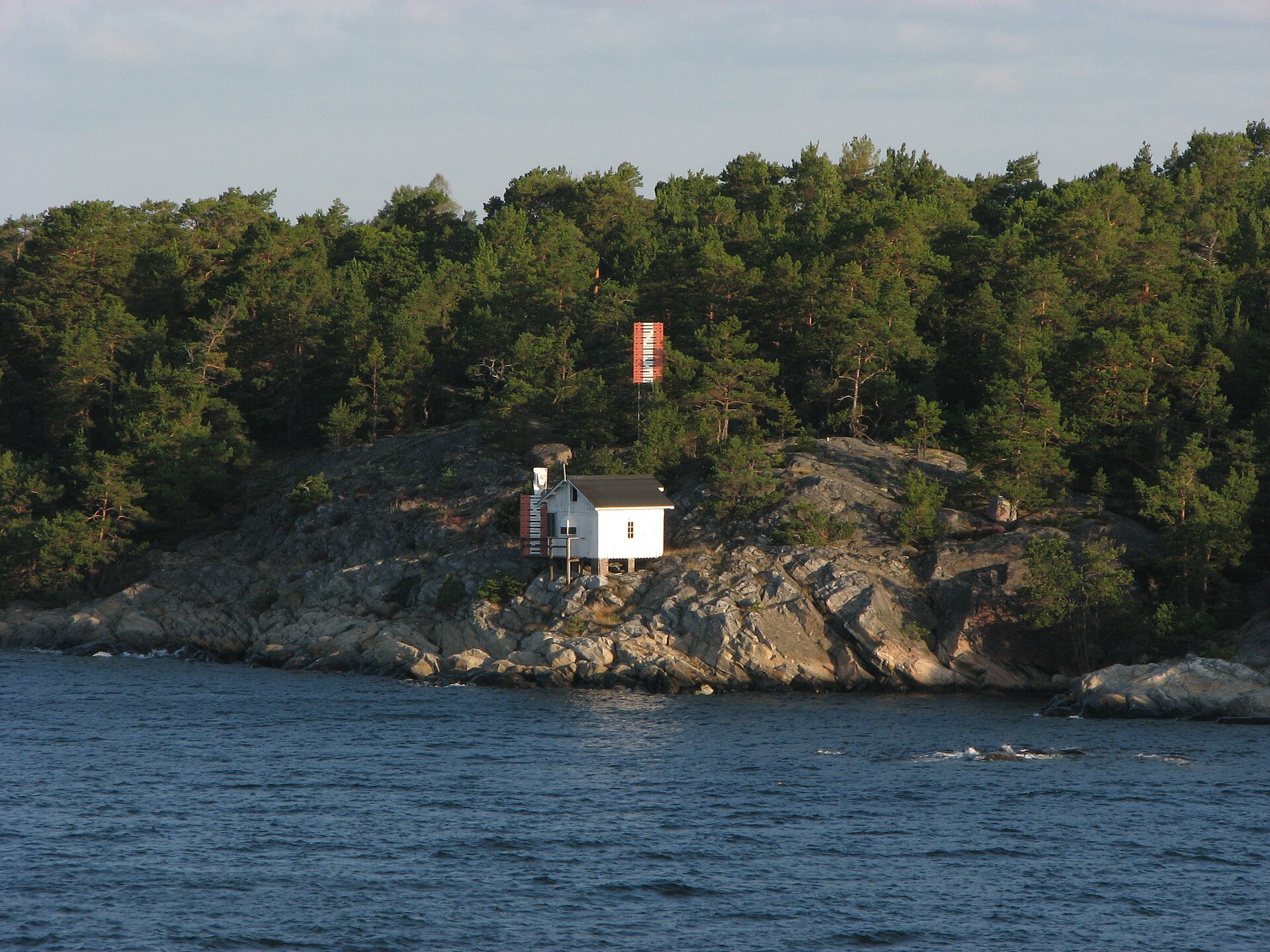
.jpg)
How do you get to Grinda?
Grinda is reached only by boat — there is no bridge and no vehicle access, which is normal for the archipelago rather than unusual. Waxholmsbolaget, the public archipelago ferry operator, runs scheduled services to Grinda, typically departing from Strandvägen in central Stockholm or from Vaxholm itself. Strömma, a private operator, also runs seasonal boats to the island, often as part of wider archipelago sightseeing routes.
Because both operators run to a published timetable that changes with the season, and because winter service to smaller archipelago islands is generally reduced, the only reliable approach is to check current departures on Waxholmsbolaget’s own site before travelling. The broader mechanics of archipelago boat travel — tickets, seasonal timetables, which islands get year-round service — are covered in how Stockholm’s archipelago boats work through the season and in the more general guide to actually visiting the archipelago.
Can you stay overnight on Grinda?
Yes. Overnight options are the campsite, the rental cabins run by Skärgårdsstiftelsen, and rooms at Grinda Wärdshus, though all three operate on a seasonal basis and capacity is limited on a small island with no other accommodation. Anyone planning to stay rather than day-trip should book directly with whichever operator runs the option they want and confirm the dates it’s actually open that year.
This is where Grinda differs from islands that function primarily as day-trip destinations. A short stay makes it possible to walk more of the reserve, use the swimming spots without the tighter turnaround of a single-boat day trip, and see the island outside the middle of the day when visitor numbers are highest.
Is Grinda worth a day trip or better as an overnight stay?
Both work, and which suits a given visit depends mostly on how much of the island someone wants to cover versus how much boat time they’re willing to spend. A single day allows for one or two of the marked trails, a swim, and perhaps a meal at the inn if it’s open, provided the ferry timetable allows enough time on the island between arrival and the last return sailing.
An overnight stay removes that time pressure entirely and suits anyone treating the island as a genuine break rather than a sightseeing stop. The general question of how to fit archipelago time into a limited schedule is addressed directly in fitting the archipelago into a short trip, which applies to Grinda as much as any other island in this band of the archipelago.
What time of year does Grinda actually function as a destination?
Grinda, like most of the archipelago’s smaller islands, is built around a summer season. The campsite, cabins, inn and shop all run reduced hours or close entirely outside roughly May to September, and ferry frequency drops sharply once the main season ends. Walking the reserve itself is possible year-round under allemansrätten, but anyone relying on the island’s facilities — food, a bed, a working shop — needs to travel in season and confirm current opening directly with the operators involved.
This seasonal rhythm is not unique to Grinda; it shapes the whole archipelago, and is covered more generally in the site’s Parks & Archipelago section and in its wider Day Trips archive, both of which are useful starting points for comparing Grinda against other islands within reach of the city.
How does Grinda compare to a place like Vaxholm?
Vaxholm is a town with a permanent population, a fortress, shops and year-round services; Grinda is an island with a handful of seasonal buildings inside a nature reserve. Vaxholm works as a destination in any month; Grinda works best in the warmer half of the year, when its trails, swimming spots and the inn are all actually operating.
For planning purposes, that makes Grinda a strong candidate for a summer archipelago day out focused on walking and swimming rather than sights and shopping, while Vaxholm — detailed separately in this site’s piece on why Vaxholm was fortified — suits a visit at almost any time of year.
Access Stockholm is an independent guide written from published, checkable sources. We have not visited the places described here and we do not publish personal recommendations or invented ‘local favourites’ — where something is singled out as notable, we say who says so. Opening times, fares, closures and prices change at short notice, so treat everything here as a starting point and confirm with the museum, operator or venue directly before building a day around it. We give no advice on visas, insurance, health or safety; use your own government’s official guidance for those.
Featured image: Photo by Егор Журавлёв from Smarde, Latvia, source, CC BY-SA 2.0
.jpg)