The Swedish approach to seasonal food is not a marketing idea but a working calendar: specific dishes are tied to specific weeks of the year, often by centuries-old convention, church tradition or the growing season itself, and shops, menus and public holidays follow that calendar rather than the other way around.
Why does Sweden organise food by calendar rather than by trend?
Sweden sits far enough north that the growing season is short and sharply defined, and long winters historically meant preserving, salting, drying and fermenting food to last through them. That agrarian rhythm survived industrialisation and is now reinforced by the Lutheran liturgical calendar, so dishes cluster around fixed points — Shrovetide, midsummer, the crayfish season, Christmas — rather than drifting with fashion.
What marks the start of the food year in Stockholm?
The calendar effectively opens with semla, the cardamom bun filled with almond paste and whipped cream traditionally eaten on Fettisdagen (Shrove Tuesday) before Lent. Bakeries and cafés across the city sell it for weeks either side of the date, a practical accommodation to demand rather than historical accuracy, and it disappears from counters almost as abruptly as it arrives once Lent has passed.
What happens to Swedish food in spring?
Spring in Stockholm is a comparatively quiet stretch on the food calendar, bridging semla season and midsummer. Easter brings its own smörgåsbord-style spread of pickled herring, eggs and lamb, echoing the wider tradition described in the site’s explainer on what smörgåsbord actually is and where it comes from. As daylight lengthens sharply through April and May — a shift covered in detail in the site’s piece on what the light actually does through a Stockholm year — outdoor cafés and market stalls extend their hours, and the first domestic asparagus and rhubarb appear.
Why is midsummer treated as a food event, not just a holiday?
Midsummer (Midsommar), held on a Friday in late June, is built around a fixed short list of foods: new potatoes with dill, pickled herring in several styles, soured cream, chives, and the season’s first Swedish strawberries. The site’s explainer on what midsummer is and what happens to Stockholm covers how thoroughly the city empties out and closes for it — most Stockholmers leave for the archipelago or the countryside, and the food itself is deliberately simple, because it is meant to be eaten outside.
.jpg)
What does “kräftskiva” mean and when does it happen?
A kräftskiva is a crayfish party held in August, traditionally under paper lanterns, with crayfish boiled in dill-heavy brine, eaten cold with bread, cheese and akvavit. The custom dates to a period when crayfish fishing was seasonally restricted by law to protect stocks; the restriction has since been relaxed, but the August timing has stuck as cultural habit rather than legal necessity.
What is surströmming, and why does it only appear in late summer?
Surströmming is fermented Baltic herring, canned while the fermentation is still active, with a smell strong enough that it is conventionally opened outdoors. Retailers traditionally release the new season’s cans on the third Thursday of August — a date fixed by trade custom rather than law — and the site’s full explainer, what surströmming is and why it is eaten, sets out its history as a preservation method from a period before refrigeration.
How does autumn change what’s on offer in Stockholm?
Autumn is the foraging season: chanterelles, ceps and other wild mushrooms, along with lingonberries and blueberries, are gathered from forests around the city under allemansrätten, Sweden’s right of public access, which permits picking wild produce on most uncultivated land regardless of ownership. Market halls and grocers stock the results through September and October, and menus at restaurants serving husmanskost, Swedish home cooking, lean toward game, root vegetables and mushroom dishes as the weather turns.
Why does Christmas food take over so much of December?
Julbord — the Christmas table — is an extended smörgåsbord served through most of December in restaurants, workplaces and homes, built around cured and pickled fish, ham, meatballs, sausages, and a small set of specifically Christmas dishes such as lutfisk and rice porridge. It is less a single meal than a season-long format that restaurants across Stockholm run as a fixed menu for weeks, often requiring advance booking, which is one reason December is worth planning around; the site’s guide to planning a Stockholm day in December’s four hours of light covers how the season shapes the whole day, not just the evening meal.
Where does this seasonal produce actually get sold in the city?
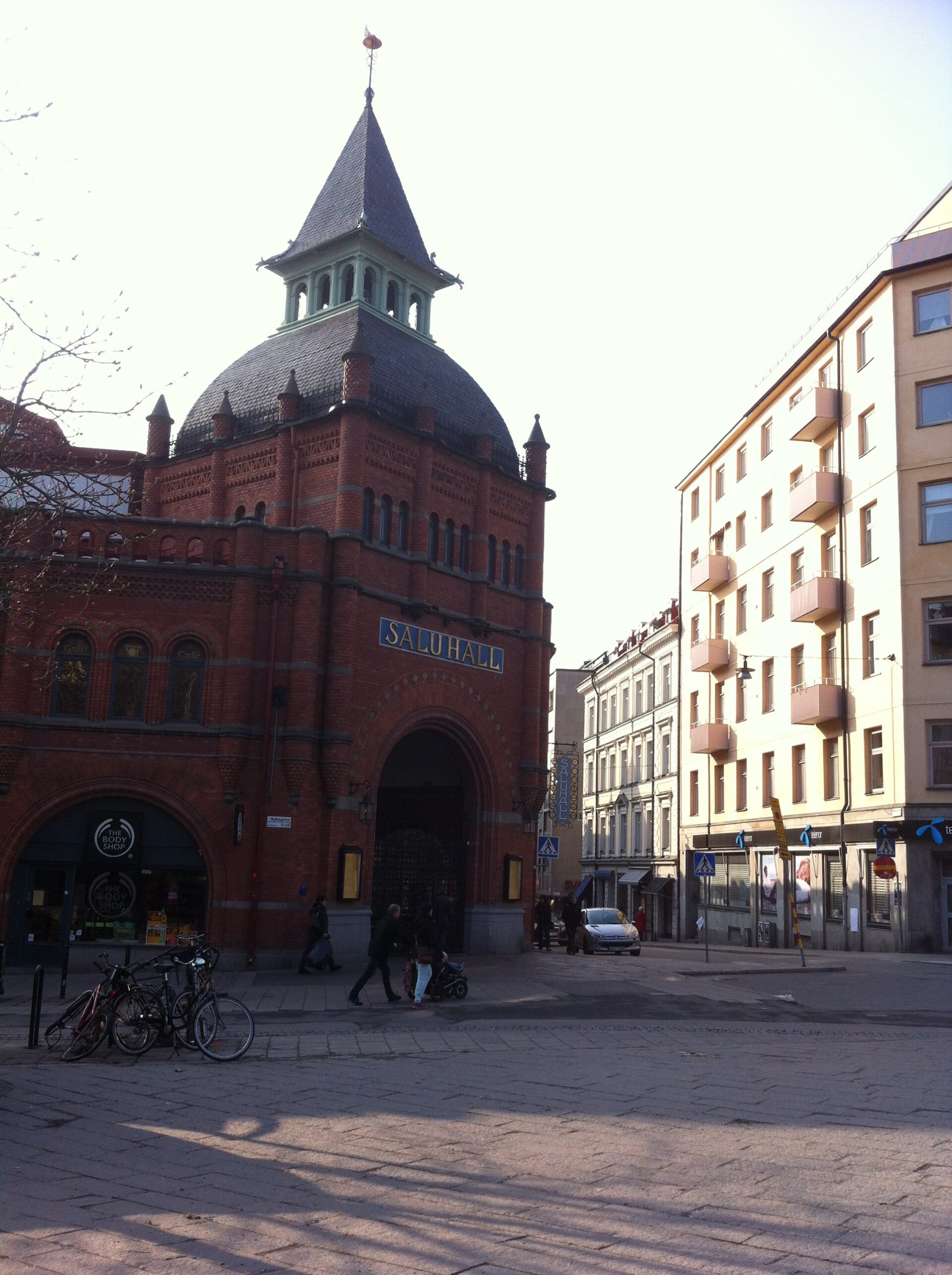
Stockholm’s two best-known indoor market halls are structured around exactly this rhythm. Hötorgshallen, the underground food hall beneath Hötorget, and Östermalms Saluhall, the market hall on Östermalmstorg, both stock fish, game and produce that shift with the calendar — crayfish in August, game and mushrooms in autumn, cured fish before Christmas. Outside these halls, the wider pattern of markets and specialist food shops is covered in the site’s Food & Markets archive.
Does seasonality affect everyday eating, or just festival food?
It affects both. The dagens lunch (lunch deal) that structures the Swedish weekday — a fixed-price main course offered by most casual restaurants at lunchtime — often rotates seasonally, swapping heavier stews and root-vegetable dishes for lighter fish and salad options in summer. The site’s explainer on what a lunch deal is and why it shapes the day sets out how central this format is to how Swedes actually eat on an ordinary working day, seasonal shifts included.
What should a visitor actually expect from this calendar?
A visitor arriving outside a specific food window will simply miss it — surströmming will not be on shelves in April, semla will not be on counters in October — because these are genuinely seasonal products, not year-round menu items kept alive for tourism. Anyone planning a trip around a particular food tradition should confirm current dates directly, since exact timings (the semla season’s start, the surströmming release date, individual restaurants’ julbord dates) shift slightly year to year and are set by retailers, churches or trade custom rather than fixed statute.
How does this fit into planning a visit?
Because so much of Swedish food culture is calendar-bound, it is worth treating alongside the rest of the seasonal planning covered in the site’s practical planning hub, which sets out how the city’s opening hours, holidays and daylight all move together through the year. Residents plan around the same calendar, which is one reason the food seasons are treated less as novelty and more as fixed points in how the year is understood, both inside and outside the kitchen.
Access Stockholm is an independent guide written from published, checkable sources. We have not visited the places described here and we do not publish personal recommendations or invented ‘local favourites’ — where something is singled out as notable, we say who says so. Opening times, fares, closures and prices change at short notice, so treat everything here as a starting point and confirm with the museum, operator or venue directly before building a day around it. We give no advice on visas, insurance, health or safety; use your own government’s official guidance for those.