Sandhamn is a small village on the island of Sandön, roughly three hours by boat from central Stockholm, at the outer edge of the archipelago where it meets the open Baltic. It grew up as a pilot and customs station, and is now best known as the base of Swedish offshore sailing and a destination for archipelago boat trips.
Where exactly is Sandhamn?
Sandhamn sits on Sandön, an island in the outer part of the Stockholm archipelago, closer to the open sea than to the mainland. It is one of the furthest-out settlements reachable by scheduled boat, which is part of why it has a different character from the calmer, more wooded islands nearer the city. The wider archipelago itself is described in more detail on this site’s own piece on what the Stockholm archipelago is and how big it is.
The village occupies a narrow strip of land between two harbours — one facing the sheltered inner waters, the other opening more directly toward the Baltic. That double-harbour layout is a direct result of its original function: a place where pilots and customs officers needed access to both incoming sea traffic and the calmer channels leading toward Stockholm.
Why was Sandhamn a pilot and customs station?
Sandhamn’s location made it the natural checkpoint for ships approaching Stockholm from the Baltic. It answers directly: because it sits at the point where open-sea shipping lanes meet the sheltered channels into the city, so pilotage and customs control were placed there rather than further in.
From at least the 17th century, vessels bound for Stockholm needed a local pilot to navigate the archipelago’s channels safely, and Sandhamn was a logical place to station pilots waiting for incoming ships. A customs house followed, since goods and vessels could be inspected here before continuing toward the city. Traces of this administrative role remain in the village’s older buildings and its layout around the harbour, even though the pilot and customs functions have long since been reorganised into modern Swedish maritime administration.
What is Sandhamn’s connection to sailing?
Sandhamn is the base of the Royal Swedish Yacht Club (Kungliga Svenska Segel Sällskapet, KSSS), and it is where Sweden’s best-known offshore race, Gotland Runt (the “Round Gotland Race”), starts and finishes. This is the reason many Swedes know the name even if they have never travelled there themselves.
KSSS maintains a clubhouse and marina facilities in Sandhamn, and the village’s harbour fills with visiting boats each summer around race weekends and regattas. The club’s own site is the authoritative source for race dates and club activities, since these change year to year: Kungliga Svenska Segel Sällskapet publishes its racing calendar directly. The scale of small-boat and yacht traffic through the harbour in summer is a good illustration of how sailing, rather than tourism infrastructure, still shapes the rhythm of the place.
How do you get to Sandhamn?
Sandhamn is reached by scheduled passenger boat from central Stockholm or from Stavsnäs, a mainland departure point further out toward the archipelago; there is no road or bridge connection, and no car access. Waxholmsbolaget, the public archipelago boat operator, runs the main scheduled services, and its own timetables and current fares are the only reliable source, since these are adjusted seasonally: Waxholmsbolaget’s own site should be checked before travelling.
The direct route from Stockholm takes several hours each way, while departures from Stavsnäs are shorter, since Stavsnäs sits further out along the coast road. Private operators also run faster boats to Sandhamn in the summer season. The general mechanics of buying archipelago boat tickets, choosing routes and understanding how the network is organised are covered on this site’s guides to how Stockholm archipelago boats work by season and how you actually visit the archipelago.
.jpg)
Is Sandhamn car-free?
Yes. Sandhamn has no road connection to the mainland and no car traffic within the village itself; movement is on foot, with wheelbarrows and small carts used to move luggage and goods from the harbour. This is typical of the outer archipelago generally, where islands are reached only by boat and settlements are built for pedestrian scale rather than vehicles.
The absence of cars is one reason the older parts of the village — narrow lanes, closely spaced wooden buildings, the customs-era street pattern near the harbour — remain legible as a working settlement rather than as a reconstruction. Nothing here has needed to be widened for traffic.
What does Sandhamn actually consist of today?
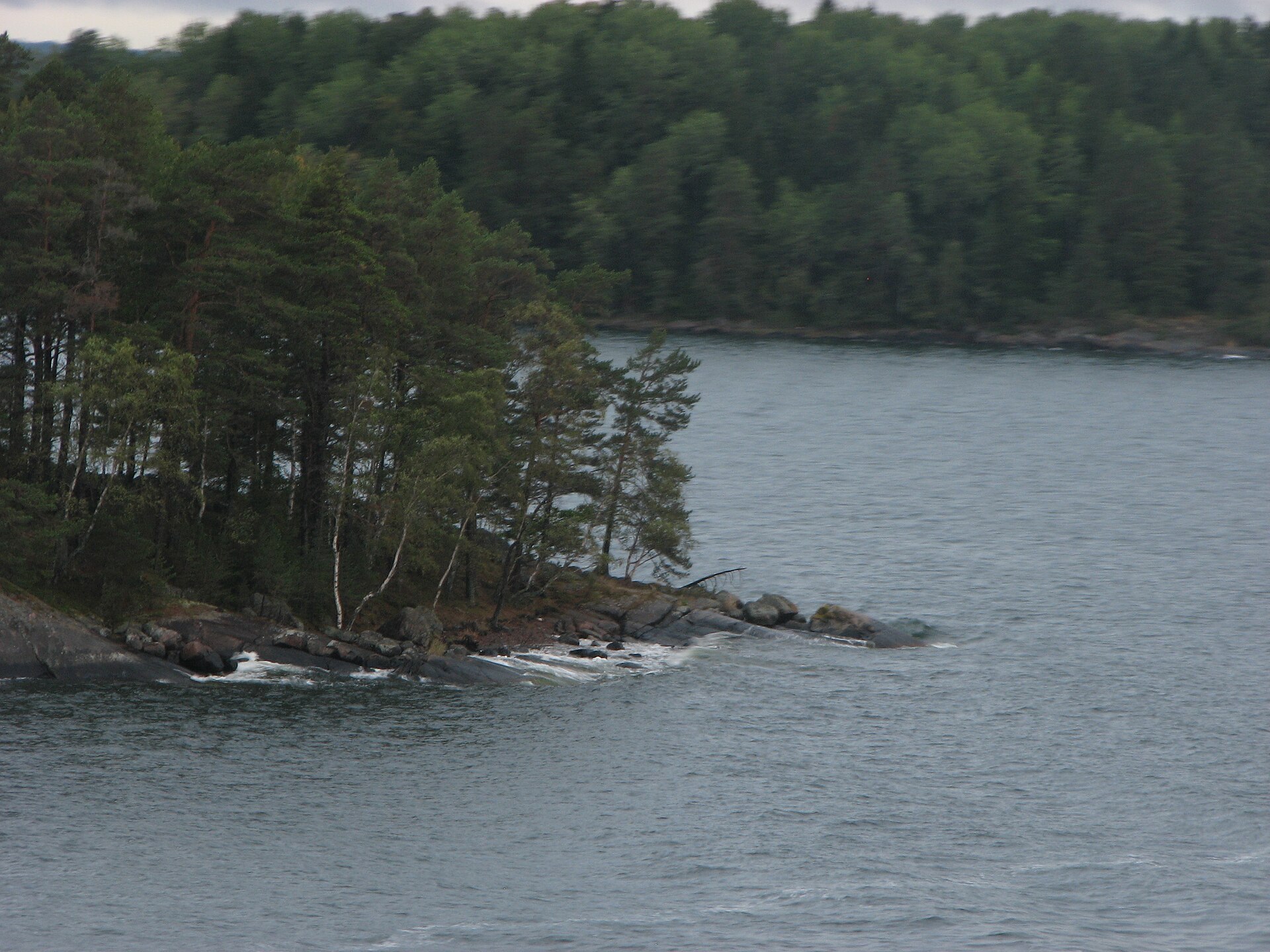
The village today combines its historic core — wooden buildings from its pilot and customs era, clustered close to the harbour — with a working marina, the KSSS clubhouse and sailing facilities, and the everyday infrastructure of a small permanent community, including a church and a village shop. Outside the built-up centre, Sandön island itself is largely nature: pine forest, rocky shoreline and swimming spots typical of the outer archipelago, accessible on foot from the village.
Public access to the island’s uncultivated land, shoreline and forest is governed by allemansrätten, the general right of public access that applies across Sweden and is explained in full on this site’s piece on what allemansrätten actually permits and where its limits lie. It allows walking, temporary camping and berry- or mushroom-picking on most uncultivated land, including much of Sandön, without needing the landowner’s permission, within limits that are worth reading in full before assuming they apply everywhere.
When is Sandhamn busiest, and when is it quiet?
Sandhamn is busiest through the Swedish summer, particularly around sailing regattas and the Gotland Runt race weekend, when the harbour fills with visiting boats and scheduled services run more frequently. Outside summer, boat frequency drops, some facilities close for the season, and the village returns to functioning as a small, largely self-contained community of permanent residents rather than a destination.
This seasonal swing is common across the outer archipelago generally: infrastructure, boat schedules and opening hours are all built around a short, intense summer window. Anyone planning a visit outside peak season should check current boat timetables directly with the operator rather than assume a summer schedule still applies, and should be prepared for a much quieter, more residential atmosphere than the harbour sees in July.
How does Sandhamn compare to other archipelago destinations near Stockholm?
Sandhamn sits further out and closer to open water than better-known inner and mid-archipelago stops such as Vaxholm, which functions more as a fortified gateway close to the mainland; the two places serve different purposes and suit different kinds of trip. Vaxholm’s fortress role and its position as a historical defensive checkpoint for the approach to Stockholm are covered separately in this site’s piece on what Vaxholm is and why it was fortified.
Where Vaxholm is close enough for a half-day trip and built around its fortress and harbour town, Sandhamn requires a longer commitment — most of a day at minimum given travel times — and rewards it with a more open, sea-facing setting and direct exposure to the working culture of Swedish offshore sailing. Advice on building an archipelago stop into a limited schedule is covered in this site’s guide to fitting the archipelago into a short trip, and the practicalities of a full day spent on the water, including how boat-based days in the archipelago are typically structured, are set out in a day in Stockholm on the water, and how it actually works.
What should a visitor actually expect?
A visitor should expect a small, working village rather than a curated attraction: a harbour, a handful of historic buildings, a sailing club, and forest and shoreline beyond the built-up centre, with no cars, limited facilities outside summer, and a long boat journey each way. It rewards an interest in sailing history and archipelago landscape more than an expectation of shops or organised sights.
Anyone assembling a wider archipelago itinerary, including where Sandhamn fits alongside closer islands, boat operators and seasonal considerations, can find the broader picture in this site’s archipelago and outdoors coverage under Parks & Archipelago, and in the practical transport detail collected under Getting Around.
Access Stockholm is an independent guide written from published, checkable sources. We have not visited the places described here and we do not publish personal recommendations or invented ‘local favourites’ — where something is singled out as notable, we say who says so. Opening times, fares, closures and prices change at short notice, so treat everything here as a starting point and confirm with the museum, operator or venue directly before building a day around it. We give no advice on visas, insurance, health or safety; use your own government’s official guidance for those.
Featured image: Photo by Егор Журавлёв from Smarde, Latvia, source, CC BY-SA 2.0
.jpg)