A sommarstuga is a privately owned summer cottage, usually simple, often wooden, typically outside the city on the coast, by a lake or in the archipelago. Stockholm empties in July because the whole country takes its main annual holiday in overlapping stretches that month, and a large share of the population has somewhere specific to go: a cottage that belongs to them, their family or a close friend.
What exactly is a sommarstuga?
A sommarstuga (literally “summer cottage”) is a second home used for leisure rather than year-round living. It is legally and administratively distinct from a primary residence — Swedish property records and tax authorities classify it as a fritidshus, a “leisure house”, separate from permanent housing stock.
These cottages range widely. Some are 19th-century fishermen’s houses on archipelago islands, inherited across generations and barely modernised. Others are modest 1960s or 1970s builds on a lake near Mälaren or Sörmland, put up during a period when second-home ownership expanded sharply among ordinary working families rather than staying an upper-class habit. A sommarstuga is rarely insulated to the same standard as a main home, rarely has full winter heating, and is typically closed up — water drained, shutters on — from autumn to spring.
How many people actually have one?
A significant minority of Swedish households own a fritidshus, and a larger share again has regular access to one through parents, in-laws or close friends. Statistics Sweden (SCB), the national statistics agency, publishes figures on the fritidshus stock and its distribution; its data show concentration around Stockholm’s own archipelago and lake districts as well as further out along the coasts.
The pattern matters more than the exact count. Ownership clusters by region and often by family — a cottage bought or inherited decades ago gets used by children and grandchildren long after the original owners are gone, which is one reason so many are modest rather than newly built. It is not, on the whole, a market of holiday-home investors; it is closer to a piece of inherited domestic infrastructure.
Why does July specifically empty the city?
Because Swedish annual leave is generous, legally protected, and taken in a concentrated block that most of the workforce times to overlap. Swedish law guarantees a minimum number of paid holiday days per year, and many workplaces — particularly larger employers, the public sector and industry — effectively shut down or run on skeleton staffing for several consecutive weeks in July.
This is a legacy of a mid-20th-century arrangement sometimes called industrisemester (“industry holiday”), in which factories and larger employers coordinated a common shutdown period so that production, suppliers and staff schedules didn’t have to be juggled individually. The formal industrial version has faded, but the cultural habit of taking the main summer break in a concentrated July window has not. Schools are out from early June until late August, which frees families to leave together rather than staggering trips around term time.
The result is a city where a very large number of residents are doing the same thing at the same time: closing the flat, driving or taking the train out, and opening up a cottage that has been shut since the previous autumn.

Where do people actually go?
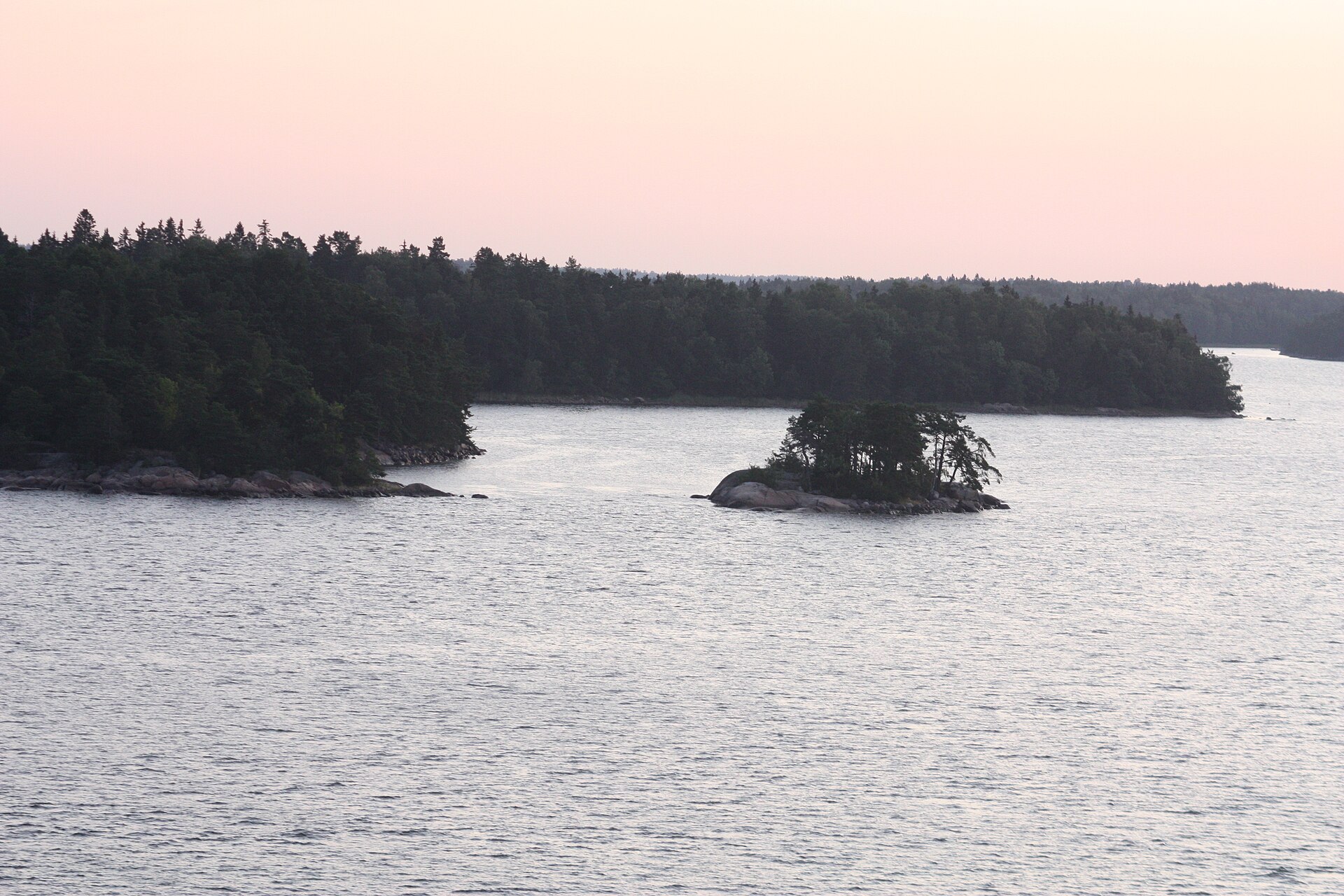
Overwhelmingly outward, not far. The Stockholm archipelago accounts for a large share of the region’s own sommarstuga stock, and destinations further afield — Sörmland, Uppland, the west coast, Dalarna — take much of the rest. For residents without their own cottage, staying with relatives who do is common enough that “whose cottage” becomes a normal small-talk question in June.
Coverage of the archipelago itself, including how the boat network that serves it actually works, is covered in the site’s guide to visiting the Stockholm archipelago and in the broader piece on what the archipelago is and how big it is. Vaxholm, one of the archipelago’s fortified gateway towns, is a useful example of a place whose year-round character shifts noticeably with the summer influx — covered separately in the piece on why Vaxholm was fortified.
What does this mean for someone visiting Stockholm in July?
Fewer locals, but not a closed city. Restaurants, cafés and small independent shops in central districts are the businesses most likely to reduce hours or shut for a stretch, since owner-operators and their staff take leave too. Museums, major attractions and the transport network keep running, because they exist for the visitors who arrive precisely because it’s the warmest, lightest part of the year.
The practical effect is a city that looks and feels different rather than diminished: quieter residential streets, some shopfronts with handwritten notes about return dates, and a noticeably higher proportion of tourists relative to residents in the centre. Anyone planning a trip around this period should treat opening hours as genuinely unstable and check individual venues directly rather than assuming normal service — a point covered more generally in the site’s notes on how Stockholm’s economy and everyday costs actually work, which touches on how seasonal staffing affects pricing and service.
Lunch culture is one of the more visible casualties: the weekday dagens lunch deal that structures much of the city’s daytime eating depends on offices being staffed, and its rhythm changes when a large share of the office workforce is away — background on how that system works in ordinary weeks is in the piece on what a dagens lunch actually is.
Does the sommarstuga habit affect how the city works the rest of the year?
Yes, in ways that outlast July. Owning or having access to a cottage shapes weekend patterns from spring through early autumn — many residents leave the city on Friday afternoons from May onward and return Sunday night, a rhythm distinct from the July shutdown itself but built on the same infrastructure of cottages, boats and second homes. It also shapes housing decisions: a family with a functioning sommarstuga has less pressure to own or rent a larger city flat purely for holiday use, which is one small factor among many in how Stockholm’s housing stock gets used.
The broader question of how residents actually organise their lives around the city’s seasons — including winter darkness at the other extreme — is addressed in the site’s piece on what Stockholm’s districts are actually like to live in, and in the general living-in-Stockholm coverage in the Living in Stockholm hub.
Is there an equivalent for visitors without a cottage?
Not directly, but the archipelago functions as a shared outdoor space for exactly this purpose. Sweden’s allemansrätten, the right of public access to land and water, means the coastline and forest around most cottages — and the wider archipelago — is open to walk, swim near or camp briefly on, regardless of who owns the adjoining property. This is one reason the region’s parks and nature reserves see heavy summer use even from residents without a private cottage of their own.
General background on how that access works, and on the wider parks-and-archipelago system that absorbs Stockholm’s summer population, is in the site’s Parks & Archipelago archive.
Where to check current details
Statistics on second-home ownership and its regional distribution are published by Statistics Sweden (SCB) at scb.se. For anything time-specific — museum hours, restaurant closures, transport timetables — the operator’s own current page is the only reliable source during the July shutdown period, since normal-season information is exactly what changes.
Wider practical planning for the season is covered in the site’s Stockholm Practical hub, and the general shape of a visit that accounts for summer closures is addressed across the Planning & Practicalities archive.
Access Stockholm is an independent guide written from published, checkable sources. We have not visited the places described here and we do not publish personal recommendations or invented ‘local favourites’ — where something is singled out as notable, we say who says so. Opening times, fares, closures and prices change at short notice, so treat everything here as a starting point and confirm with the museum, operator or venue directly before building a day around it. We give no advice on visas, insurance, health or safety; use your own government’s official guidance for those.
Related reading
Stockholm Day Trips Compared: What Your Travel Pass Actually Covers.